Airport transfers are where black car service is judged. The principal lands, the assistant checks the app, and either the chauffeur is exactly where they should be — named, dressed, calm, with the right vehicle and the right plan — or the principal's first thirty minutes on the ground are spent finding a phone signal. There is no middle ground at the curb.
This article covers what black car airport transfers actually include, how FBOs differ from commercial terminals, and how to structure long-distance trips from a US airport to a regional destination.
The Arrival, End to End
A serious black car airport transfer is a dispatched arrival, not a curb pickup. The components:
- Flight monitoring — the operations cell watches the flight, not the principal's assistant. Delays, gate changes, diversions, and early arrivals are handled before they reach the principal.
- Meet-and-greet protocol — a named, vetted chauffeur, dressed appropriately, at a confirmed meeting point, with verified hand-off. No "look for a black SUV."
- Curb or FBO discipline — staged at the correct location, on the correct level, at the correct time. At FBOs, the chauffeur is cleared planeside where rules allow and meets the principal at the aircraft stair where they do not.
- Luggage workflow — bags identified, loaded, and accounted for without the principal handling them unless they choose to.
- Egress plan — pre-planned route with alternates, briefed before the principal lands.
- Single dispatch line — one number, monitored 24/7, that can answer where the car is, where the principal is, and what is happening next.
Commercial Terminals vs FBOs
Different failure modes, different discipline.
Commercial terminals fail at the curb. Most US airports actively limit black-car waiting. The chauffeur has minutes. The discipline is in the dispatch model: the car stages in a cell-phone lot, the operations cell tracks the principal through TSA exit, and the chauffeur pulls in on a confirmed cue.
FBOs fail at the credentialing line. Ramp access varies by airport and FBO. The chauffeur may or may not be allowed planeside; badging may or may not be current. The fix is preparation — the operations cell confirms FBO procedure, badging, and staging twenty-four hours ahead.
A serious black car provider runs both fluently and can name, on the spot, which FBOs at which airports they have credentialed presence at.
Long-Distance Trips From the Airport
Long-distance black car trips from a US airport — same-day movement from the gateway airport to a regional headquarters, secondary city, or family compound — are a different operation than a downtown transfer. The right structure:
- Single planned route with alternates, weather and event overlays, and a defined break protocol.
- Chauffeur hours-of-service discipline — for very long legs, a planned exchange at a confirmed location, not a gas station of opportunity.
- Vehicle staged for the leg — fueled, cleaned, climate-conditioned, with the principal's preferences set before pickup.
- Operations cell monitoring in real time, including weather and route conditions, with the principal's assistant on a single dispatch line.
The objective is for the long-distance leg to feel like one continuous ride, even when the route is hundreds of miles.
Meet-and-Greet Options
Meet-and-greet at the curb or FBO is the default for any serious black car provider. The variations to be clear about up front:
- Standard curb meet — the chauffeur stages at the cell-phone lot and pulls in on cue.
- Inside meet — the chauffeur (or a separate arrivals agent at major hub airports) meets the principal at the gate or baggage claim with discreet signage, handles bag identification, and walks the principal to the vehicle.
- FBO planeside — where rules and badging allow, the chauffeur meets the principal at the aircraft stair.
The right choice depends on the airport, the principal's profile, and the level of discretion required.
Where Airport Transfers Sit in a Larger Black Car Program
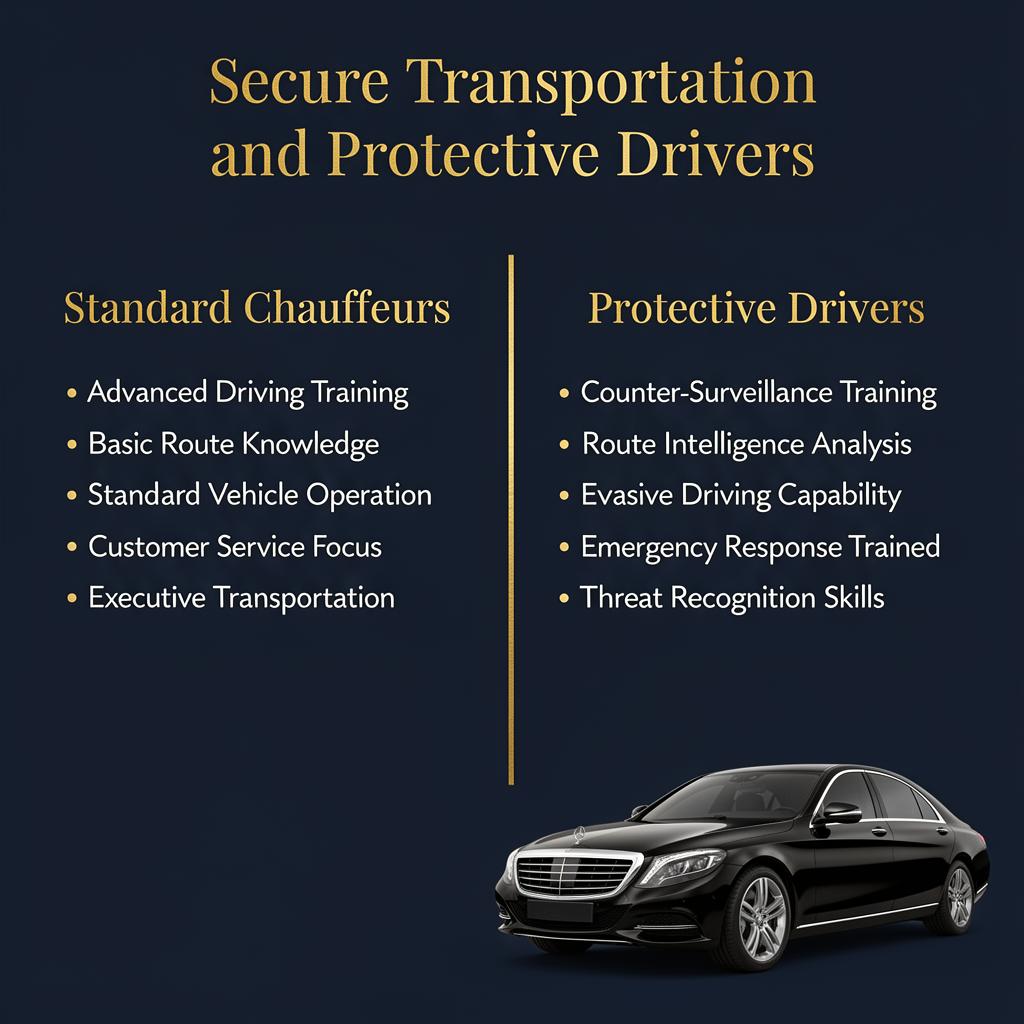
For most corporate principals, airport transfers are one component of a managed black car program that also includes downtown business meetings, multi-city travel, event movement, and — where the risk picture warrants — protective drivers. The full picture is in Black Car Service in the United States: The Complete Corporate & VIP Guide. The fleet question is in Modern Black Car Fleet.
Bringing It Together
A well-run black car airport transfer is invisible to the principal — the flight lands, the chauffeur is where they should be, and the next meeting starts on time. Everything that makes that possible happens in the operations cell before the principal arrives. Contact AMERINE for a confidential conversation.
---
General mobility-planning commentary. Not legal or operational advice for a specific engagement.