A Governance Frame
Most family office security failures we are asked to review are not failures of equipment or coverage. They are failures of governance. The alarm worked. The driver was vetted. The residence had cameras. What was missing was the connecting tissue — the program, the review cadence, the named owner, and the written standards that survive turnover.
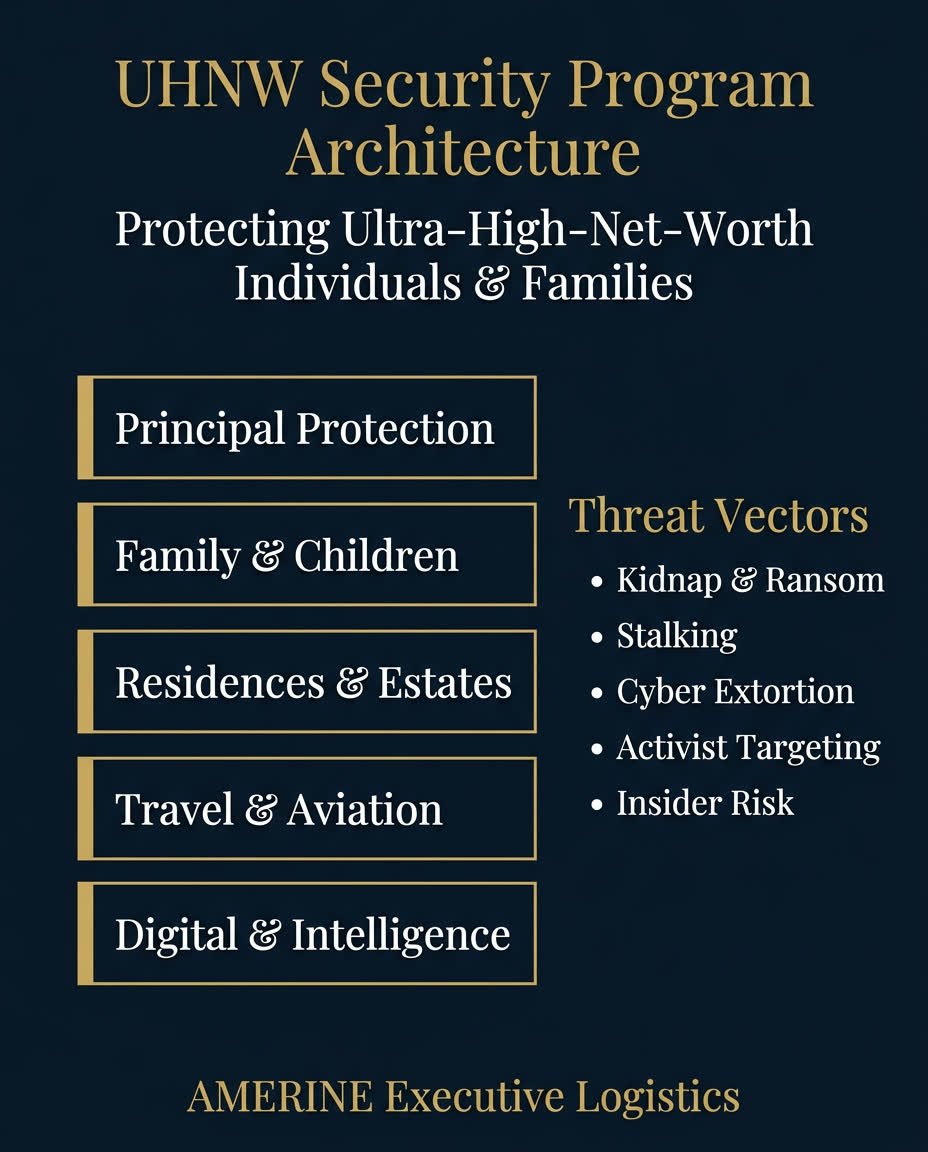
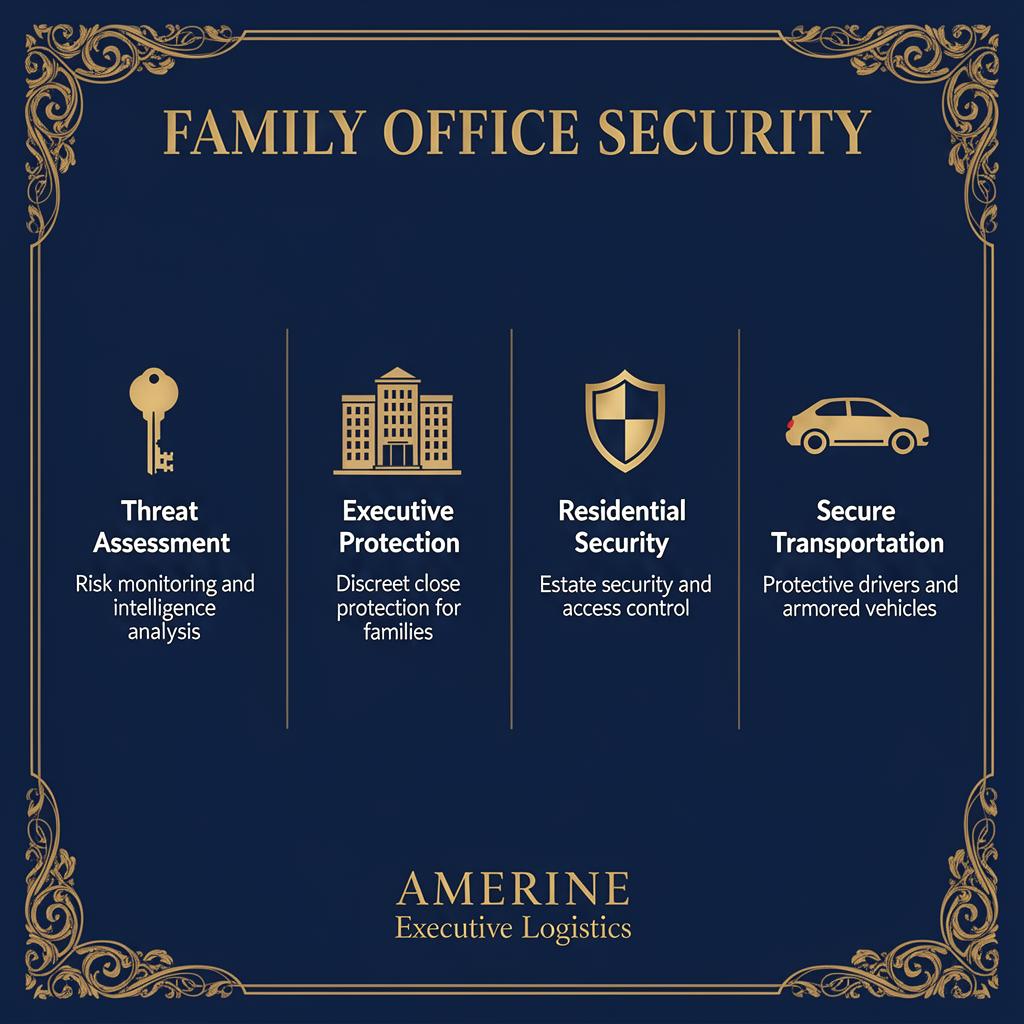
UHNW family security is not residential security. It is a governance program covering people, residences, travel, vendors, digital exposure, schools, and events. The components are not exotic. The discipline is.
The Family Risk Register
The most useful single document in any family office security program is a written family risk register. It lives with the COO or chief of staff and gets reviewed quarterly.
Categories:
- People: principal, spouse, children, household staff, drivers, vendors, advisors.
- Residences: primary, secondary, occasional-use, family-member residences.
- Travel: scheduled trips by tier, with intelligence and coverage notes.
- Digital exposure: doxxing surface, voice and image samples, social-media patterns.
- Events: weddings, galas, holidays, philanthropy, public appearances.
- Vendors: who has residential access, who handles finance, who handles travel.
The register is not classified. It is operational. Its purpose is to make sure the same conversation happens every quarter regardless of who is in the room.
Staff Vetting and Re-Vetting
Background checks at hire are baseline. The actual control is the re-vetting cadence:
- Annual re-vetting for all household staff and drivers.
- Quarterly re-vetting for new hires inside the first year.
- Targeted vetting for any contractor receiving recurring residential access.
- Clear policy on personal phone use, photography, social media, and outside engagements while employed.
Most household-staff incidents we are asked to investigate involve people who passed the original background check and were never reviewed again.
Children, Schools, and Predictability
Children are the most asymmetric exposure in any UHNW family. The school routine, the activity pattern, the social-media presence of friends, and the public visibility of family identifiers compound year over year.
A reasonable standard:
- Annual security review with school administration for principal-family children.
- Clear policy on real-time location posting by children and their friends.
- Driver and protective-agent coordination on after-school and activity routes.
- Defined escalation channel for the school in any concerning incident.
This is parenting work as much as security work. It is far more effective when the family treats it that way.
Residential Programs
Residential security is the most visible part of the program. Doing it well means doing fewer, better things:
- Walk every residence twice a year. Locks, cameras, alarm coverage, panic protocols, safe-room readiness.
- Confirm landscaping, package delivery, and contractor access protocols.
- Review residential staff communication chain and escalation paths.
- Verify off-site monitoring contract is current and responsive — not just present.
Travel
Family travel is where corporate-style travel policy and family-office governance meet. The same tier structure that works for executives works for families:
- Pre-trip intelligence for any travel above standard low-risk.
- Defined coverage for international and high-visibility domestic.
- Family check-in cadence with a home-side accountable person.
- Two-channel rule for any in-trip change.
Digital Exposure
Digital exposure is the fastest-changing risk surface in any UHNW family:
- Annual doxxing audit on principal, spouse, children, and family office leadership.
- Quarterly review of voice-clone and impersonation risk against finance and household staff.
- Written two-channel confirmation policy for any payment or itinerary change.
- Social-media privacy and real-time content discipline by family and staff.
Events
Weddings, galas, holidays, milestone birthdays, and philanthropic events are the most predictable, plannable exposures in the family calendar. They also produce the most overbuilt and underbuilt security programs we see.
Plan each event with the same lens used for an executive trip — venue, route, hospitality, guest list, vendor access, contingency. Most are well-handled at Tier 1 or Tier 2 effort.
Quarterly Family Office Security Review
Thirty minutes per quarter, attended by the COO or chief of staff, the security lead, and the principal when appropriate. Covers incidents, risk register updates, staff and vendor changes, travel and events for the next quarter, and digital exposure changes. Documented. Filed. Returned to next quarter.
A Final Note
Family office security is governance work. The families that do it well are not the ones spending the most. They are the ones with a named owner, a written program, a quarterly review, and the discipline to revisit it when something changes.
Build or review a UHNW family security program →
Related: Residential security, Cyber & digital executive protection, Private investigations, Secure transportation.
---
General planning guidance, not legal, financial, tax, or fiduciary advice. Coordinate family office security decisions with the family's qualified advisors.