Mexico Risk Is Not a Single Number
Treating Mexico as a single risk environment is the most common mistake in planning travel there. Conditions for a corporate executive flying into CDMX for two days of meetings are entirely different from those for a family spending a week in Cabo. Likewise, a manufacturing executive visiting a plant outside Monterrey has a different operational profile from a UHNW family staying in Cancun's hotel zone.
The U.S. State Department publishes its Mexico advisory state by state rather than assigning a single national figure. Advisories range from Level 2 (exercise increased caution) in much of the country to Level 4 (do not travel) in specific states. Private travelers can also use restrictions on U.S. government personnel as practical baselines. These include bans on intercity travel after dark and requirements to use regulated or app-based transportation in many areas.
AMERINE uses this framework to plan Mexico travel in 2026 for corporate clients, family offices, and UHNW principals.
The Four Variables
Every Mexico engagement starts with the same four variables:
- State and city: where the principal will physically be.
- Itinerary: what the principal will be doing, with whom, and how visible.
- Profile: how recognizable the principal is and how easy they are to research.
- Movement pattern: airport transfers, intercity travel, evening movement, and predictable repetition.
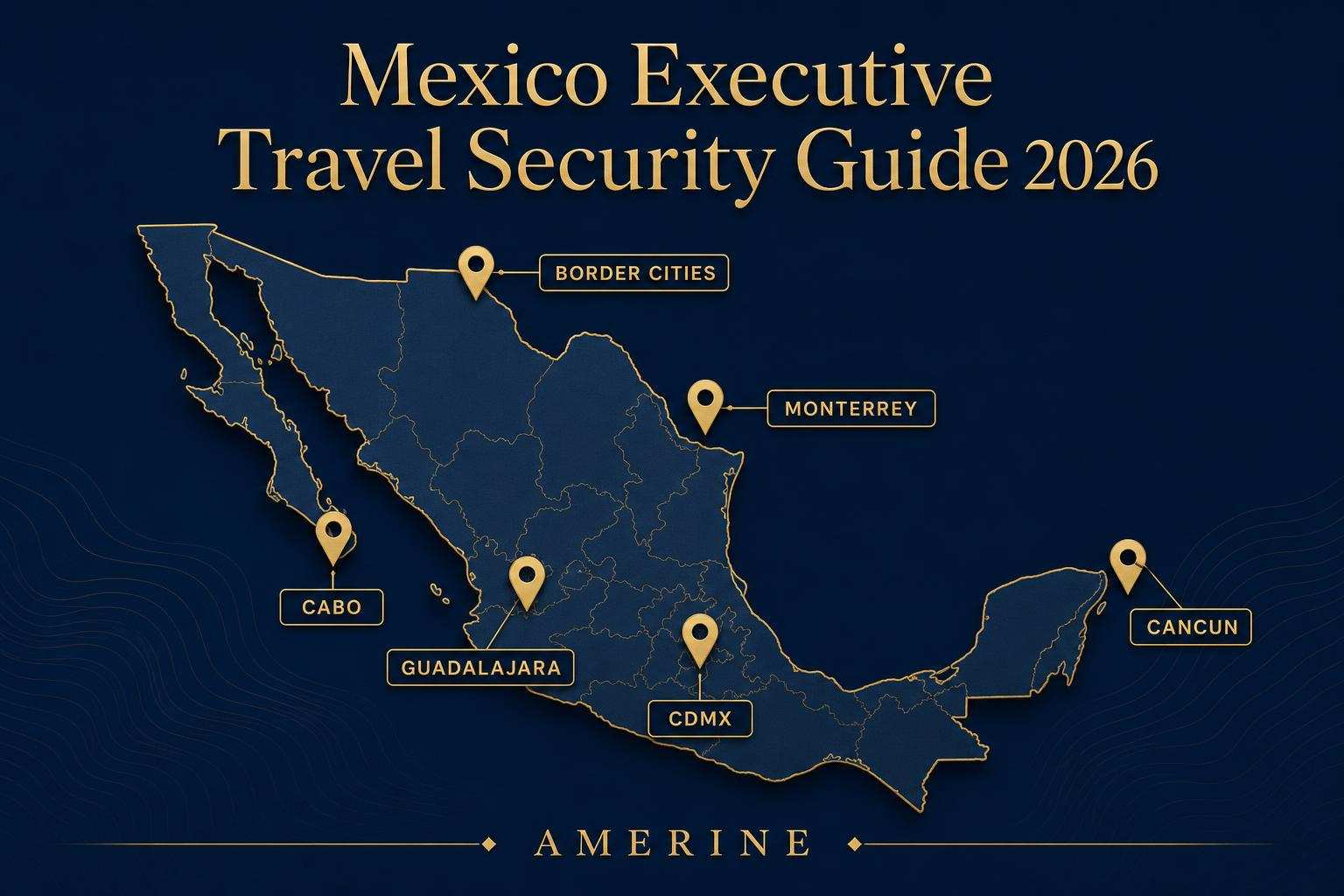
A tightly controlled, low-visibility itinerary in a higher-risk state can be an easier engagement than a high-profile itinerary in a low-risk state. The map gives you a starting point, but it doesn't settle the planning.
Mexico City (CDMX)
The primary business destination. Most corporate travel into Mexico runs through CDMX.
- Arrival: Most international principals route through MEX (Benito Juárez) or, increasingly, AIFA. AICM Terminal 2 is the typical international arrival point. For private aviation, Toluca (TLC) is the standard FBO destination for CDMX-bound principals.
- Neighborhoods: Polanco, Lomas de Chapultepec, Roma Norte, and Condesa are the typical hotel and meeting zones for international executives. The St. Regis, Four Seasons, and Las Alcobas are the standard premium properties.
- Movement: A vetted driver and SUV is the standard setup. Rideshare in CDMX is functional, but it does not match a vetted secure-transportation posture for an executive principal.
- Evening: Restaurant exposure is the most common low-grade risk: predictable arrival times at the same handful of well-known venues. Schedule variation, advance work, and discreet drop-off discipline mitigate it.
Monterrey and the Industrial North
Monterrey is the manufacturing and corporate hub. The risk picture has been more volatile than CDMX in recent years.
- The city itself, particularly San Pedro Garza García, is the standard executive zone.
- Travel to plants and facilities outside the metro area is where most planning attention goes. Daylight movement only, vetted driver, and pre-cleared route are standard.
- Border-city extensions (Nuevo Laredo, Reynosa, Matamoros) require a separate, much more conservative posture and are out of scope for most general executive travel.
Cabo San Lucas and the Baja Peninsula
Cabo is a leisure destination, not a business one. Most of our work here centers on family movement.
- The corridor between SJD (Los Cabos airport) and the major resorts is the primary movement leg. A vetted driver and SUV, preferred daytime arrival, and confirmed property pickup are standard.
- Resort properties (One&Only, Esperanza, Las Ventanas, Waldorf Astoria Pedregal) handle in-property security capably. The exposure is off-property: restaurants, the marina, and day trips.
- Family briefings on social media discipline matter especially in Cabo. Geotagged family photos from named resorts are the most common cause of itinerary exposure.
Cancun and Riviera Maya
Over the past several years, Tulum, Playa del Carmen, and the Riviera Maya have received increased advisory attention. The risk is concentrated in nightlife districts, certain beach clubs, and after-dark travel on Highway 307. With the right posture, that risk is manageable.
- Airport transfers from CUN to resort destinations are the highest-attention movement leg. Plan for a vetted driver, daylight arrivals where possible, and no rideshares for principals.
- Hotel zone properties handle on-property risk well. Off-property excursions require advance work.
- Nightlife exposure is the highest-frequency risk. For UHNW family travel, controlled venues and early evenings remain the default.
Guadalajara
Tech, manufacturing, and tequila-industry principals travel here frequently, and the risk profile within the metro area is generally moderate. Movement to facilities and properties in surrounding Jalisco and Michoacán needs attention because conditions there change quickly.
Border Cities
Travel to Tijuana, Juárez, Nuevo Laredo, Reynosa, Matamoros, and the broader border corridor calls for an entirely different approach. Most corporate principals either avoid border-city travel or use a substantially heavier protective posture, with a pre-deployed advance, hardened vehicles where appropriate, and a clear extraction plan positioned in advance. These trips are specialist engagements rather than standard ones.
Airport Transfers: The Critical Leg
The airport-to-property transfer consistently gets the most attention of any movement leg across every Mexico destination. That's because arrival times are publicly known and vehicle bottlenecks are predictable. Rideshare and unvetted ground services are also the most common point of exploitation for opportunistic crime against foreign travelers.
For our principals, the standard is:
- Vetted driver and pre-cleared vehicle, identified by name in advance.
- Driver waiting inside the arrivals area with discreet signage agreed in advance.
- Direct route to the property with no stops.
- Notification to the home-side accountable person on arrival and again on property check-in.
The same posture applies in reverse on departure.
Night Movement
No intercity travel after dark is the most consistent rule in the State Department's Mexico restrictions for U.S. government employees. For private executive travel, we use the same standard:
- Avoid intercity ground movement after sunset.
- Within metro areas, late-night movement is fine using vetted transportation and short, direct routing. Still, predictable late-night returns to the same property at the same hour should always be varied.
Social Media Exposure
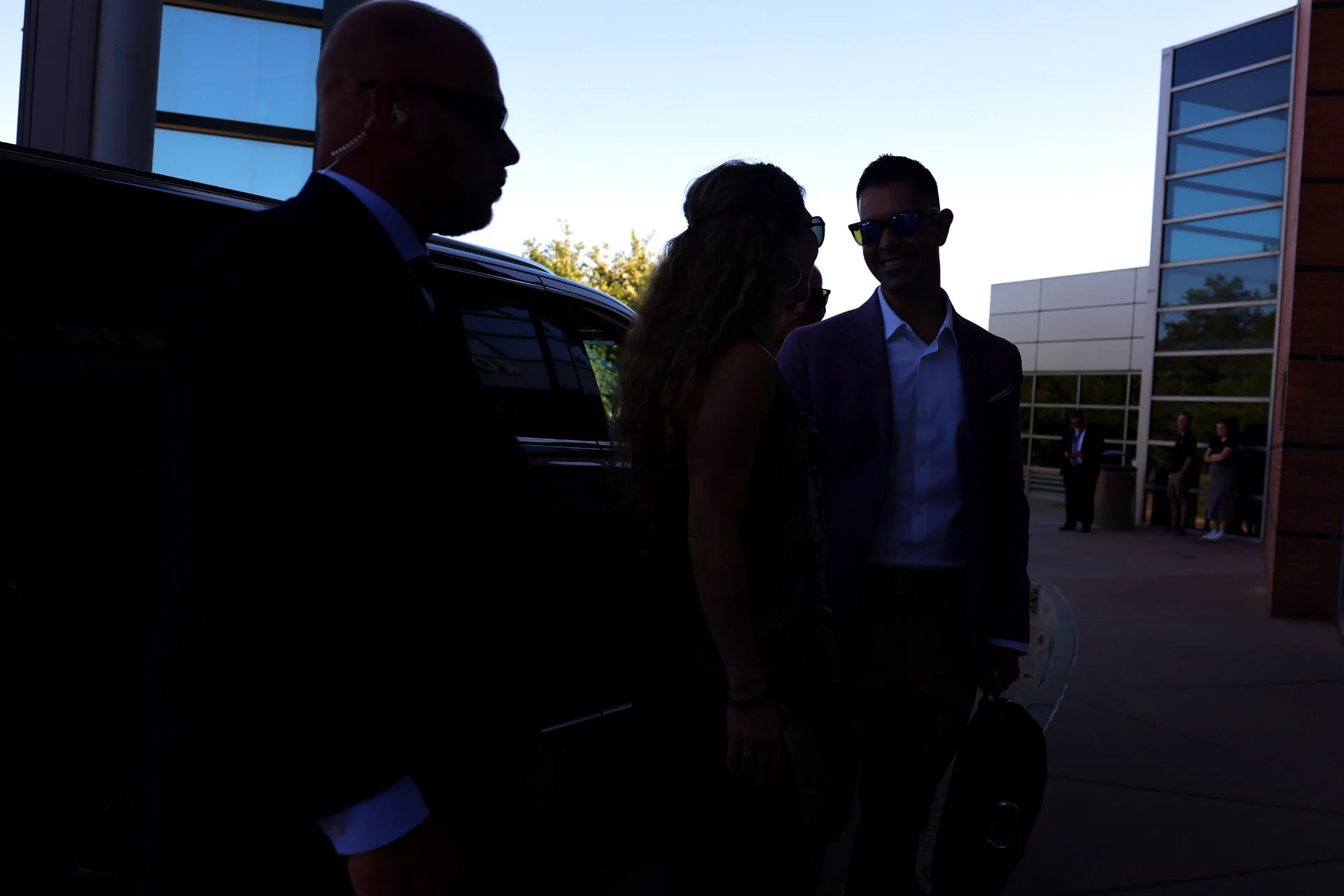
The traveler's own side most often exposes a Mexico itinerary through geotagged family photos, posts from named resorts, and real-time check-ins. Briefing, rather than technology, is the defense:
- Family members agree before departure: no real-time posts. Photo sharing happens after the trip, or on private channels only.
- Adult children get the briefing too. They are usually the largest exposure source.
- Executive assistants and family office staff who manage calendars and travel keep itineraries on named-recipient channels only.
Secure Transportation: What "Good" Looks Like
A Mexico secure-transportation program for an executive principal includes, at minimum:
- Vetted driver with verifiable references and clean background.
- Vehicle staged and inspected before pickup.
- Route planned with primary and alternate.
- Communications with the protective team or home-side operations cell throughout the movement.
- A clear protocol if the route is disrupted, the vehicle is followed, or the principal needs to be re-routed.
For high-profile principals, an in-vehicle protective agent (PPO-equivalent, locally licensed) accompanies the driver. For most corporate travel, the driver-and-vehicle posture with remote protective intelligence is appropriate.
When to Engage AMERINE
We engage on Mexico travel in three patterns:
- One-off business travel: 2- to 5-day engagements for corporate executives or family-office principals.
- Recurring corporate programs: standing arrangements for companies with regular Mexico travel, manufacturing, energy, financial services.
- Family travel: leisure and event travel for UHNW families to Cabo, Riviera Maya, or recurring family destinations.
Our Texas office runs Mexico work in coordination with vetted in-country operators. Throughout the engagement, the principal has a single point of accountability: Scott or our operations lead.
Contact us or call (281) 799-1877 to discuss a specific trip.
---
This article is general travel-security planning guidance and is not legal, immigration, or law enforcement advice. Travelers should consult the current U.S. State Department Mexico advisory, OSAC reporting, and qualified in-country counsel for circumstances specific to their travel.