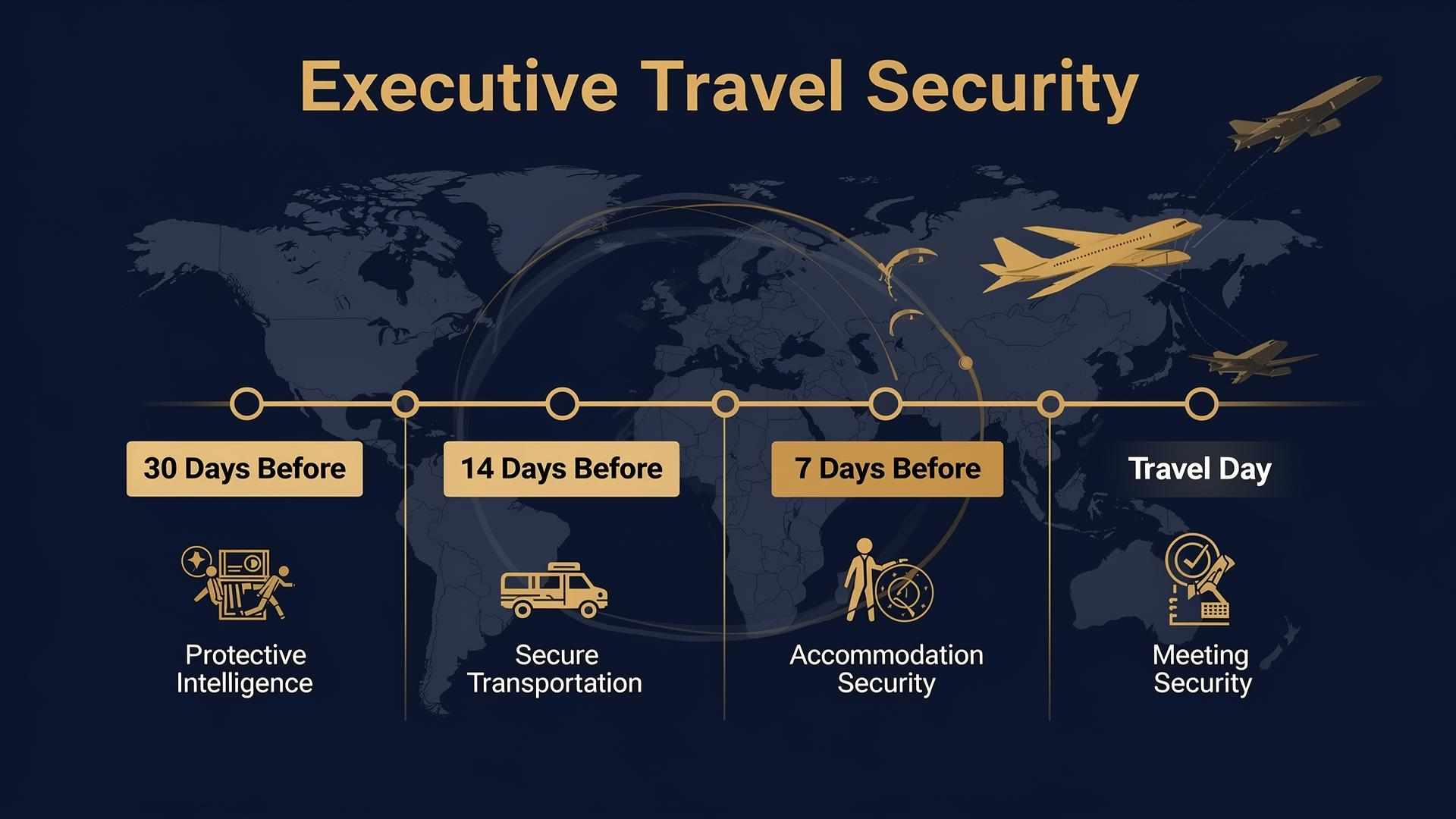
Spring break feels far off in January. That's exactly why January is when the planning should start. A family trip in March runs on a dozen small decisions, and most of them are easier to make with ten weeks of lead time than with ten days. This calendar walks through what to settle each month so the week itself stays quiet.
January: the advance call
Start with one call between the family's point person and whoever is handling security and logistics. Keep it short and practical. You're not building the whole plan yet. You're answering three questions that shape everything after.
Where does the car wait? Arrival is the moment a family is most visible and most distracted. Kids are tired, bags are everywhere and everyone is looking at their phones. Decide now where the vehicle stages, who meets you and how the driver confirms it's really you. A quiet pickup with a code word beats a name board in the arrivals hall.
What happens if the flight shifts? Spring break flights move. Weather, crew timing and connections all play a part. Agree on who watches the flight, who updates the driver and what the fallback is if you land three hours late or a day early.
Who answers at 2 AM? Something will come up at an odd hour. A child gets sick, a door code fails or a plan changes overnight. Name the one person you call, and make sure they know they're the one.
Write the answers down. That one page becomes the backbone of the trip.
February: itinerary privacy
February is about who knows what. A full itinerary in too many inboxes is one of the easiest ways for a family's movements to leak.
Make a short list of people who get the full plan. Usually that's the parents, the security lead and maybe one assistant or household manager. Everyone else gets only the piece they need. The driver needs pickup times and addresses. The hotel needs arrival dates. The kids' friends back home don't need anything until you're back.
A few habits help a lot:
- Hold off on posting trip photos until after you've left a location.
- Turn off location sharing on social apps for the week.
- Talk with older kids about why the family keeps travel plans offline. Frame it as a family habit, not a scare.
- Use one shared document for the plan instead of forwarding versions by email.
This is also the month to finish passports, travel documents and any medical notes. If anyone takes prescriptions, pack enough for a delayed return and keep it in carry-on bags.
March: the final route check and the return trip
Two to three weeks out, check the plan against the real trip. Confirm flight times, the pickup point, the route from the airport to where you're staying and a second route if the first one is slow. Check how long each drive actually takes at the hour you'll be on the road.
Then look at the days themselves. Where does the family split up? Who goes with whom? What's the meeting point if someone gets separated in a busy place? Keep it simple enough that a ten-year-old could repeat it back.
Don't skip the return trip. Families plan the arrival carefully and then wing the trip home. Checkout, the drive back to the airport and the late-night arrival at your home airport all deserve the same care. Somebody should know when you're expected home and what to do if you're not.
During the week
If the planning was done well, the week should feel uneventful. The point person checks in once a day, the driver knows the schedule and changes go through one person. When the day changes, and on spring break it usually does, the plan bends instead of breaking.
After you're home
Every AMERINE engagement ends with a full threat assessment. We look at what changed during the trip, what got exposed and what the next trip should do differently. For families who travel every year, that review is what makes next spring easier than this one.
Where to go from here
If your spring travel includes international stops, our guide to executive travel security for spring international trips covers the extra planning abroad. If a college student in the family is studying overseas or meeting you somewhere, see how we support students abroad and their families.
AMERINE is Texas-licensed (Private Security License No. C31012001); operating nationally and internationally through vetted, licensed local partners where required. Scope and terms are confirmed in writing. To start your January call, request a private consultation.