Tour Security for Musicians and Touring Artists
For musicians and touring artists, tour security covers physical security and executive protection at venues, hotels and public appearances, as well as during travel. Before staffing begins, artist management, tour managers and existing security teams need to agree on who handles venue coordination, individual protection and transportation at each stop.
Pre-engagement discussions cover tour-security planning, not instructions for conducting protective operations. Scope, personnel, destination requirements and availability are confirmed in writing.
Define the Tour Security Planning Scope
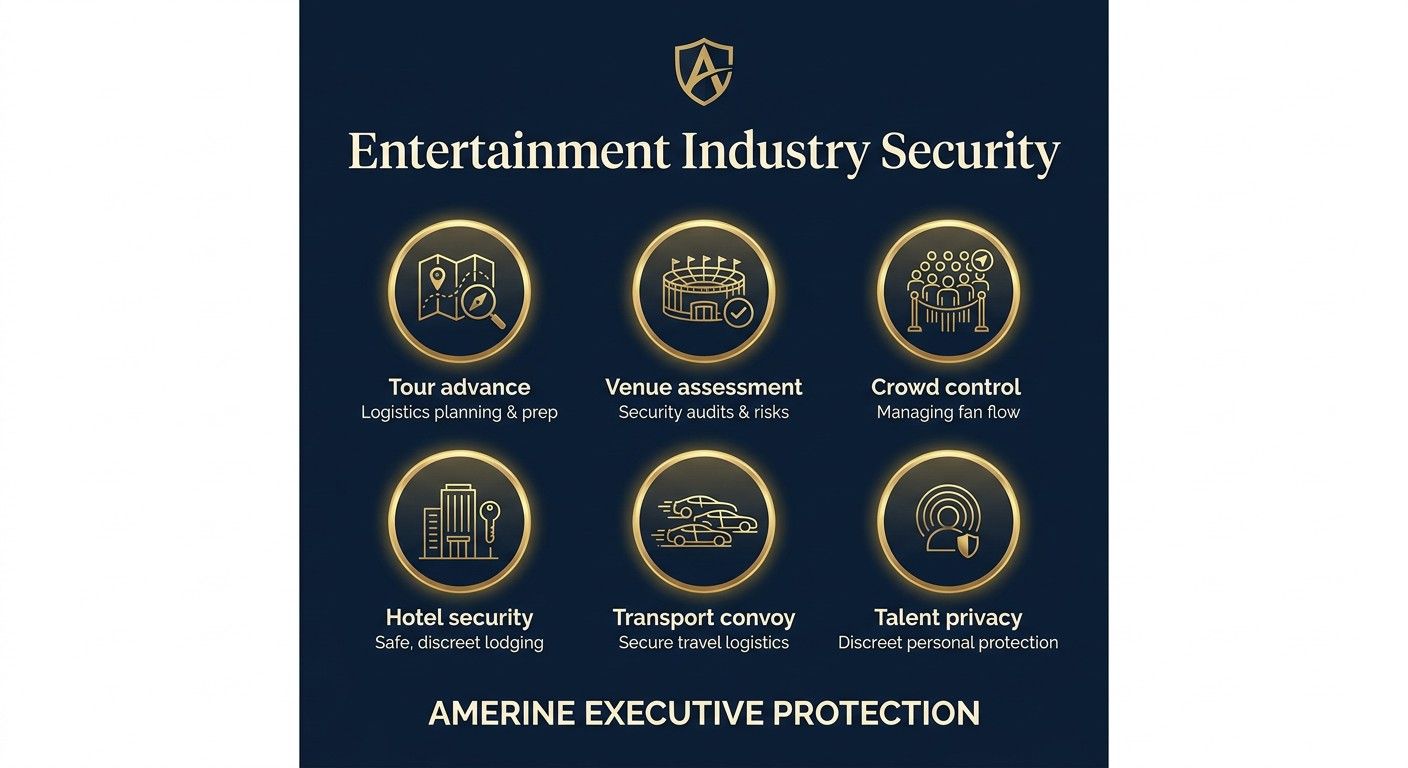
The existing planning framework brings together four areas. None should be assumed to be included automatically:
- Venue coordination: Clarify what venue security provides and which artist-specific responsibilities need a separate agreement.
- Hotel requirements: Discuss privacy and coordination requirements at a high level, without sharing room assignments or private arrival details in a web inquiry.
- Transportation: Identify whether ground transportation and inter-city travel require separate planning or support.
- Artist-specific requirements: Discuss the artist's public exposure and whether assessment, close protection or intelligence work should be evaluated separately.
Different parts of the scope fall to Event security services and executive protection. To distinguish venue responsibilities from protection for the individual, use the existing EP vs. Event Security Checklist.
For Texas stops on your tour, use executive protection in Dallas–Fort Worth and executive protection in Houston as planning references. Neither confirms personnel or availability. To evaluate provider leadership, review AMERINE's founder background and former Secret Service protection together with the proposed scope and jurisdiction-specific requirements.
Questions to Ask Music Tour Security Companies
When you compare music tour security companies, focus on the responsibilities each proposes, rather than its title or team size. Useful questions for buyers include:
- What assessment comes before a staffing recommendation?
- Which venue, hotel, transportation and individual-protection responsibilities are included, and which are excluded?
- Who coordinates with artist management, the existing security team and each venue?
- How are jurisdiction-specific licensing, personnel and destination requirements verified?
- Which support hours, reporting and handoff responsibilities will be confirmed in writing?
- How will privacy and necessary information-sharing be agreed before sensitive material is provided?
- What changes to the schedule or destination require another scope review?
You'll find a provider-evaluation checklist and scope-of-work template in the existing Executive Protection Buyer's Guide. Use the guide together with a tour-specific discussion, but don't treat it as confirmation that a provider is available or suitable for every stop.
Tour Security and High-Profile Artist Appearances
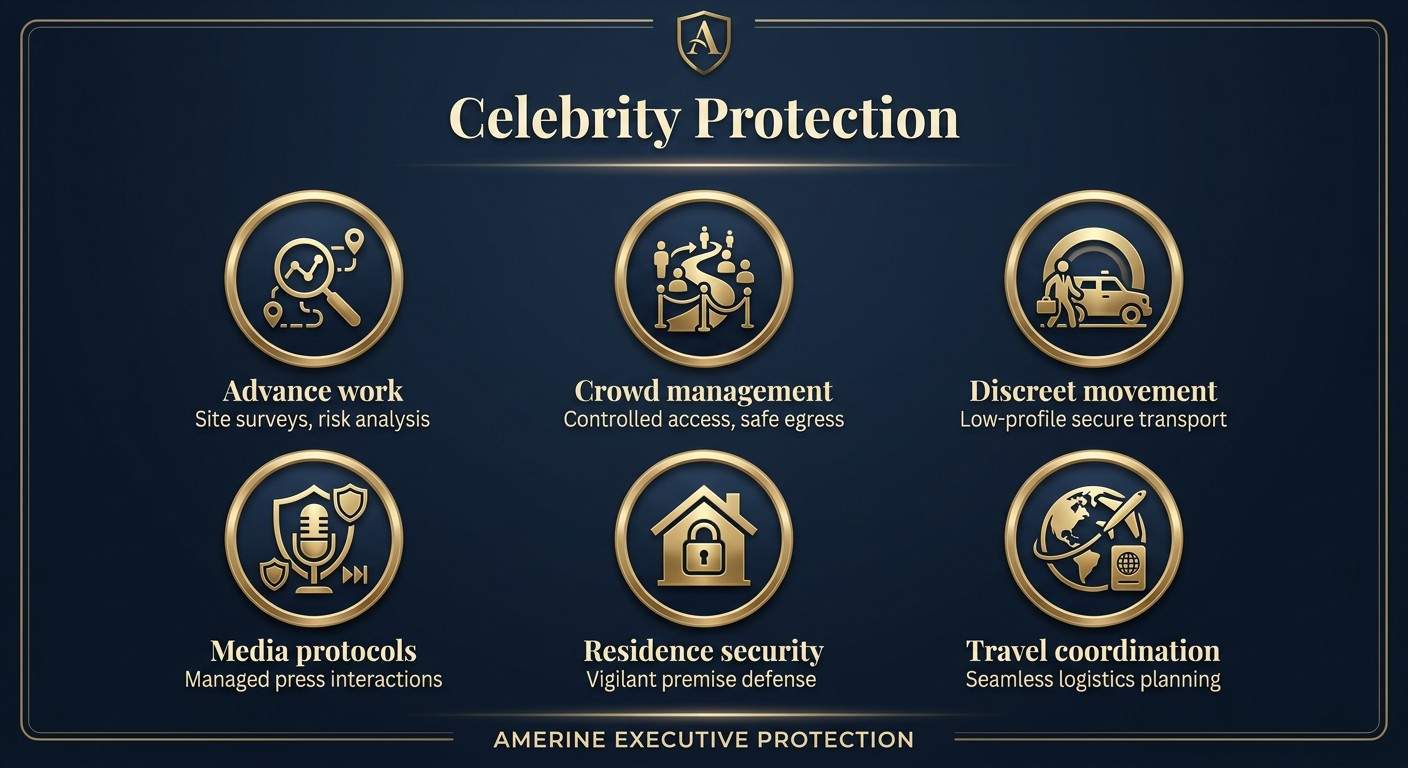
A festival appearance, gala or public engagement may belong to a wider tour rather than stand alone as an event. Before and after that appearance, individual protection should be distinguished from the venue's responsibilities. Management should agree on who owns each part of the proposed work and where the event fits within the travel program.
Review high-profile event-security planning, secure transportation and travel security as related scopes, not as an automatically bundled service.
International Tour Stops, Including Thailand
Destination determines how international requests are evaluated. For a proposed tour that includes Thailand, use the existing Thailand executive protection and travel-security page as the destination planning reference. Having a country page doesn't establish an AMERINE office, locally staffed coverage or available personnel.
Before any engagement, get written confirmation of local licensing, providers, transportation, support responsibilities and availability. Arrangements agreed for one country can't be assumed to carry over to another.
Prepare a Tour Security Inquiry
Start by sharing your role, the proposed tour or appearance type, approximate dates, destinations and the support you'd like evaluated. Include whether an existing security team or venue contact is already involved. That information helps frame the scope discussion without exposing an artist's private movements.
Keep artist-identifying details, private itineraries, hotel assignments and sensitive threat information out of the initial web inquiry. During consultation, agree on appropriate arrangements for sharing information.
Discuss tour security planning with AMERINE. Scope and terms are confirmed in writing.
How Tour Security Fits With Existing Arrangements
A security lead, production team and venue contacts are already in place on many tours. A protective provider should work around those arrangements, not replace them by default. Management should agree before any engagement on who leads each responsibility, who communicates with each venue and how handoffs work as the artist moves from one environment to another.
Clear responsibilities matter most during arrivals, departures, hotel transitions and travel days between cities. At these points, venue security ends, and individual protection, secure transportation or travel planning may need to begin. Each is discussed separately within the scope, rather than treated as covered by default.
Matching the Scope to the Tour
Support needs vary by tour: a short run of domestic appearances raises different planning questions than a festival season or a multi-country tour. For some artists, individual protection is needed only at selected appearances. Others need a wider program that also considers protective intelligence, transportation and destination review.
Start by assessing the artist's public exposure and the tour's schedule, then put the scope in writing with clear inclusions and exclusions. Review that scope again if the schedule or destinations change. See touring artist security for a broader overview of this planning for artists and their teams.
Frequently Asked Questions
What does tour security for a musician include?
Tour security may include venue coordination, hotel requirements, transportation and artist-specific protection. Each responsibility is evaluated for the tour and confirmed in writing; none is included automatically.
How is tour security different from venue security?
Venue security manages the venue's responsibilities. Tour security focuses on the artist across the wider schedule, including arrivals, departures, hotels and travel between stops.
What should I ask music tour security companies?
Ask what assessment comes before a staffing recommendation, which responsibilities are included and excluded, who coordinates with each venue, how licensing and personnel are verified, and what is confirmed in writing.
Can tour security cover international stops?
International requests are evaluated by destination. Local licensing, personnel, transportation and availability must be confirmed in writing for each country before any engagement.
What should I include in a tour security inquiry?
Share your role, the tour or appearance type, approximate dates, destinations and the support you want evaluated. Do not include artist-identifying details, private itineraries, hotel assignments or threat details in the initial web inquiry.
---
This article is general tour-security planning guidance. It is not legal, venue or law-enforcement advice. Specific responsibilities should be coordinated with artist management and the relevant venue and professional advisers.