2026 Security Trends: What Executive Protection Clients Should Expect
Executive protection is changing quickly as 2025 ends and 2026 begins. For UHNW principals and security professionals, new threats, new technology, and shifting client expectations are reshaping what to expect from protective details.
How the Threats Are Changing
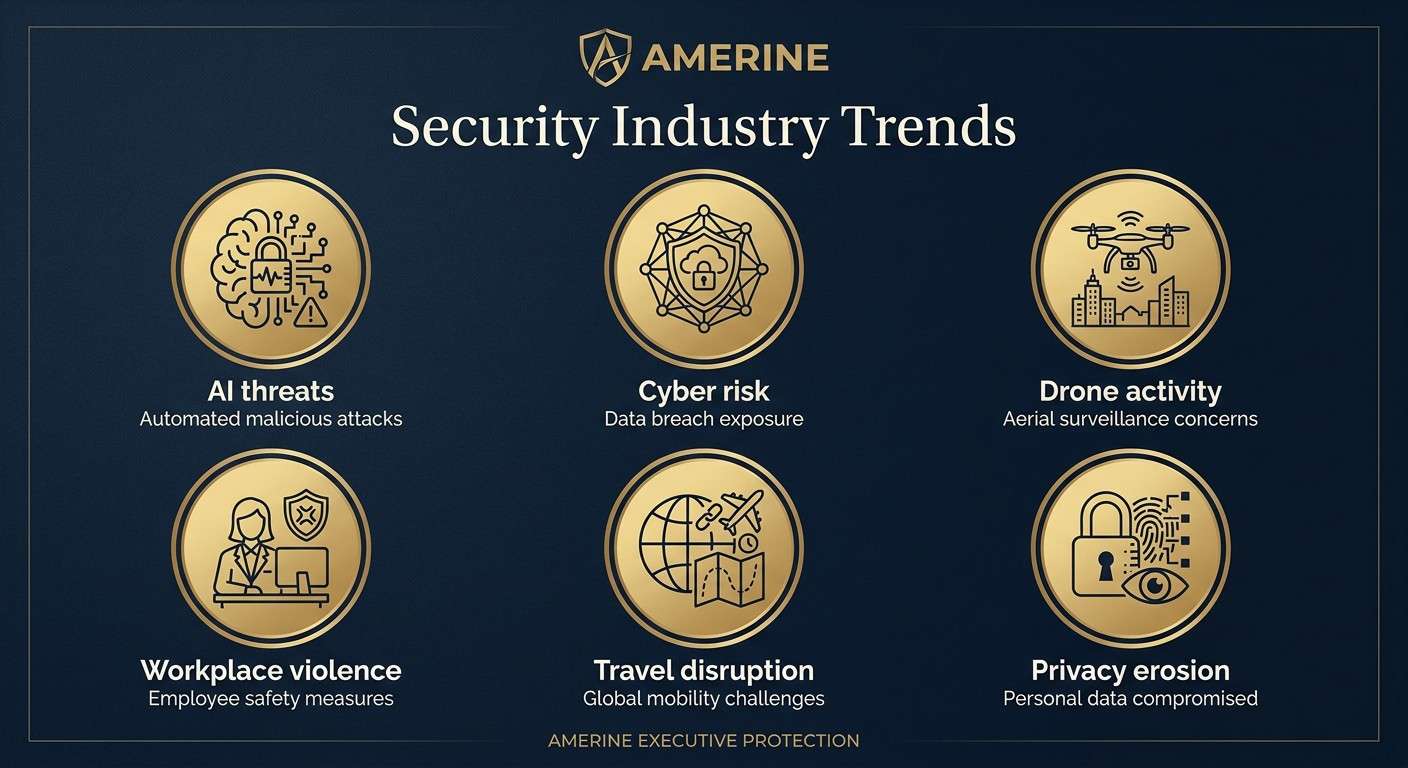
Corporate leaders are more visible and face greater direct risks. Activist campaigns target individual executives, while social media harassment and doxxing add to their exposure. Political polarization affects business leaders, and wealth inequality drives opportunistic threats.
Global instability affects both travel and overseas operations. Regional conflicts create no-go zones, and economic tensions affect corporate travel. Severe weather and climate events disrupt travel routes, while political instability reaches regions that were previously stable.
Threat actors gain new reach through digital tools, including AI-generated media used for manipulation and commercial surveillance technology available to the public. Drone-based surveillance and direct threats add to the picture, alongside attacks that combine cyber and physical methods.
Technology Trends in Protection
Artificial intelligence is changing protective operations through predictive threat analysis and pattern recognition across threat feeds. It also supports automated open-source intelligence gathering and natural language processing for early threat detection.
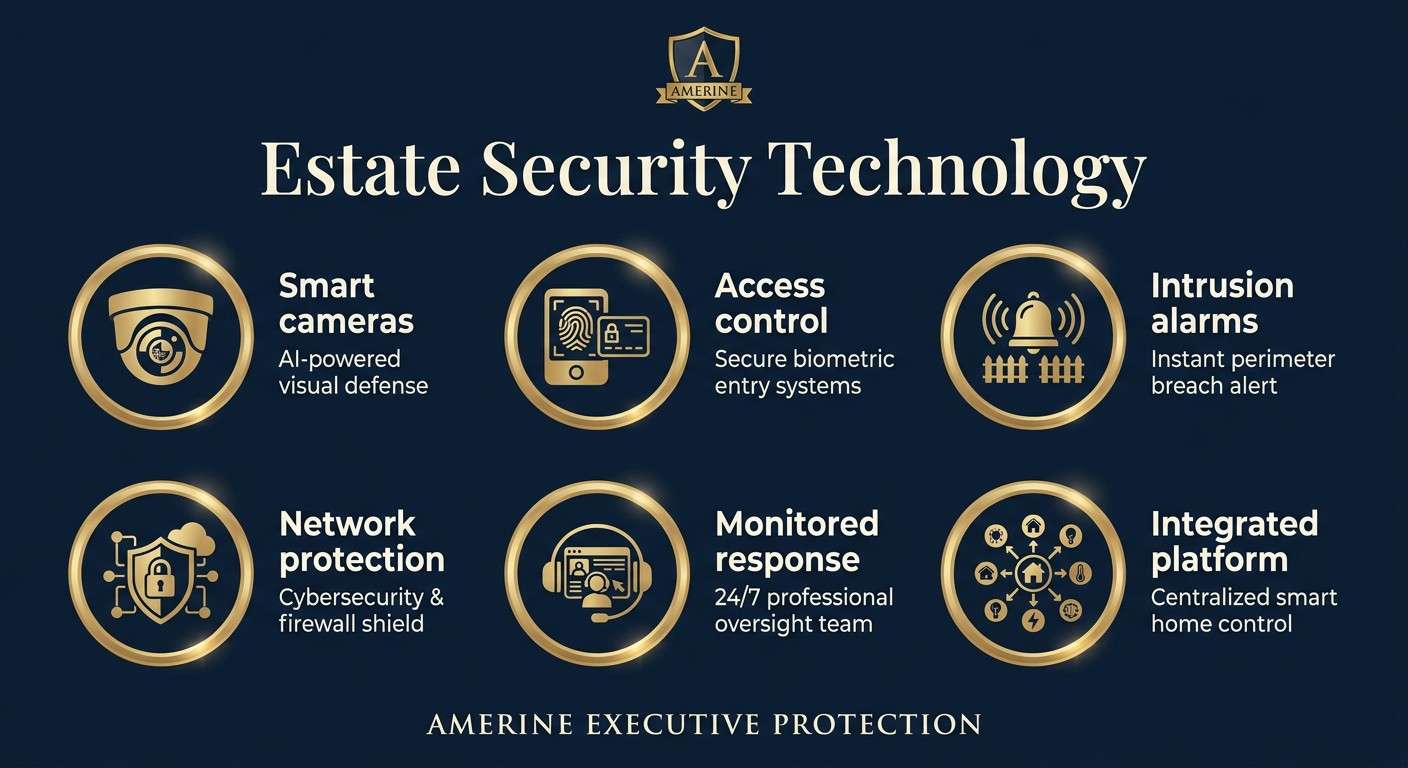
Security layers are becoming better integrated through unified platforms for team coordination and real-time information sharing between details. Automated alerting and response protocols, along with data-driven decision support, are part of that connection.
Modern secure communication tools include encrypted messaging and tactical coordination, backed by satellite networks and redundant connectivity. Field teams also have real-time translation tools, while biometric access and authentication are part of these advances.
Drones are both a threat and an operational tool. Counter-drone systems provide detection and mitigation, while drones support aerial reconnaissance during advance work, overhead monitoring for estates and public events, and specialized logistics and delivery.
Operational Trends
Protection is moving beyond purely physical, reactive details toward intelligence-led work. That shift includes rigorous protective intelligence programs, continuous threat monitoring, data-driven risk assessments, and planning that puts prevention first.
Integrated security programs connect work that would otherwise sit in separate silos. They combine physical and cyber security, coordinate coverage across estates, transit, and close protection, and provide single-provider accountability with clear operational reporting and oversight.
Low-profile operations pair high capability with a smaller visible footprint around the principal. Plainclothes teams have remote technology behind them, vehicles blend in, and details stay less visible, with a focus on the principal's privacy in public spaces.
Wellness integration makes support for everyday life part of protection. It includes mental health awareness within security teams and thorough advance work to lower client stress. Preserving quality of life and personal schedules also matters, with practical approaches tailored to family routines.
Client Expectations
Clients expect their details to show clear business discipline through measurable outcomes, performance metrics, and transparent reporting and governance. They also expect a single point of contact and thorough documentation for fiduciary and corporate boards.
Reliable international coverage calls for consistent protection standards across destinations and vetted global partner networks. Regional expertise, local language capability, and coordinated multi-country itineraries round out that global capability.
Technology integration brings mobile applications for travel coordination into operations, along with real-time tracking and automated status alerts. Modern operational tools also include threat analytics, insights into patterns, and clean digital communication channels.
Environmental priorities are showing up in operational choices, from carbon-conscious travel and route planning to ethical vendor sourcing. Sustainability awareness also includes respect for the impact on local communities and smarter operational logistics to reduce waste.
Regional Outlook for 2026
In North America, executives continue to face risks tied to public visibility, alongside stricter legal definitions around corporate duty of care. Major political events place heavy demands on security, and planning must account for extreme weather disruptions.
Regional tensions are reshaping travel security in Europe, where strict data privacy laws affect intelligence work. Cross-border coordination across the EU brings logistical demands, alongside concerns about energy security and infrastructure.
Asia-Pacific's expanding UHNW population is driving demand for protection, while local security infrastructure varies between countries. Political transitions in key financial hubs and rapid adoption of new surveillance and detection tools also shape regional conditions.
Corporate and executive travel remains steady in the Middle East, though regional stability varies widely. High-profile international summits and events bring their own demands, and ultra-luxury travel security is growing.
Latin America continues to face kidnapping and extortion risks, along with political and economic volatility in major markets. Corporate demand for secure transport is rising, and medical readiness and extraction planning remain essential priorities.
Preparing for 2026
As a UHNW client, take stock of what your current protection detail actually covers and identify gaps where modern tools could help. Assess your provider's responsiveness and performance standards, and consider bringing vendors under one lead firm.
For your family office, update internal security policies and reporting, then review fiduciary documentation for security spending. Check that protective coverage includes all family members, including dependents, and audit upcoming international travel plans.
For your corporation, audit duty of care protocols for senior leaders and update corporate executive protection policies. Review which security data reaches the board, and test your current threat assessment and response capabilities.
The Year Ahead
Executive protection will keep shifting throughout 2026. To stay ahead, you'll need proactive, intelligence-led approaches, smart use of technology without relying too heavily on gadgets, quiet service focused on the client, and clear accountability backed by measurable standards.
Looking Forward Together
AMERINE remains focused on providing clients with quiet, high-standard protection as executive protection adapts. Get in touch with our team to talk through your security requirements for 2026 and beyond.