The Business Case for Active Shooter Preparedness
Workplaces rank among the most common locations for active shooter incidents, which the FBI reports occur an average of 61 times per year in the United States. These incidents are statistically rare in workplaces, but they’re among the most devastating security events an organization can experience.
Being prepared means having a plan and training your people to give them the best chance of survival if the worst happens. It doesn’t mean living in fear.
The Emergency Action Plan (EAP)
Every business should put a written Emergency Action Plan in place. It needs to cover:
Threat Recognition
- Pre-attack indicators and warning signs
- Employee reporting protocols
- Coordination with the threat assessment team
- Clear guidelines on when to contact law enforcement
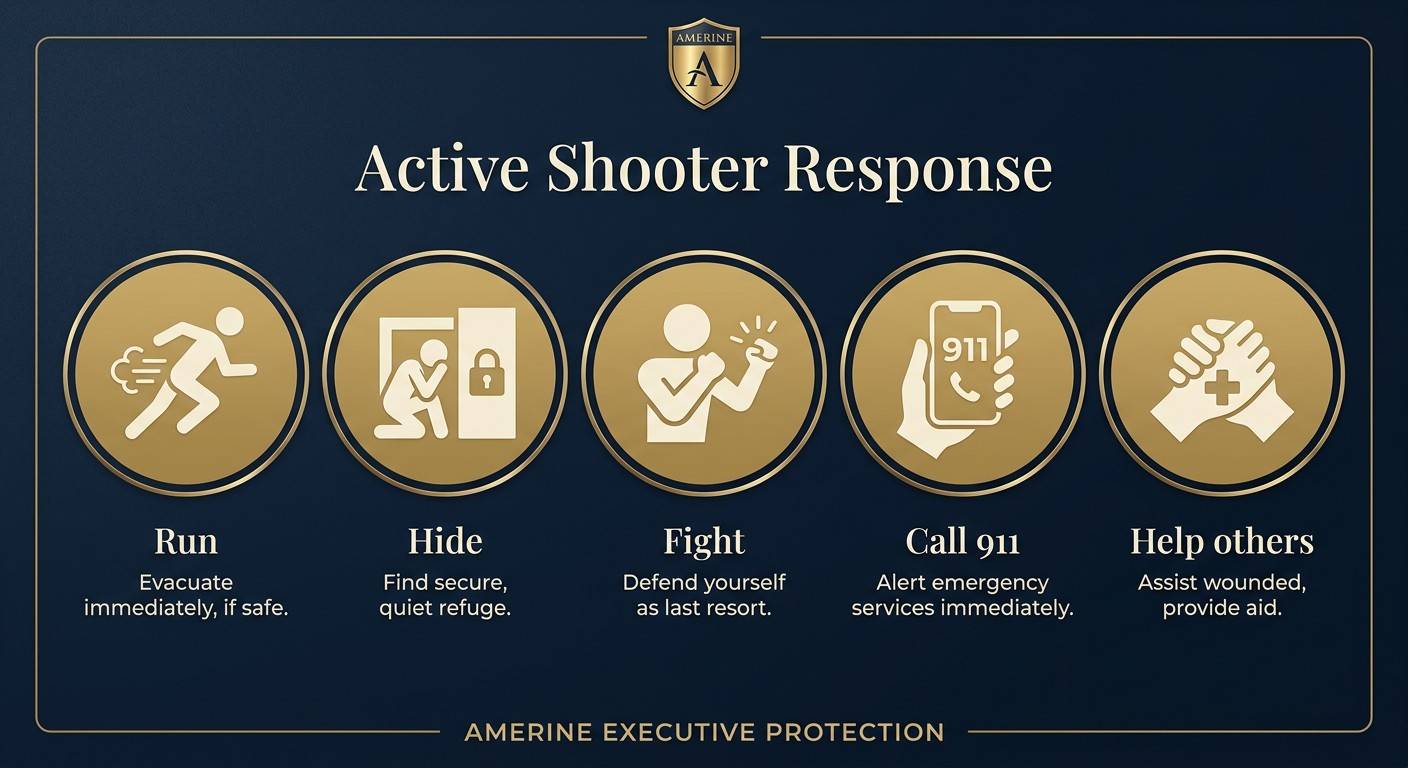
Run-Hide-Fight Response Protocol
RUN (Evacuate) Know your exits by identifying at least two from every workspace. Leave your belongings behind, help others escape if you can, and prevent people from entering the danger area. Once you’re safely away, call 911.
HIDE (Shelter in Place) Find a room you can lock or barricade, then turn off the lights and silence your phones. Hide behind large objects for additional protection. If you’re in a group, spread out rather than clustering together. Stay quiet while you wait for law enforcement.
FIGHT (Last Resort) Fight only if your life is in imminent danger and you have no other option. Act with commitment and aggression, using available objects as improvised weapons. Work as a team if possible and attempt to incapacitate the shooter.
Law Enforcement Interaction
When law enforcement arrives:
- Show empty hands
- Follow all commands
- Do not point or gesture
- Keep your hands visible at all times
- Move in the direction officers indicate
- Expect to be temporarily detained and searched
Facility Preparedness
Physical Security Measures
- Access control at all entry points
- Visitor management and badge systems
- Lock capabilities on interior doors
- CCTV coverage of common areas and entry points
- Public address system for emergency notifications
Communication Systems
- Mass notification system (text, email, PA)
- Clear communication chain of command
- Predetermined code words if needed
- Integration with local 911 dispatch
- Social media monitoring during events
Training Program
Annual Training for All Employees
- Active shooter awareness and recognition
- Run-Hide-Fight protocol review
- Evacuation route familiarization
- First aid and Stop the Bleed basics
- Reporting suspicious behavior
Tabletop Exercises for Leadership
- Scenario-based decision-making exercises
- Communication protocol testing
- Coordination with law enforcement representatives
- After-action review and plan updates
Physical Drills
- Evacuation drills (minimum annually)
- Lockdown/shelter-in-place drills
- Communication system testing
- First responder coordination exercises
Post-Incident Response
Immediate (Hours)
- Account for all personnel
- Medical triage and hospital coordination
- Secure the scene for law enforcement
- Initial family notification
- Media management
Short-Term (Days to Weeks)
- Employee assistance program activation
- Group and individual counseling
- Facility repair and reopening planning
- Ongoing communication with employees and families
- Cooperation with investigation
Long-Term (Months)
- Continued mental health support
- Plan review and updates
- Memorial and recognition as appropriate
- Legal and insurance coordination
- Security program enhancements
Contact AMERINE for active shooter preparedness training and emergency action plan development tailored to your facility and organization.