What Is Counter-Surveillance?
Detecting, identifying, and neutralizing surveillance directed against you is the work of counter-surveillance. The term may sound dramatic, but executives and high-net-worth individuals face surveillance more often than most people realize.
Every protective operation we ran in the Secret Service depended in part on counter-surveillance. We kept dedicated counter-surveillance teams focused on a single job: detecting anyone watching, following, or photographing the protectee.
Who Conducts Surveillance: and Why?
Criminal Pre-Operational Surveillance
Criminals conducting surveillance before a robbery, kidnapping, or home invasion. They are assessing routines, security measures, and vulnerabilities.
Competitive Intelligence
Business competitors or foreign governments gathering information about an executive's meetings, associates, and activities.
Litigation-Related Surveillance
Private investigators hired by opposing parties in lawsuits, divorce proceedings, or business disputes.
Stalkers and Fixated Individuals
People obsessed with the target who conduct surveillance to learn routines and identify approach opportunities.
Media and Paparazzi
Photographers and journalists tracking movements for publication.
Indicators of Surveillance
The Same Person in Multiple Locations
The most reliable indicator. If you notice the same individual near your home, your office, and a restaurant you visit, that is not coincidence.
Unusual Vehicle Behavior
- A vehicle parked in the same spot repeatedly with an occupant
- A vehicle that matches your turns and stops
- Multiple vehicles that seem to coordinate movements around you
Electronic Indicators
- Unusual battery drain on mobile devices (possible spyware)
- Strange clicking or interference on phone calls
- Unexpected devices appearing on your home Wi-Fi network
- Evidence of physical tampering with vehicles or personal items
Environmental Changes
- New construction or maintenance activity near your home or office that seems unusual
- Unfamiliar delivery vehicles parked for extended periods
- New neighbors or workers who show unusual interest in your activities
What to Do If You Suspect Surveillance
Do NOT Confront
Confronting a surveillance operative alerts them that they have been detected. This causes them to change tactics, making future detection harder.
Document
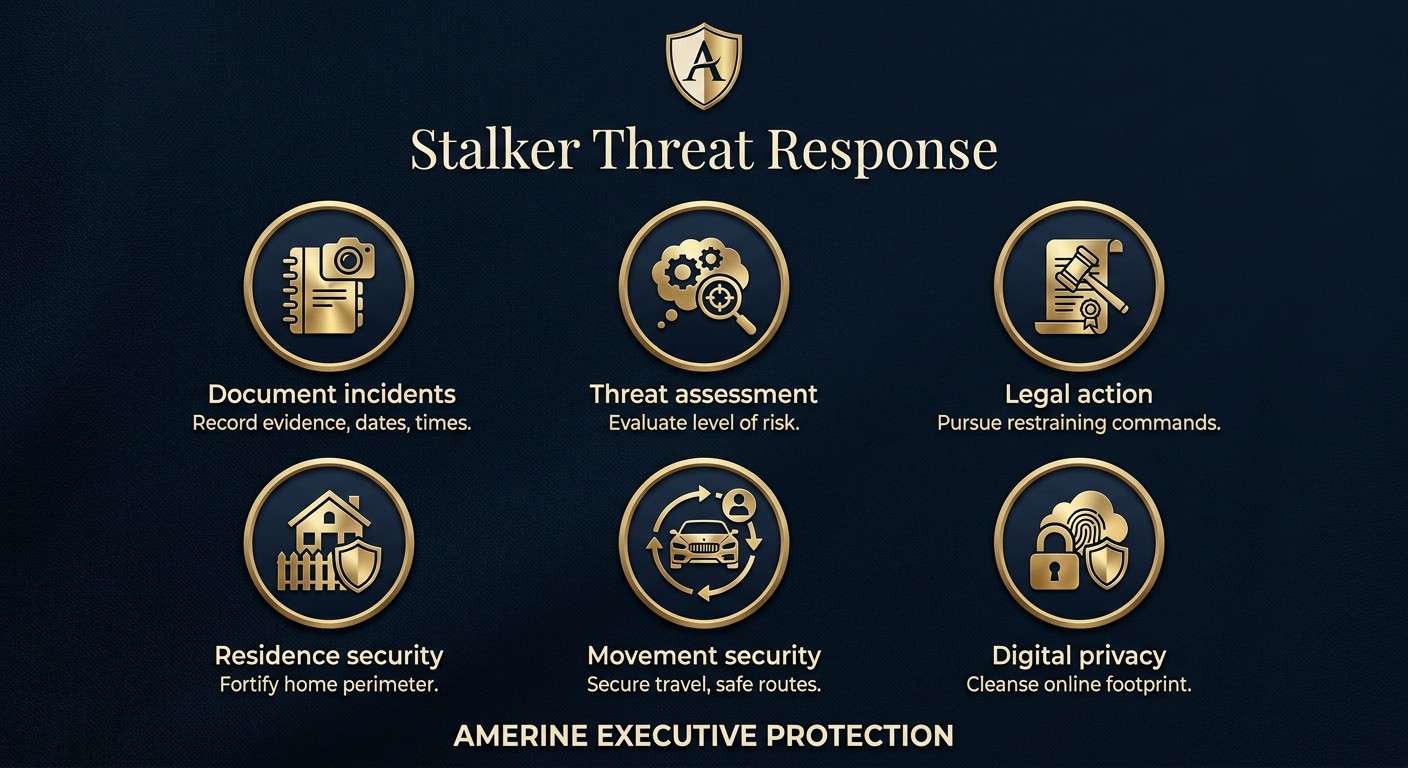
Note details: time, location, description of person/vehicle, license plate numbers, photographs if possible without being obvious.
Contact Professionals
Engage a security team experienced in surveillance detection and counter-surveillance operations. They can:
- Conduct surveillance detection routes (SDRs) to confirm or rule out surveillance
- Identify the surveillance team and their methods
- Determine who is behind the surveillance
- Implement counter-measures
Vary Your Routine
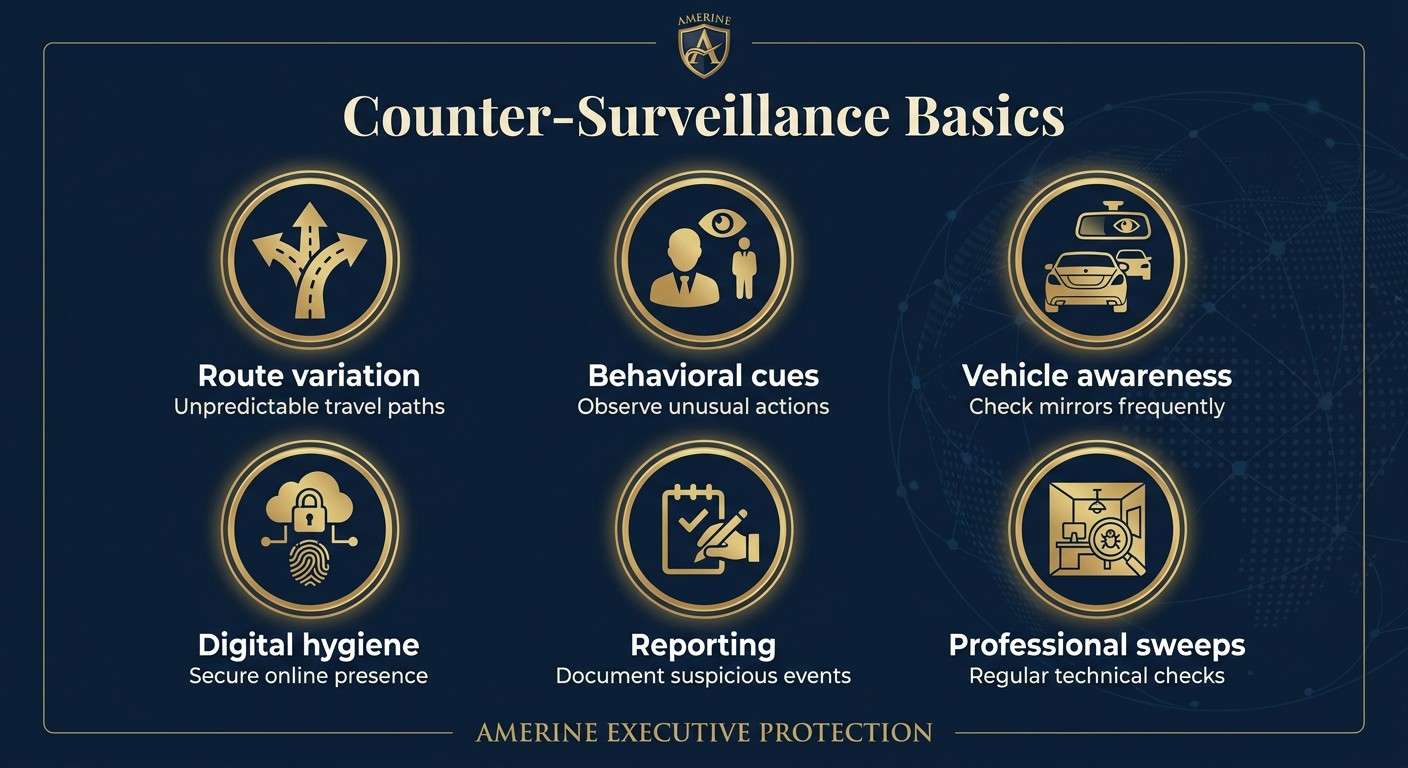
The most effective personal counter-measure is unpredictability:
- Change your daily routes
- Vary your departure and arrival times
- Use different entrances and exits
- Change your exercise and social routines
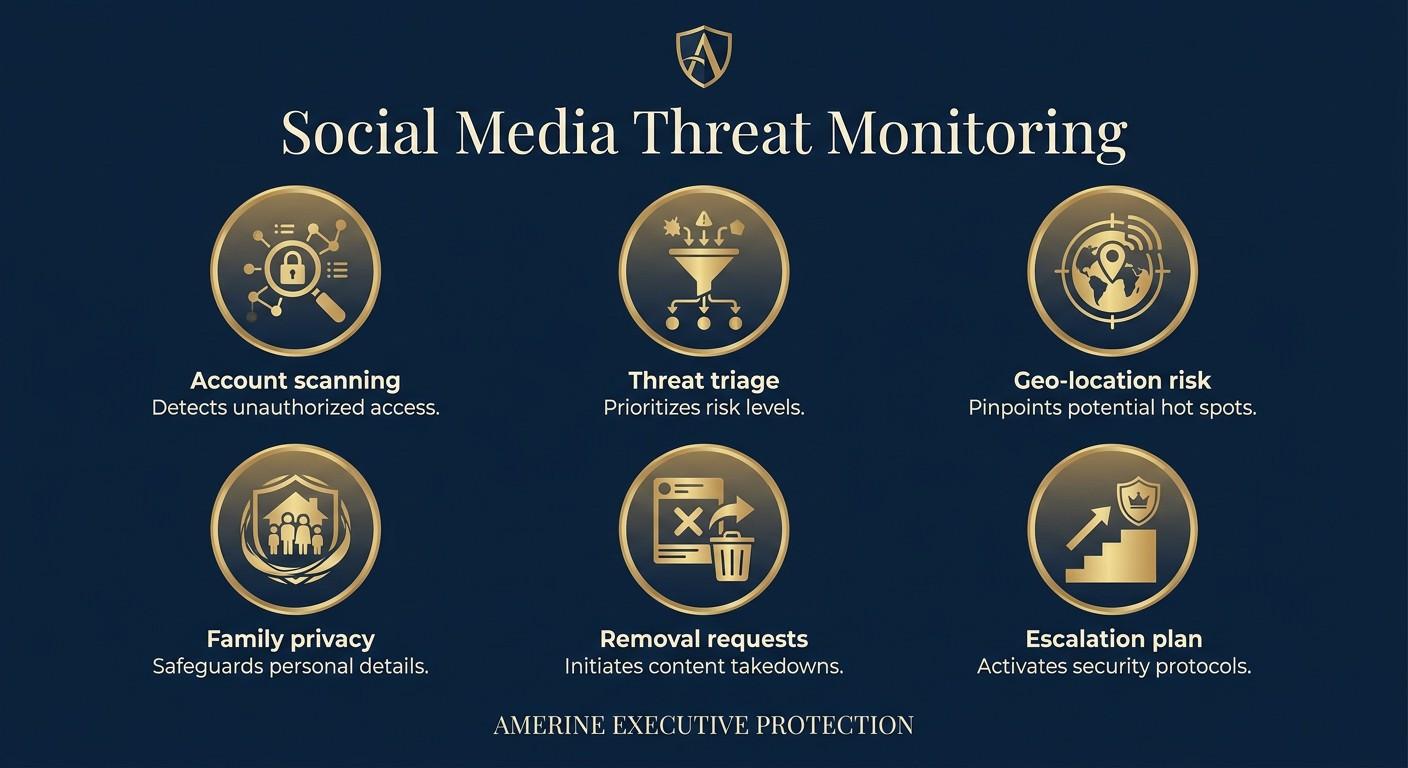
- Avoid posting real-time locations on social media
Professional Counter-Surveillance Operations
Once surveillance is confirmed, professional counter-surveillance uses Surveillance detection teams to identify and track the watchers, Technical surveillance counter-measures (TSCM) to sweep for electronic bugs, Vehicle inspections to look for GPS tracking devices, and Digital forensics to check devices for spyware. It also includes Coordination with law enforcement when criminal activity is suspected.
For counter-surveillance services, Contact AMERINE. Our former Secret Service agents specialize in detecting and neutralizing surveillance threats and are experts in that discipline.