Understanding the Stalking Threat
For high-profile individuals, executives, and public figures, stalking ranks among the most persistent and psychologically damaging threats. Unlike most security threats, which are situational, stalking is relational. The threatener develops a psychological attachment to the target, driving repeated, unwanted contact.
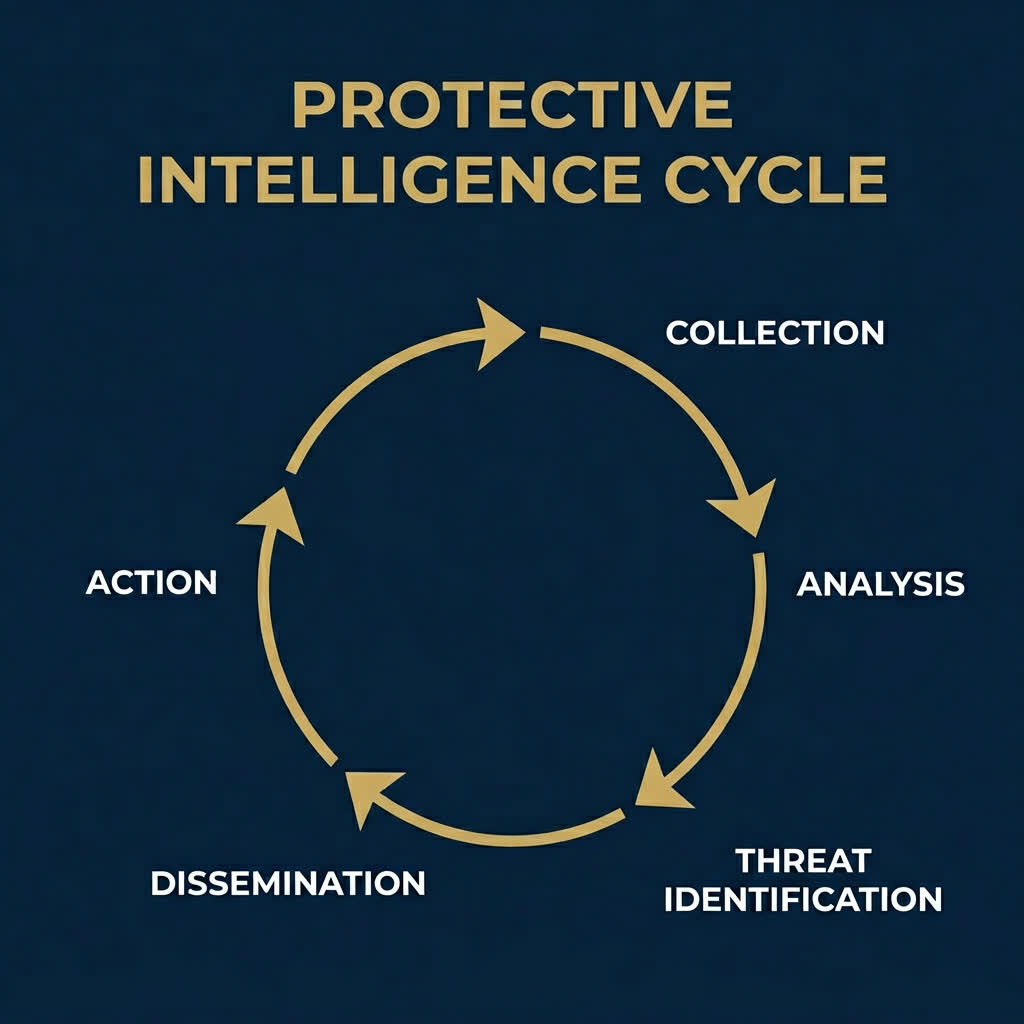
We handled hundreds of cases involving people fixated on protectees during my career in the Secret Service. Our methodology centered on tracking escalating behavior, assessing movement toward violence, and putting layered interventions in place. You can apply that methodology directly to private-sector threat management.
Types of Stalking Threats
The Rejected Stalker
Someone who had a real or perceived relationship with the target and cannot accept that it is over. This includes ex-partners, terminated employees, or former business associates.
The Resentful Stalker
Driven by a perceived injustice or grievance. They often target executives following a business dispute, lawsuit, or public controversy.
The Intimacy Seeker
Believes they have a special connection with the target. This type frequently surfaces around celebrities and public figures, where media exposure feeds a one-sided parasocial bond.
The Predatory Stalker
The most dangerous category: an individual planning an attack who conducts surveillance as part of pre-operational planning.
The Four-Level Threat Assessment Framework
Level 1: Monitoring
Unwanted contact that is unusual but not immediately threatening:
- Excessive social media engagement
- Unsolicited letters, gifts, or messages
- Appearing at public events repeatedly
- Online posts expressing fixation
Response: Document all contact, preserve evidence, establish baseline monitoring, brief the client.
Level 2: Investigation
Escalating behavior that warrants active investigation:
- Direct contact attempts (showing up at known locations)
- Threatening or disturbing communications
- Contact with family members or staff
- Evidence of surveillance or information gathering
Response: Conduct a full OSINT investigation of the individual and coordinate with law enforcement. Increase physical security measures and consider legal intervention through restraining orders.
Level 3: Intervention
Behavior indicating movement toward physical confrontation:
- Appearing at the client's residence or workplace
- Acquiring weapons or tactical equipment
- Making specific threats with timelines
- Travel toward the client from a distant location
Response: Engage law enforcement threat management units, deploy close protection, implement counter-surveillance operations, consider relocation or pattern disruption.
Level 4: Full Protection
Imminent threat requiring comprehensive protective response:
- Active surveillance of the client
- Breach of security perimeter
- Physical confrontation or attack attempt
Response: Full protective detail deployment, law enforcement partnership, potential emergency relocation, GSOC monitoring.
Digital Threat Monitoring
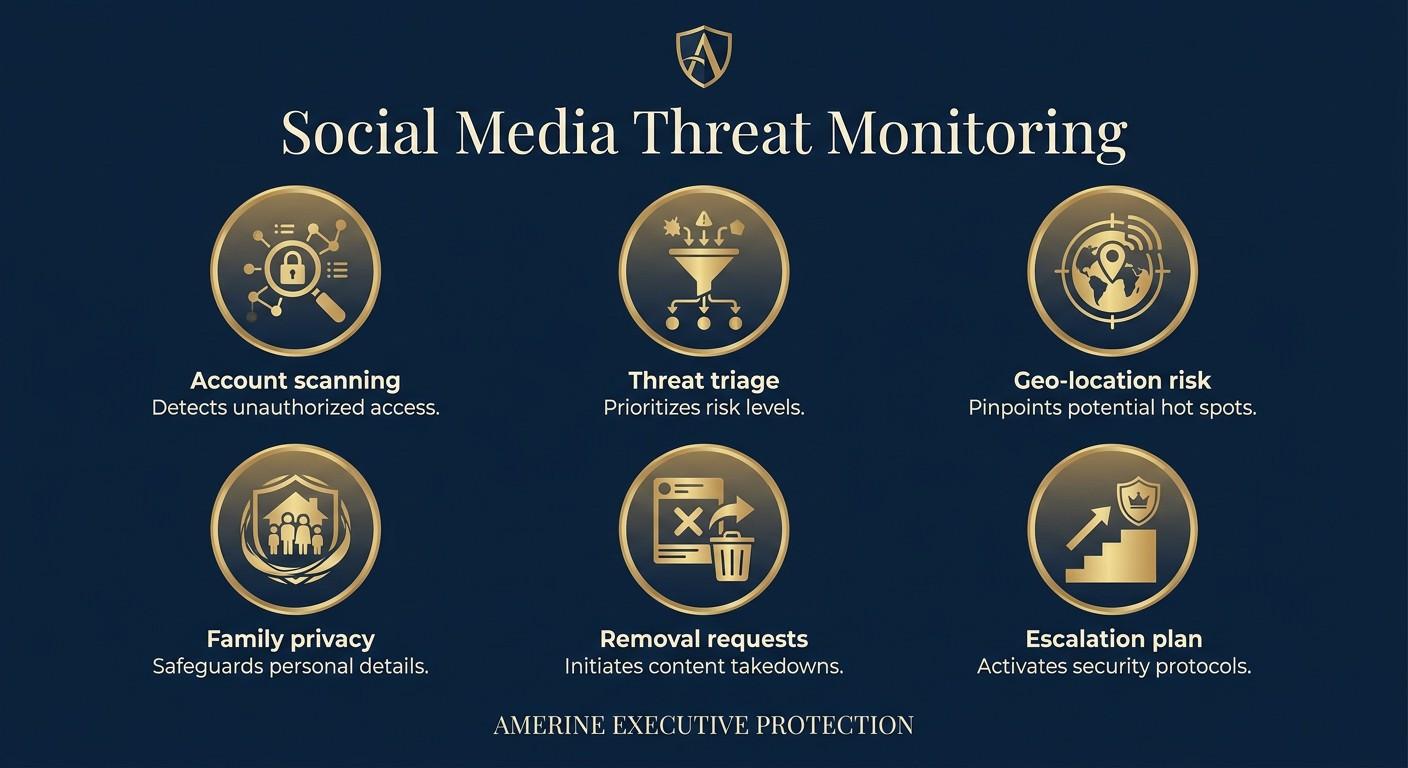
Stalking often starts online now. Effective monitoring covers social media surveillance across all platforms, dark web monitoring for exposure of personal information, and threat analysis of email and other communications. It also includes monitoring online forums and communities, running reverse image searches, and analyzing geolocation.
Legal Tools for Stalking Cases
- Restraining orders / protective orders: Court-ordered no-contact requirements
- Criminal stalking charges: Most states have specific stalking statutes
- Harassment documentation: Building a prosecutable case requires meticulous records
- Cease and desist communications: Sometimes effective for lower-level cases
What To Do If You Are Being Stalked
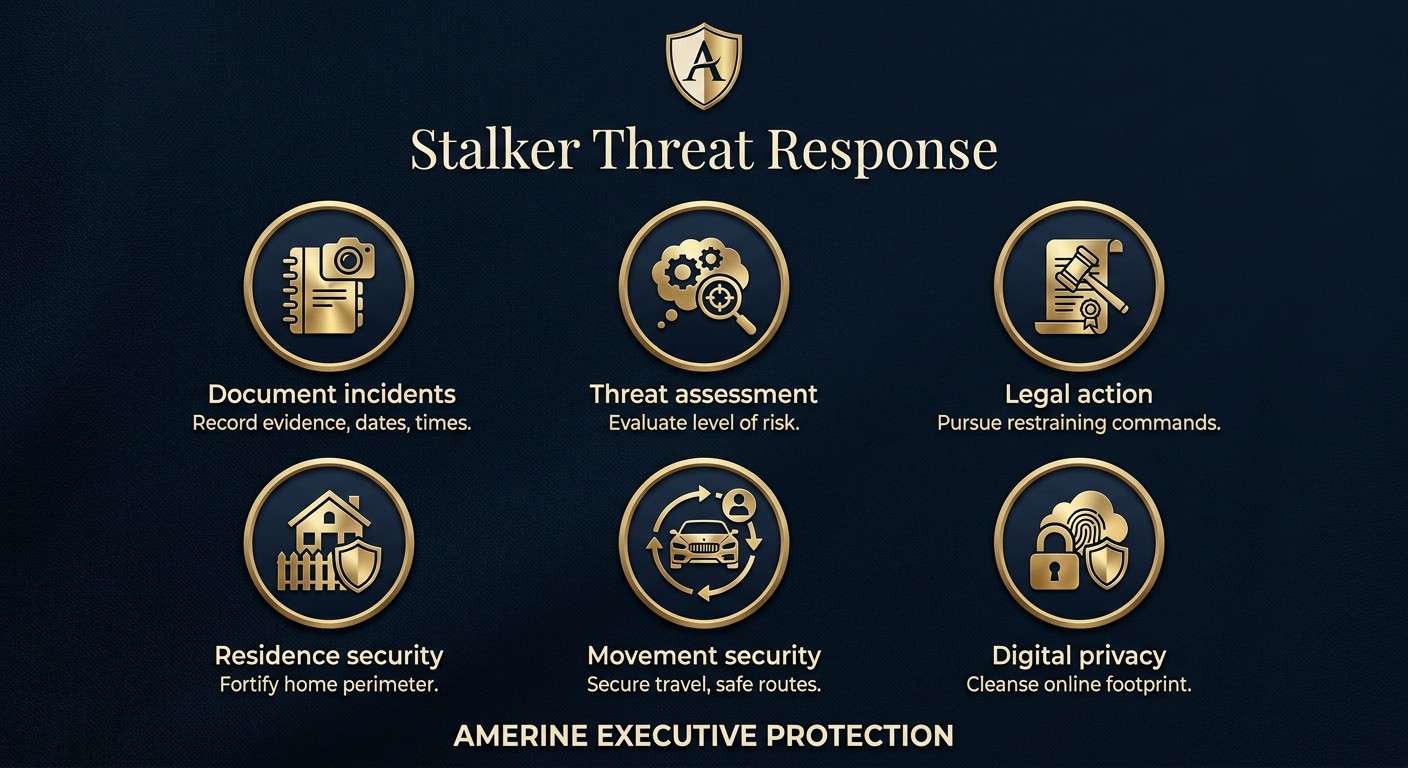
- Do not engage: Any response, even a negative one, reinforces the behavior.
- Document everything: Save all communications, photos, and evidence.
- Report to law enforcement: File a report, even if you are unsure.
- Engage a professional threat management team: You need experts who can assess the risk level.
- Increase physical security: Review residential, workplace, and transportation vulnerabilities.
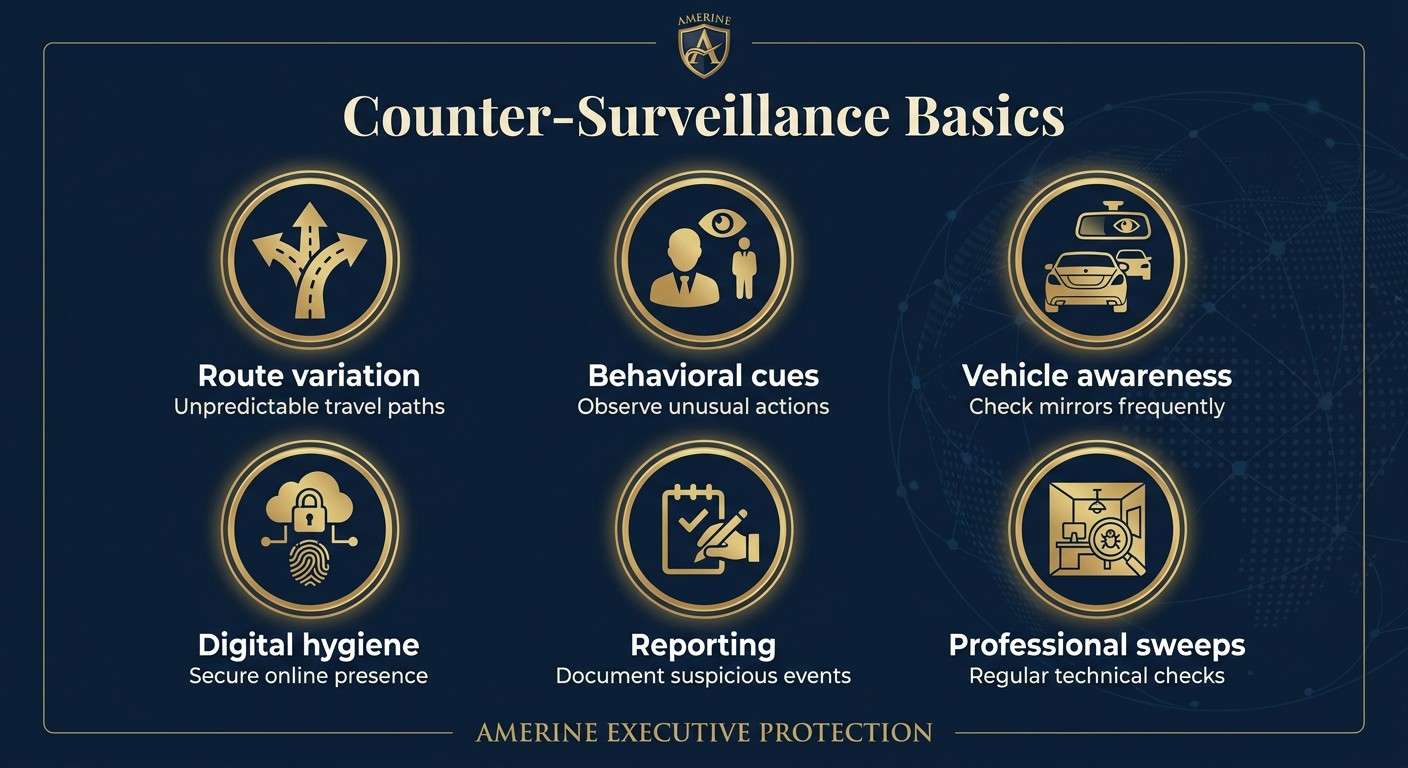
- Vary your routines: Unpredictability is your greatest protective tool.
For a confidential threat assessment, Contact AMERINE. You'll work with a team that includes former Secret Service agents specializing in protective intelligence and threat management.