Security Challenges in the Energy Sector
Oil and gas executives routinely travel to politically unstable regions and visit remote operational sites where infrastructure is limited. They also manage operations in countries where kidnapping, extortion, and political violence are endemic. These conditions create security challenges that few other industries face.
Unique Risk Factors
Remote and Hostile Locations
Energy operations often exist in areas with minimal law enforcement presence, poor medical infrastructure, and challenging terrain. Security planning must account for extended response times and self-sufficiency.
Kidnap and Ransom Exposure
Oil and gas executives are high-value kidnapping targets, particularly in:
- West Africa (Nigeria, Cameroon, Niger Delta region)
- Latin America (Mexico, Colombia, Venezuela)
- Middle East conflict zones
- Central Asia
Political and Regulatory Risk
Energy companies operate at the intersection of national interests, environmental politics, and local community dynamics. Executive visits can become flashpoints for protests, government pressure, or targeted action.
Environmental Activism
Growing environmental activism has intensified targeting of fossil fuel executives. Actions range from peaceful protests to aggressive confrontations, doxxing campaigns, and property damage.
Security Framework for Energy Executives
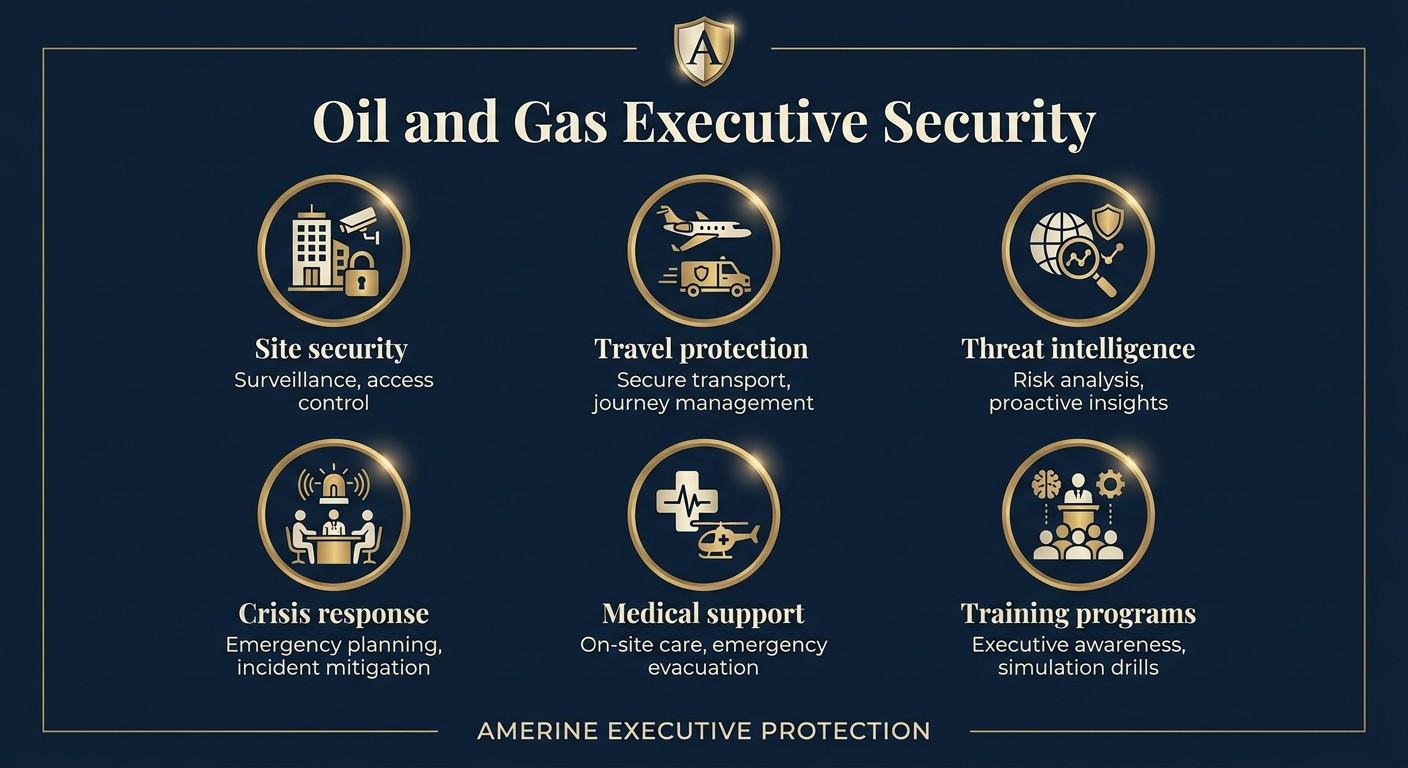
Pre-Travel Intelligence
Before any executive travel to operational areas:
- Country and regional risk assessment
- Route analysis and alternate planning
- Medical facility mapping and evacuation routes
- Political climate assessment
- Local security force evaluation
In-Country Protection
- Vetted local security teams with knowledge of regional dynamics
- Armored vehicle transportation for high-risk areas
- Advance work at all meeting locations and accommodations
- Communications redundancy (satellite phone, HF radio)
- GPS tracking and check-in protocols with GSOC
Site Visit Security
Visits to drilling sites, refineries, and production facilities require:
- Coordination with site security and HSE teams
- Helicopter landing zone security
- PPE and emergency response briefing
- Secondary evacuation routes
- Medical standby for remote locations
Crisis Response Planning
Every energy company should maintain:
- Kidnap response protocol and crisis management team
- K&R insurance with established response network
- Emergency evacuation plans for each operating region
- Proof of life protocols
- Media management during crisis events
Duty of Care Obligations
When personnel travel to high-risk regions, energy companies have heightened duty of care obligations. Those obligations include comprehensive travel risk assessments, training and briefings before deployment, adequate security measures proportional to the risk, emergency response capabilities, and support and medical care after an incident.
Work with AMERINE by contacting them to develop a security program for your energy company’s executives, tailored to the specific risks in the regions where you operate.