The Security Advantages: and Vulnerabilities: of Private Aviation
You’ll often hear that private aviation is inherently more secure than commercial travel, and in many ways, it is. You control who’s on the aircraft, skip crowded terminals, and can adjust your route and timing. Still, flying privately creates security vulnerabilities that most travelers don’t consider.
Ground Security: The Weakest Link
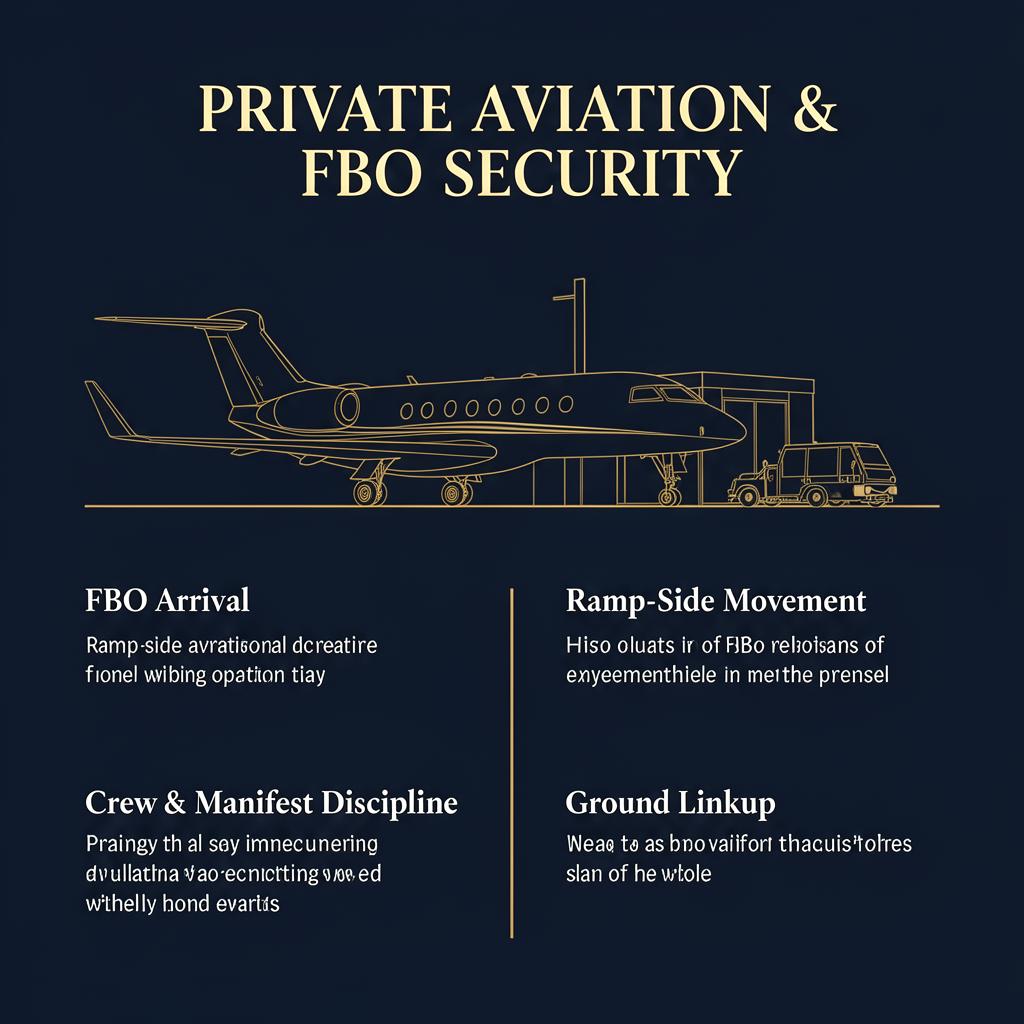
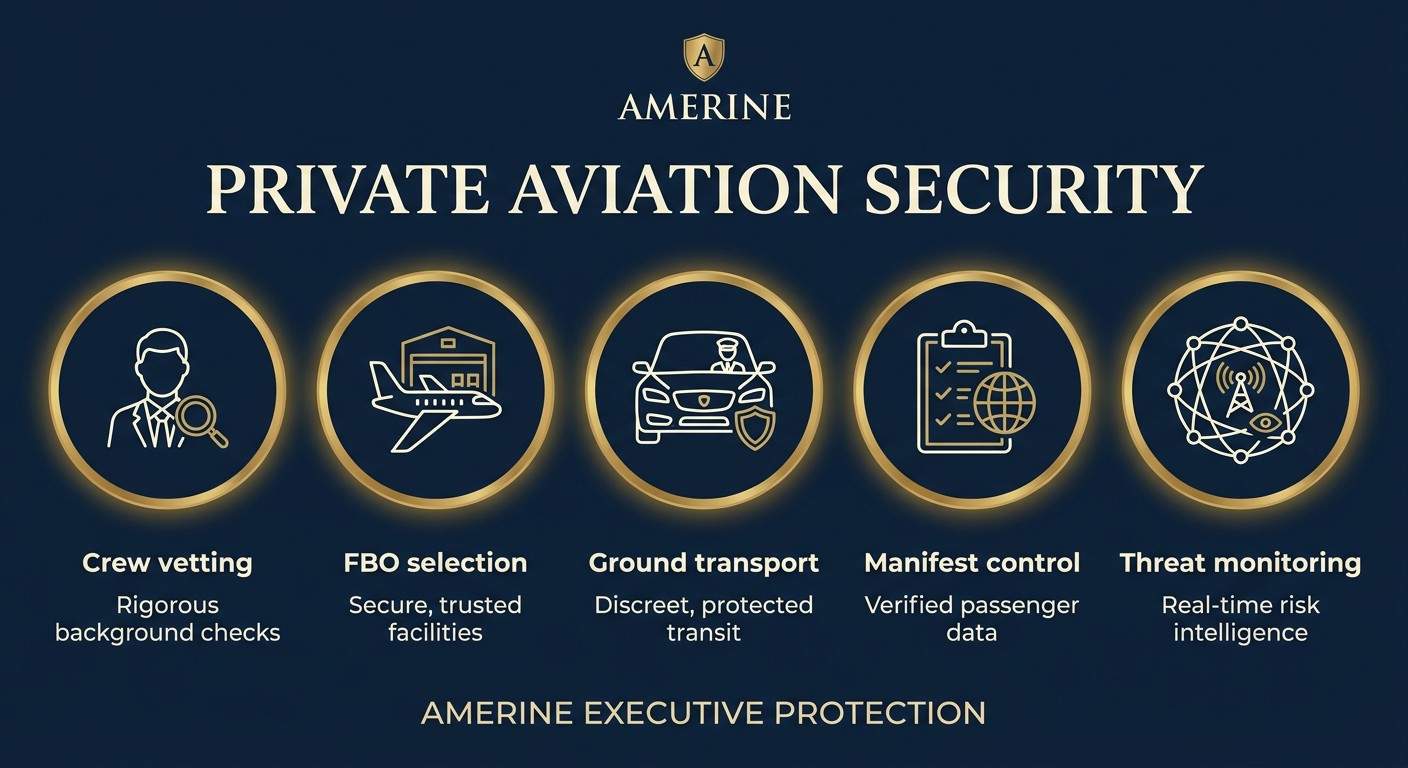
FBO (Fixed Base Operator) Security
Most FBOs have minimal security compared to commercial terminals:
- No TSA screening of passengers or luggage
- Open ramp access in many locations
- Limited access control to hangars and aprons
- Variable quality of background checks on FBO staff
What to do: Confirm that the FBO has reasonable security protocols, request controlled access to the aircraft, and arrange for protective agents to meet clients at the FBO when they arrive.
Airport Arrival and Departure
The transition between vehicle and aircraft is often the most exposed moment:
- Pre-position vehicles at the FBO before the client arrives
- Coordinate arrival timing to minimize exposure on the ramp
- Have an agent escort the client directly from vehicle to aircraft stairs
- Ensure luggage handling is supervised
In-Flight Security Considerations
Crew Vetting
For charter flights, the crew is assigned by the operator. Consider:
- Background check requirements for pilots and flight attendants
- Crew familiarity with security protocols
- Communication protocols for emergencies
- NDA requirements for high-profile passengers
Aircraft Security
Before boarding:
- Visual inspection of the aircraft exterior
- Interior sweep for surveillance devices (for high-risk principals)
- Verify catering and provisioning sources
- Confirm maintenance and airworthiness documentation
Communication Security
In-flight communications can be vulnerable:
- Avoid sensitive business discussions over aircraft Wi-Fi
- Use encrypted communication apps for messaging
- Be aware that some in-flight systems log communications
- Consider signal-blocking bags for sensitive devices
International Private Aviation
International private flights get more complicated because you’re dealing with customs and immigration procedures at private terminals, ground handling arrangements in destination countries, and overflight permissions for restricted airspace. Fuel stops in intermediate countries and local security arrangements at destination airports add to that complexity.
Route Planning
When planning a flight route to a high-risk destination, consider avoiding airspace over conflict zones and choosing airports with adequate security infrastructure. Planning should also account for diversion airports along the route, weather contingencies, and fuel availability at alternate airports.
Contact AMERINE to coordinate comprehensive aviation security for your next trip, from departure to destination and back.