How to Protect a Vacation Home When You Are Away
A vacation home is empty most of the year, and that is the whole problem. Nobody notices a slow leak, a forced window or a lapsed alarm until the next visit. The best protection is a plan, not a gadget: assess the property, harden the entry points, control who has access, keep your travel and your location quiet online, and assign a named responder to every alert. At AMERINE, we build security this way, assessment first, then coverage, with the scope confirmed in writing.
This guide covers what to do before you leave, what to monitor while you are gone, and how to keep the people and accounts around the house from becoming the weak point.
TL;DR
-
Empty homes fail in two ways: someone gets in, or something fails (water, heat, power) with nobody there to see it.
-
Harden doors first. Police data points to front doors, first-floor windows and back doors as the usual way in.
-
An alarm only helps if a person answers it. Name a responder for every alert before you leave.
-
Your phone, your accounts and your social posts can reveal an empty house as easily as an unmowed lawn.
For multiple homes or frequent travel, a standing arrangement beats a scramble.
Table of Contents
Why a vacation home is a different kind of target
A primary residence has a daily rhythm. Lights change, cars come and go, packages get picked up. A second home has none of that. Insurers that cover second homes point out that vacant periods let leaks, roof damage, sprinkler failures, break-ins, fires and windstorms go undetected until the damage has spread. Their advice is regular upkeep, maintenance and monitoring by a caretaker or property management firm.
For high-profile owners there is a second layer. People who want to find you can often find the house. Property records, event photos and a guest’s tagged post can tie a name to an address. An empty home that belongs to a known family is a different risk than an empty home on an anonymous street.
So treat the vacation home as part of your whole protection picture, not a separate chore. That means physical security, people, and digital exposure together.
Start with an assessment, not a shopping list
Before buying a camera or a lock, walk the property the way an intruder would. Ask five questions:
-
Where can someone approach unseen? Check tree lines, side yards, docks, service gates and neighboring lots.
-
What are the weak entry points? Count every door, window, garage door, pet door and balcony slider.
-
Who already has access? List staff, cleaners, landscapers, contractors, rental guests, friends and former employees.
-
What fails when nobody is there? Water, heat, power, internet, sump pumps, generators.
-
What does the house say about you? Look at the mail, the driveway, the lighting and what shows online.
This is the first step in how we work. We assess before we recommend, then confirm scope and responsibilities in writing so everyone, including your executive assistant and household staff, knows who does what. If you want that done for a second home, our security assessments are the starting point.
Harden the entry points
Most break-ins are not clever. A vacation security checklist from the UCI Police Department says thieves enter through the front door about 34% of the time, a first-floor window about 23% of the time and the back door about 22% of the time, often because it was unlocked. It also describes roughly 87% of burglaries as preventable.
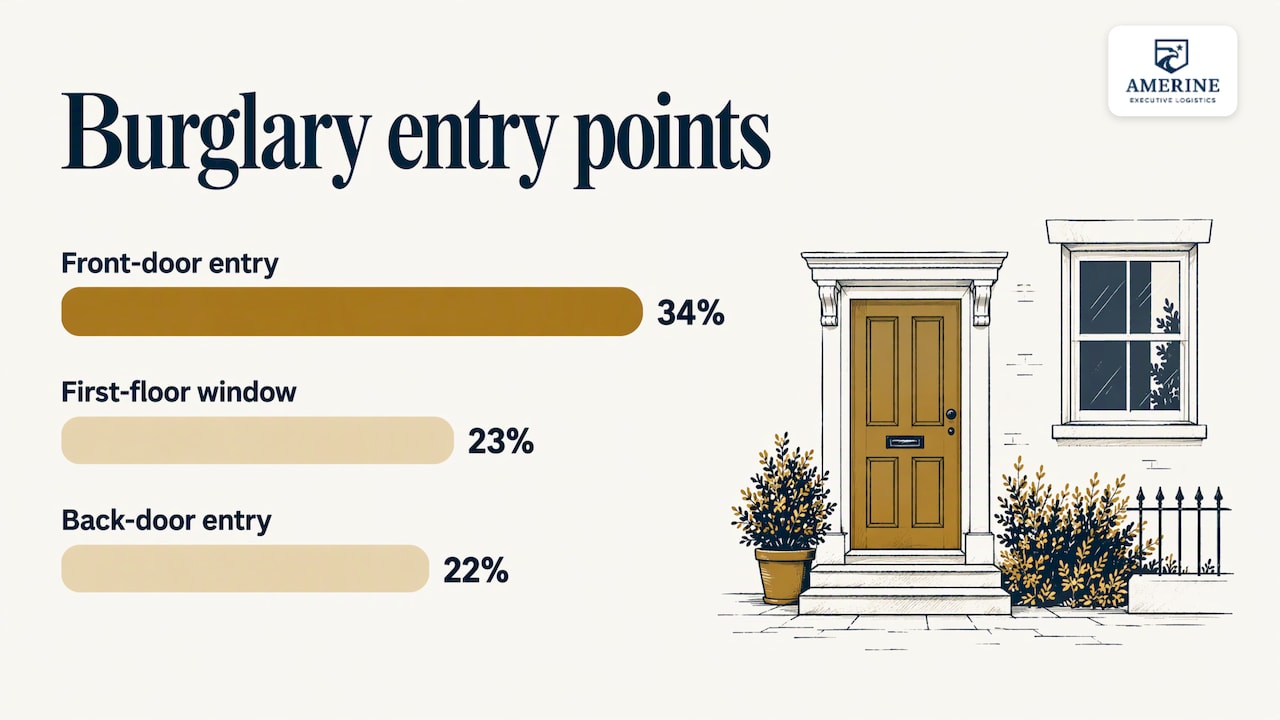
That tells you where to spend first.
Doors and locks
A good deadbolt is only as strong as the frame it bolts into. Consumer Reports’ test engineer explained that many deadbolts ship with a standard strike plate and short screws that bite only into the soft door jamb, so a kick breaks the jamb. The fix is cheap: a four-screw box strike plate and 2-inch screws that reach the house framing.
Do this on every exterior door, including the one nobody uses. Add the garage: lock the interior door from the garage to the house and disable any exterior emergency release you do not need.
Windows and glass
Lock every window, including upper floors reachable from a roof, trellis or porch. Sliding doors need a bar or track insert. Consider laminated glass or security film on ground-level glass near locks, which slows entry and keeps the sound of the attempt going longer.
Keys and codes
Change keypad and lockbox codes when staff or vendors change. Remove hidden keys. Keep a written log of who holds a key, and review it before every long absence. If a former employee still has a code, the best lock on the property is not doing its job.
Alarms, cameras and lighting: what they do and what they do not
The evidence on alarms is useful but sober. The U.S. Department of Justice’s problem-oriented guide to residential burglary cites a study in which homes with alarms had a 1.4% burglary risk versus 2.3% without. The same guide notes false alerts can run as high as 95%, which is why many responders and police departments treat unverified alarms with low priority. It points to video as a way to verify an alarm and to occupancy cues like timed lights, sound and a car in the driveway as deterrents.
Translate that into practice:
-
Verify alarms. Pair the alarm with cameras covering every approach so a human can see what triggered it.
-
Name the responder. Every alert needs a person who answers within minutes: a caretaker, a security professional, a monitoring center. An alert that goes only to your phone while you are on a flight goes nowhere.
-
Test before you leave. Trip the alarm, check that alerts reach the right phones, and confirm the system still works if the power or internet drops.
-
Light the perimeter. Motion lighting on approaches, steady low light at entries, and randomized interior timers that look like a lived-in house.
Our camera and alarm systems work integrates cameras and alarms with the rest of an estate’s security so the pieces report to the same plan.
Environmental sensors matter as much as intrusion sensors
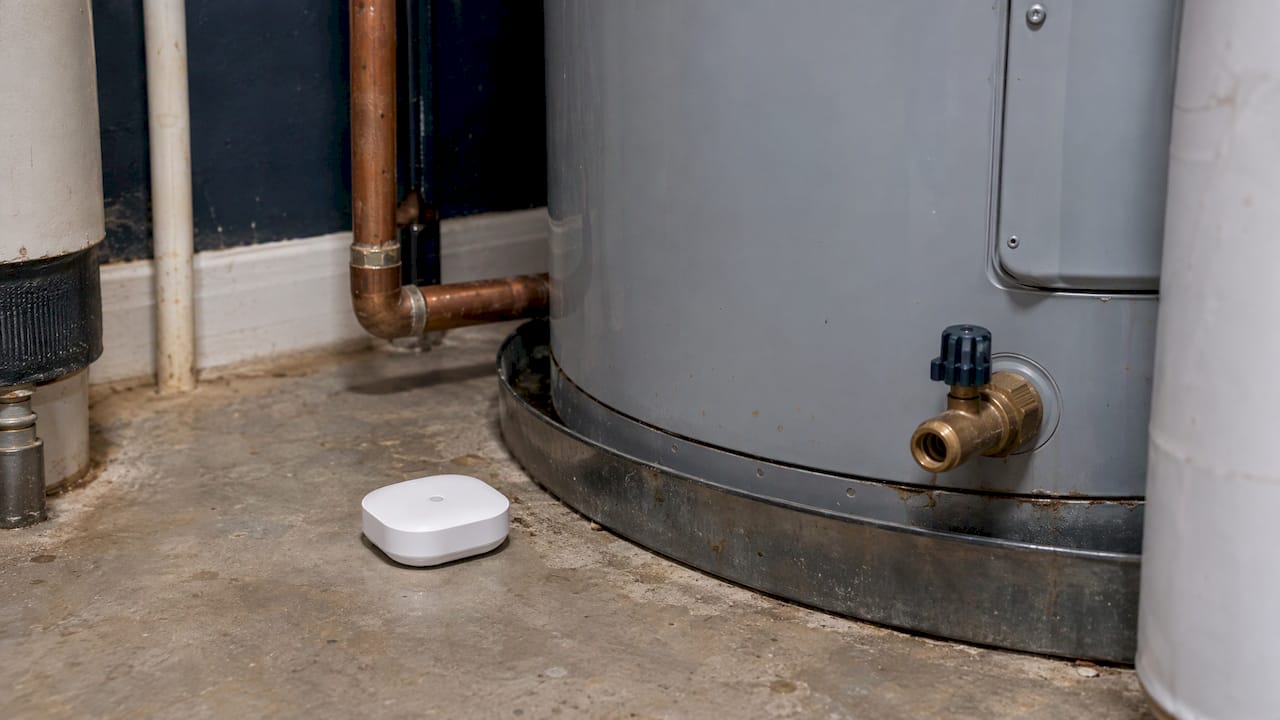
Water does more damage to most empty homes than burglars do. Put leak sensors at water heaters, under sinks, at the washing machine and at the main line. Add temperature and humidity alerts and a power-loss alert. Where a risk is local, such as freezing pipes in winter, the sensor and the responder need to cover that risk specifically. For background on how hidden plumbing failures start and what to do first, this guide to burst pipes and plumbing problems is a practical read.
Check your insurance policy for a vacancy or unoccupancy clause. Many policies limit cover for water, freeze or vandalism losses after a set number of days, or require heat to stay on, water to be shut off, or inspections with records. Terms differ by insurer and country, so read yours and ask your broker in writing before a long absence.
Make the house look lived in
Police departments run vacation-watch programs for this reason. The City of Johnston, Iowa, recommends a trusted neighbor watching the house, stopped mail and newspapers, arranged trash bins and lawn care, trimmed shrubbery, outdoor lighting, random interior timers, limiting who knows you are away, and letting a neighbor use the driveway.
Those programs have limits worth knowing. Johnston’s covers homes empty for more than a week for up to four weeks unless renewed, and the department says it cannot guarantee check frequency. Paradise Valley, Arizona, requires the form at least seven days before departure, caps coverage at six weeks, and excludes part-time residences. Many second homes fall outside such programs, so check with your local police department on its rules, and do not count on a drive-by as your only check.
A few habits close the gap:
-
Stop or redirect mail and packages. Do not let deliveries stack on the porch.
-
Keep the lawn, snow and trash on a schedule that runs without you.
-
Park a car in the driveway on a rotation, or let a trusted neighbor do it.
-
Close blinds in a normal pattern, not fully shut for weeks.
-
Do not leave valuables, art or documents in view from outside.
Control who has access
The people with keys are part of your security. Household staff, property managers, cleaners and contractors are the people most likely to know the house is empty and how to get in. Vetting, written access rules and prompt removal of old permissions matter more than another camera. Our piece on household staff vetting goes deeper.
A workable access routine:
-
Keep a single list of everyone with a key, code or app access.
-
Give each person only what the job needs, with time limits where the system allows.
-
Use individual codes, not a shared one, so you can see who entered and when.
-
Remove access the day someone leaves the job.
-
Agree on who calls whom if an alarm trips, and write it down.
An executive assistant or chief of staff is often the person holding this list. Give them a one-page contact and escalation sheet so they are not improvising when something goes wrong at 2 a.m. our time zone, not yours.
Digital exposure: the part most checklists skip
Typical vacation-home advice stops at the door lock. For executives and high-profile families, the digital side can tell a criminal more than a window can. Four risks come up again and again.
Doxxing. Your home address, your travel pattern and your family members’ names can be pulled from public records, data brokers and social tags and assembled into a profile. Once your address is posted, it is hard to pull back.
Account takeover. If someone controls your email or your cloud account, they can read your calendar, see your itinerary and reset your smart-home logins. Use a hardware security key or authenticator app, not text-message codes, on email, cloud storage, banking and the apps that run your house.
Phishing aimed at you and your staff. Attackers pose as a vendor, an airline or an assistant asking for a code. A message like “your alarm service needs verification” is a classic. Teach staff to confirm through a number they already hold.
Smart-home devices. Cameras, locks and doorbells are only as safe as their passwords, updates and the network they sit on. We cover the specifics in smart home security risks for high-profile households. Put devices on their own network, change default passwords, turn on updates and review who has app access.
A few travel habits help:
-
Do not post photos or location tags while you are at the house or away from it. Wait until you are home, and ask guests, children and teams to do the same.
-
Use a clean or loaner phone and laptop on international trips, and keep sensitive data off them.
-
Avoid public Wi-Fi for anything that touches your accounts or your home systems.
-
Check what your circle shares. A friend’s story can reveal where you are as fast as your own.
Our cyber monitoring and digital protection covers executives and families alongside physical security, so the digital picture and the property plan are read together.
Short trip or long absence: what changes
| Weekend or one to two weeks | A month or more, or a whole season | |
|---|---|---|
| Property checks | Neighbor or caretaker glance, alerts on phone | Scheduled in-person walkthroughs with a written record |
| Utilities | Leave on, set thermostat sensibly | Decide what stays on and what gets shut off, per your policy |
| Mail and packages | Hold or redirect | Redirect and review on a schedule |
| Alarm response | Named responder reachable | Named primary and backup responders, tested |
| Insurance | Read the vacancy clause | Confirm cover in writing before leaving |
| Digital | Pause location posts | Full account and device review, staff briefing |
In winter, the cold is the main variable. Decide before you leave whether heat stays on at a set minimum or the water system is shut off and drained, and follow what your policy says. For a long absence, an inspection routine with records is both a security measure and often an insurance condition.
When the family is the one traveling
A vacation home is rarely a standalone trip. You may fly privately, move with children, bring guests, or host an event. Each leg is part of the same exposure.
-
Arrival and departure. Plan how you reach the house and leave it. Vary timing, and use trusted transportation. See our work in executive transportation and private aviation security.
-
Peak season. Holidays and school breaks put more people on the move and more posts online. Our note on summer travel security for families covers that pattern.
-
Homes in other countries. If the house is abroad, laws, response times and insurance rules differ. We do not claim local offices or in-country staff, and we coordinate with those providers under a single plan. AMERINE is Texas-licensed (Private Security License No. C31012001); operating nationally and internationally through vetted, licensed local partners where required.
-
Hosting. Guests, caterers and production crews all see the property. A high-profile event security and VIP planning plan covers screening and access before they arrive.
For how we structure the layers on a large property, see our estate security program design and the broader look at residential security beyond alarms.
Our perspective
Most families treat a second home like a smaller version of the first. It is the opposite. The first home has people in it. The second has a plan, or it has nothing.
We start every engagement with an assessment, because the right answer depends on the house, the family and the travel pattern. Then we write down scope and responsibilities. Who answers the alarm? Who walks the property? Who holds the access list? When those answers are on paper, nothing depends on someone remembering.
Our team’s Secret Service experience shaped how we work: plan first, stay low-visibility, and coordinate with the people already around you, including executive assistants, household staff, corporate security teams and legal counsel. We also treat digital exposure as part of the same job. A secure house and a leaky phone is not a secure family.
That is also why we built memberships. Availability terms are set out in writing, and we coordinate through vetted licensed local providers wherever you are.
AMERINE Team
A standing arrangement for your homes and your travel
If you own more than one property, move often, or run a household where several people share responsibility, a one-time checklist runs out fast. We serve clients worldwide, not one region, and coordinate through vetted licensed local providers.

The plan stays confidential, scope is confirmed in writing, and the operators are low-visibility.
FAQ
What is the first thing to do before leaving a vacation home empty?
Walk the property and list every way in, every system that can fail and everyone who has access. Then lock and reinforce the doors, set alerts for water, temperature and power, and name who responds to each one. A short assessment before you go prevents most surprises.
How often should someone check on a vacation home?
Check your insurance policy first, because it may set a required interval and ask for records. Where it does not, a regular in-person walkthrough every week or two is a sensible baseline, with extra visits after storms, outages or freeze alerts. Give the visitor the alarm, utility and shutoff information.
Are cameras and smart locks safe to rely on?
They help, but they are connected devices. Use strong unique passwords, two-step sign-in, a separate network and regular updates, and review who has app access. Make sure an actual person receives and acts on each alert.
Should I tell neighbors and staff I will be away?
Tell only the people who need to know, such as a trusted neighbor, your caretaker and the staff who run the house. Limiting who knows is part of making an empty home less conspicuous. Keep travel dates off social media until you are back.
Sources
-
Consumer Reports: Simple Steps to Protect Your Home While You’re Away
-
U.S. Department of Justice COPS Office: Burglary of Single-Family Houses
If you want a plan for your vacation home and your travel, request a conversation about a subscription through the AMERINE website at amerineep.com/memberships.