Summer Travel Security: Protecting Your Family During Peak Season
For UHNW families, summer vacations come with added security considerations. Planning memorable trips with proper protection takes care and experienced support.
The Summer Travel Challenge
Family vacations involve distinct security dynamics:
- Multi-Generational Groups: Protecting elderly grandparents and young children at the same time
- Unfamiliar Environments: Getting around new destinations without local knowledge
- Relaxed Posture: The natural tendency to drop your guard during downtime
- Increased Visibility: Large family groups draw attention
- Extended Itineraries: Multi-week trips with complicated logistics
Destination Selection & Assessment
Before finalizing travel plans:
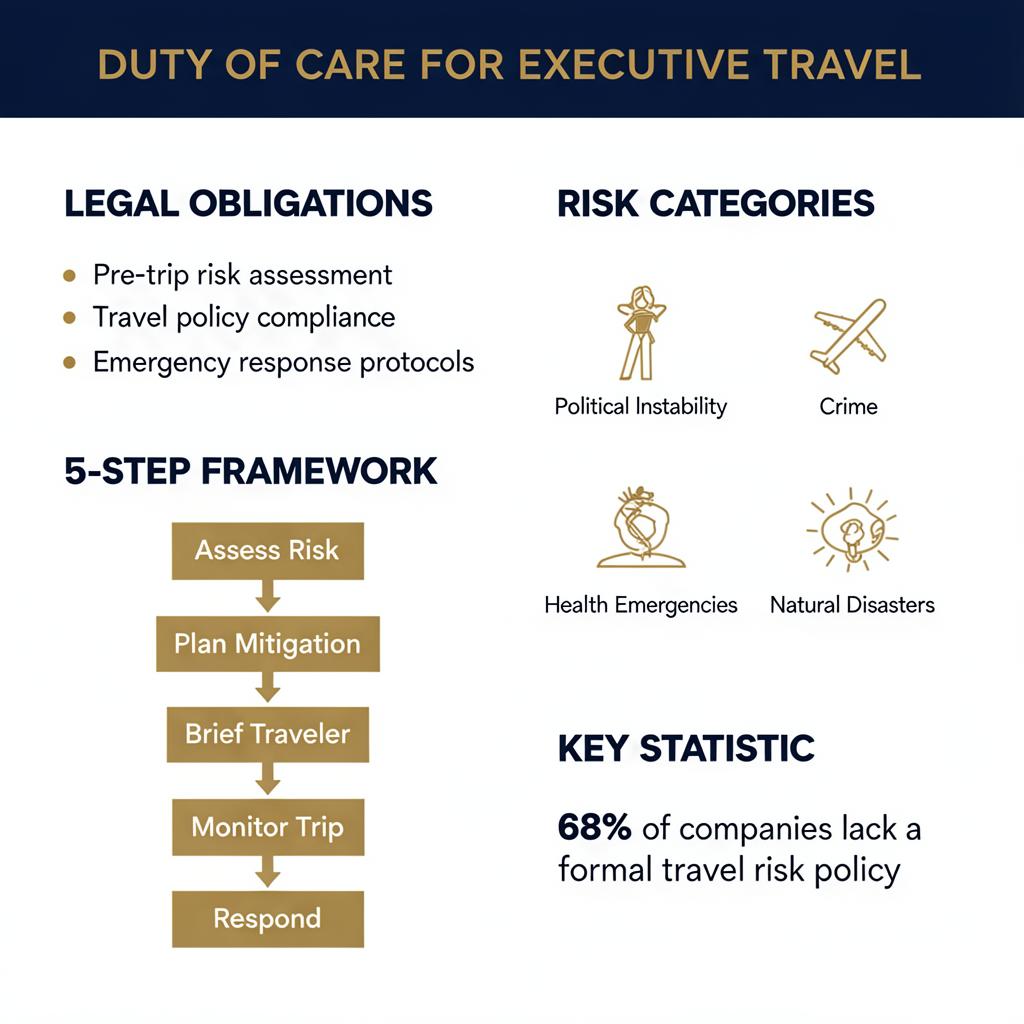
Security factors to evaluate include political stability and recent developments, crime patterns affecting tourists, healthcare infrastructure and medical resources, natural disaster and environmental considerations, and the security resources available on the ground.
Popular Summer Destinations: Security Considerations
Mediterranean Europe: You'll generally find solid security infrastructure, but watch for petty crime in busy tourist areas and heavy overcrowding during peak season.
Caribbean: Security conditions differ from island to island. Crime rates are elevated in certain spots, although resort security is often adequate for stays contained within the resort.
Safari Destinations: These demand specialized planning. Consider medical evacuation logistics, wildlife, and remote environmental hazards.
Yacht & Maritime: Distinct security considerations apply. Port security standards vary significantly from harbor to harbor.
Planning the Secure Family Vacation
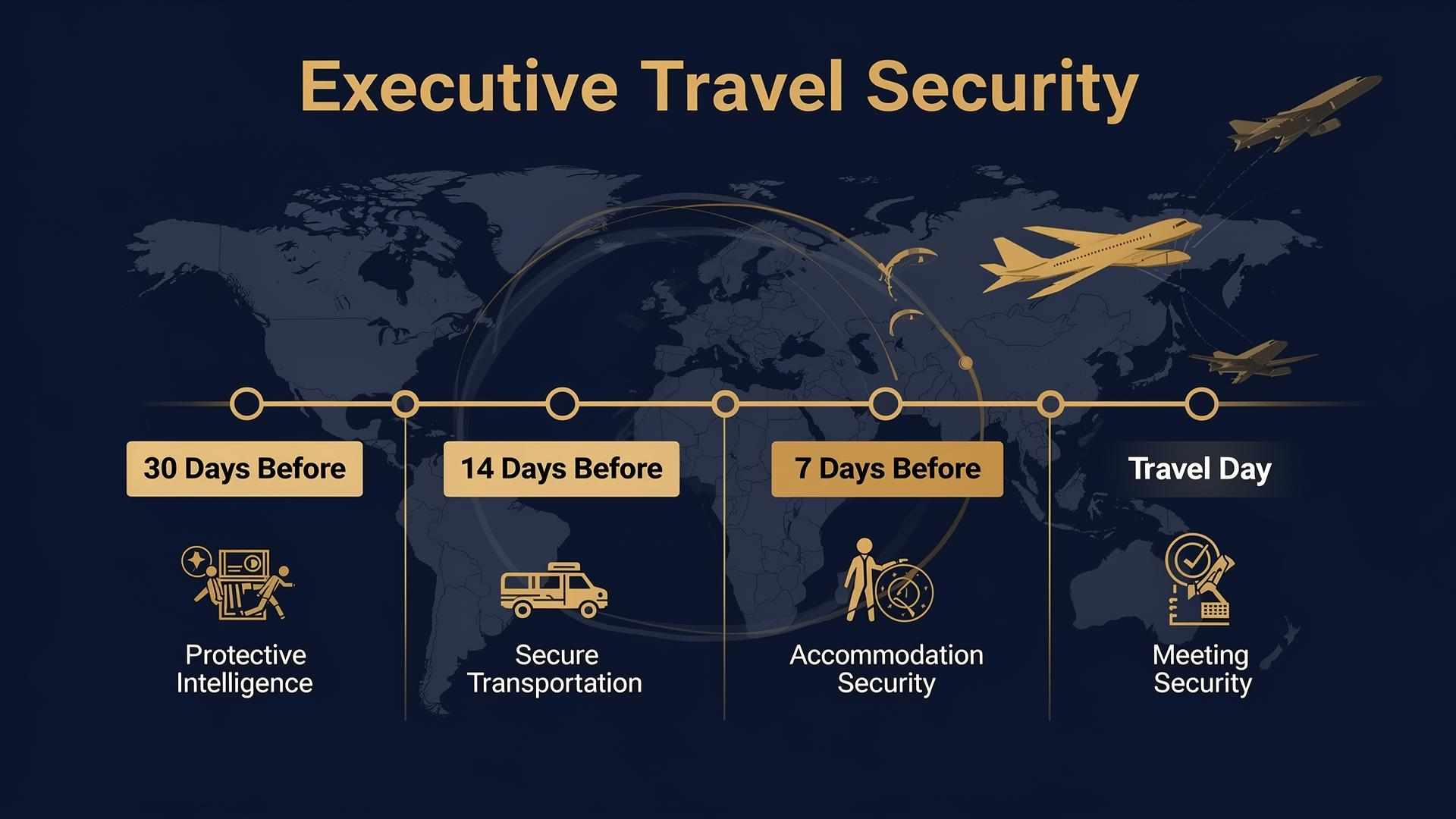
60 Days Before:
- Destination threat assessment
- Initial itinerary security review
- Accommodation security vetting
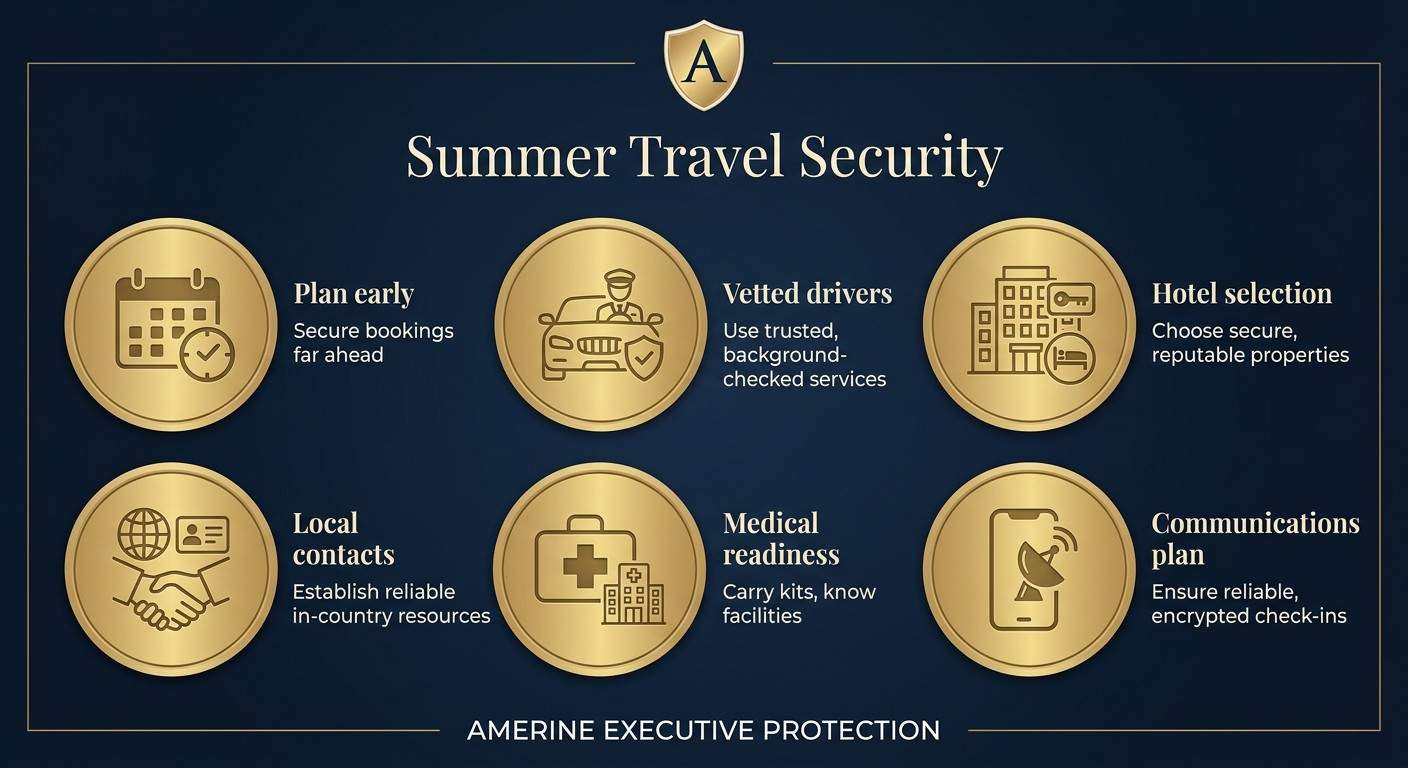
- Transportation arrangements
30 Days Before:
- Detailed activity planning
- Emergency protocol development
- Medical resources identification
- Communication plan establishment
14 Days Before: Complete the final security briefing, deploy the advance team if applicable, activate real-time monitoring, and confirm travel documents.
Protective Options for Family Travel
Match the operational footprint to your risk profile and destination:
Minimal Footprint
- Pre-travel threat briefings
- Vetted transportation arrangements
- Emergency response protocols
- Operations center access
Moderate Protection includes coordination with an advance team and discreet close protection during activities, along with enhanced transportation security and continuous monitoring and support.
Full Protection provides a dedicated close protection team and comprehensive advance work, with secure transportation throughout and complete coverage across all activities.
Keeping Kids Safe (and Happy)
Protecting children without getting in the way of their vacation:
- Low-Profile Operators: Agents who blend in and do not look like security guards
- Activity Integration: Protection that fits into family activities without disrupting them
- Age-Appropriate Awareness: Teaching children basic personal safety without frightening them
- Family-Friendly Approach: Operators who know how to work inside private household environments
The Invisible Security Presence
The most effective family travel protection goes unnoticed:
- Agents dressed naturally for every activity
- Protection that fits quietly into family dynamics
- Solving problems before they turn into incidents
- Discrete coordination and communications
- Facilitating plans rather than shutting them down
Medical & Emergency Planning
Family travel requires serious medical preparation:
- Identification of local medical resources
- Evacuation planning and insurance
- Medications and medical records
- Special needs considerations for elderly or young travelers
- Communication protocols for medical emergencies
Summer 2025: Regional Outlook
Quick security overview for popular destinations:
Southern Europe: Heavy crowds and petty crime in major cities. Safe overall, provided standard precautions are taken.
Greek Islands: Excellent security, but medical facilities remain limited on smaller islands.
Alpine Regions: Very safe. The primary risks involve outdoor recreation, requiring sound planning and proper insurance.
Scandinavia: Exceptionally safe. The midnight sun creates unusual sleep and scheduling conditions to manage.
Making Memories Safely
Sound preparation lets UHNW families enjoy summer travel without sacrificing safety. Our team designs protective travel programs to support your family's vacation rather than restrict it.