Risk Intelligence: How Protective Intelligence Prevents Threats
Preventing incidents, rather than responding to them, is what makes security most effective. Proactive executive protection programs rest on protective intelligence: the systematic collection, analysis, and use of threat information.
Understanding Protective Intelligence
Protective intelligence encompasses:
- Threat Identification: Recognizing potential threats before they escalate
- Risk Assessment: Evaluating probability and potential impact
- Vulnerability Analysis: Understanding weaknesses that could be exploited
- Countermeasure Development: Creating strategies to prevent threats
The Intelligence Cycle for Protection
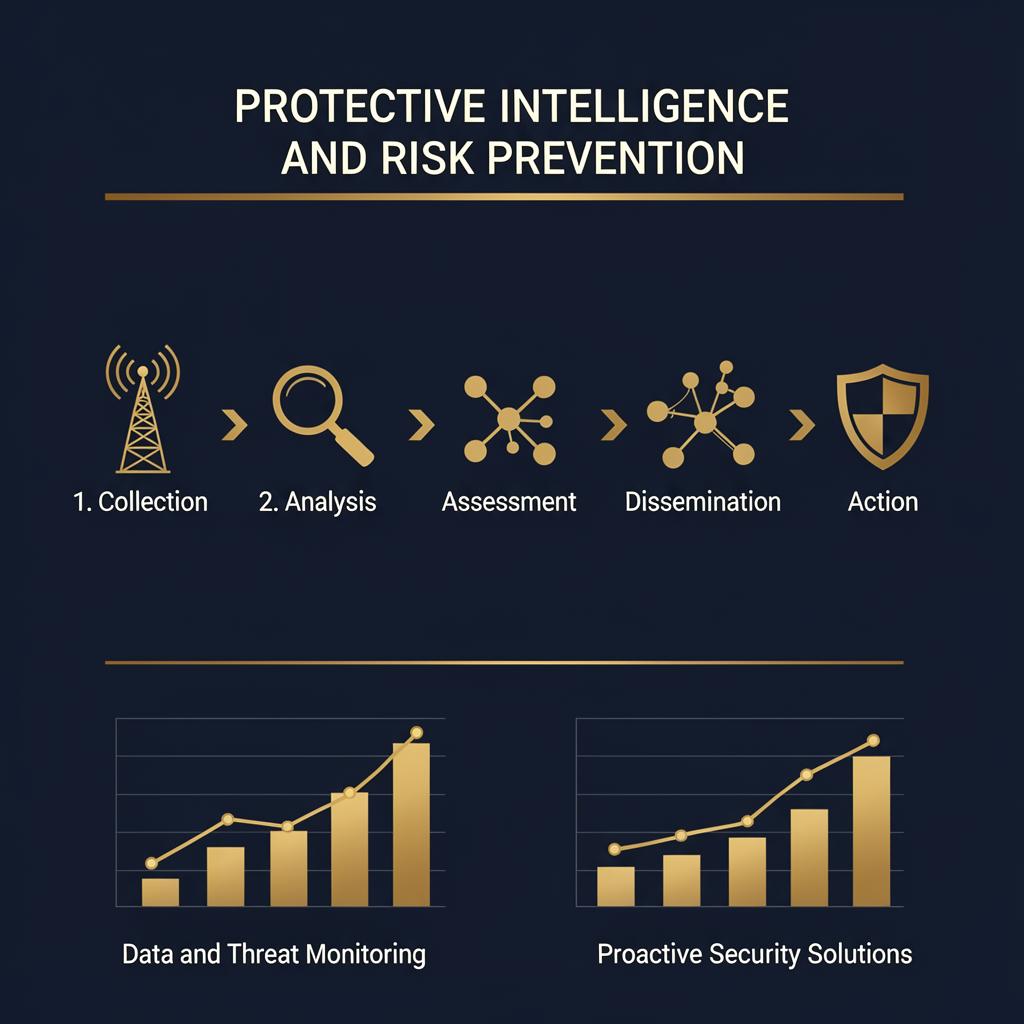
Protective intelligence follows a systematic process:
- Collection brings together relevant information from multiple sources: open source intelligence (OSINT), social media monitoring, threat reporting and tips, law enforcement liaison, and industry information sharing.
- Analysis turns raw information into intelligence you can act on by assessing threat actor capabilities, evaluating intent, recognizing patterns, identifying trends, and estimating probability.
- Dissemination means sharing intelligence appropriately through threat briefings for protected individuals, operational guidance for protection teams, strategic reports for security leadership, and incident-specific alerts.
- Action puts intelligence into practice through protective measures: adjusting security posture, modifying routes and schedules, deploying enhanced protection, and investigating and resolving threats.
Threat Categories for UHNW Clients
Protective intelligence monitors various threat types:
Targeted threats include stalkers and obsessed individuals, disgruntled employees or business associates, activist targeting, and criminal enterprises involved in kidnapping or extortion.
Situational Threats
- Travel destination risks
- Event-specific concerns
- Political and civil unrest
- Natural disasters
Reputational Threats
- Media and public relations risks
- Social media targeting
- Association risks
Monitoring and Detection
Ongoing intelligence activities include:
Social media monitoring tracks mentions of protected individuals, looks for threat indicators and warning signs, identifies reputational risks, and detects privacy breaches.
Open Source Research
- News and media monitoring
- Public records analysis
- Association mapping
- Geographic risk tracking
Threat Reporting Systems
- Internal reporting mechanisms
- Tip line management
- Incident tracking
- Pattern analysis
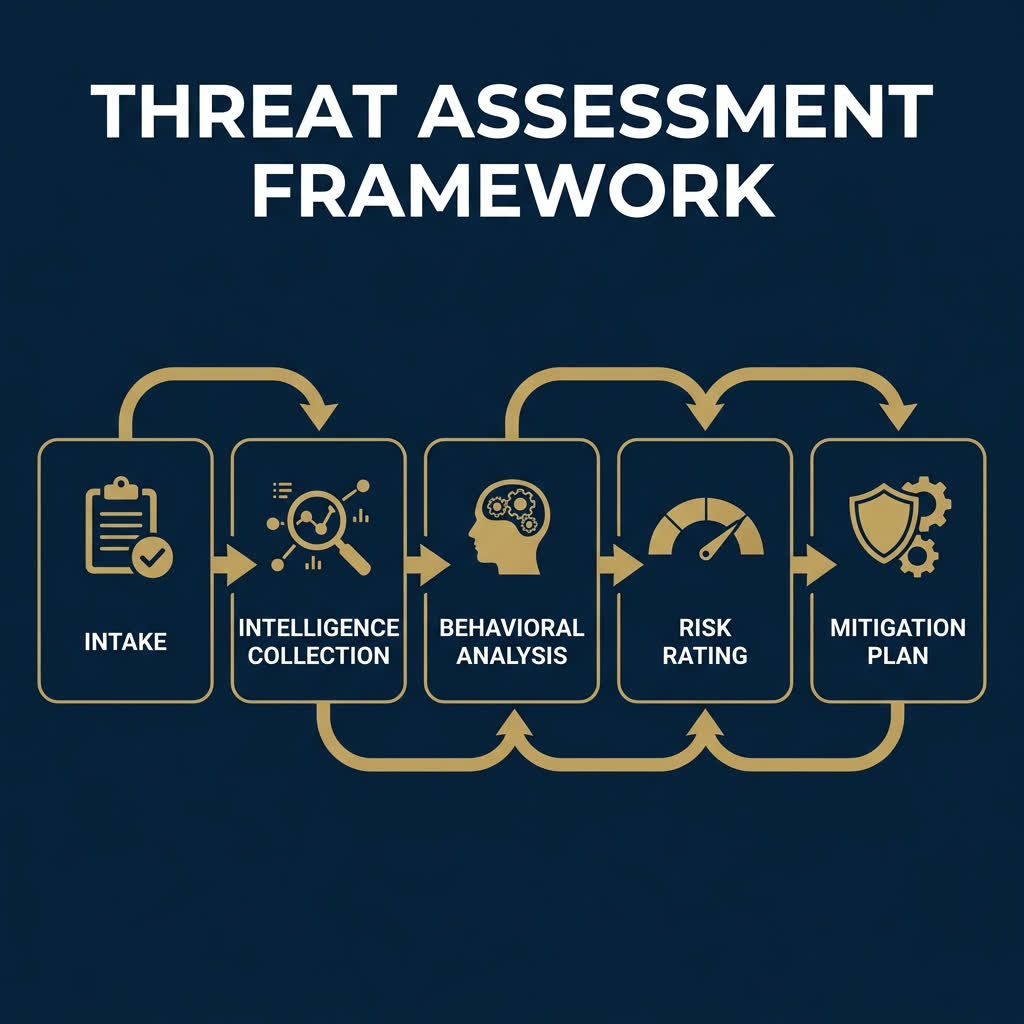
Threat Assessment Methodology
When potential threats are identified:
Initial Triage
- Credibility assessment
- Immediacy evaluation
- Capability indicators
- Historical context
Deep Analysis
- Subject research and profiling
- Capability assessment
- Intent evaluation
- Access analysis
Risk Rating
- Probability scoring
- Impact assessment
- Urgency classification
- Response recommendation
Converting Intelligence to Action
Effective intelligence drives protective responses:
Immediate actions include alerting the protection team, deploying enhanced coverage, modifying routes and schedules, and notifying law enforcement.
Medium-Term Measures
- Security posture adjustments
- Training and awareness updates
- Technical security enhancements
- Investigation initiation
Strategic Responses
- Program modifications
- Policy updates
- Resource reallocation
- Governance reporting
Building Intelligence Capability
Organizations can develop protective intelligence through:
- Dedicated Resources: Intelligence analysts focused on protection
- Technology Platforms: Monitoring and analysis tools
- Information Sharing: Networks and relationships for intelligence exchange
- Training: Protection teams educated on intelligence indicators
- Integration: Intelligence connected to operational protection
The Proactive Advantage
Intelligence-driven protection offers significant advantages:
- Prevention: Stopping threats before incidents occur
- Efficiency: Focusing resources on actual risks
- Confidence: Informed decision-making for protection
- Documentation: Evidence of appropriate security measures
- Adaptation: Continuous improvement based on threat evolution
Intelligence in Practice
Protective intelligence adds value across the security program:
- Travel security informed by destination analysis
- Event protection enhanced by specific threat awareness
- Residential security adapted to current threats
- Transportation security adjusted for identified risks
Developing Your Intelligence Capability
Without solid protective intelligence, your security program is likely reacting to threats instead of preventing them. Our team can help you develop and put intelligence capabilities to work so you stay ahead of potential risks.