Secure Transportation: Why Protective Drivers Matter for UHNW Clients
Transit is often when UHNW individuals and executives are most vulnerable. Commuting to an office, moving between meetings, and traveling through unfamiliar cities each bring distinct ground transportation security challenges that call for specialized solutions.
The Vulnerability of Movement
Several factors make transportation a high-risk period:
- Predictable Patterns: Regular routes create opportunities for surveillance
- Limited Escape Options: Traffic and road design can create ambush points
- Public Exposure: Street-level visibility during entry and exit
- Transition Points: Airport arrivals, hotel departures expose principals
- Third-Party Variables: Other drivers, traffic conditions, road incidents
Protective Drivers vs. Standard Chauffeurs
The difference between a protective driver and a standard chauffeur is significant:
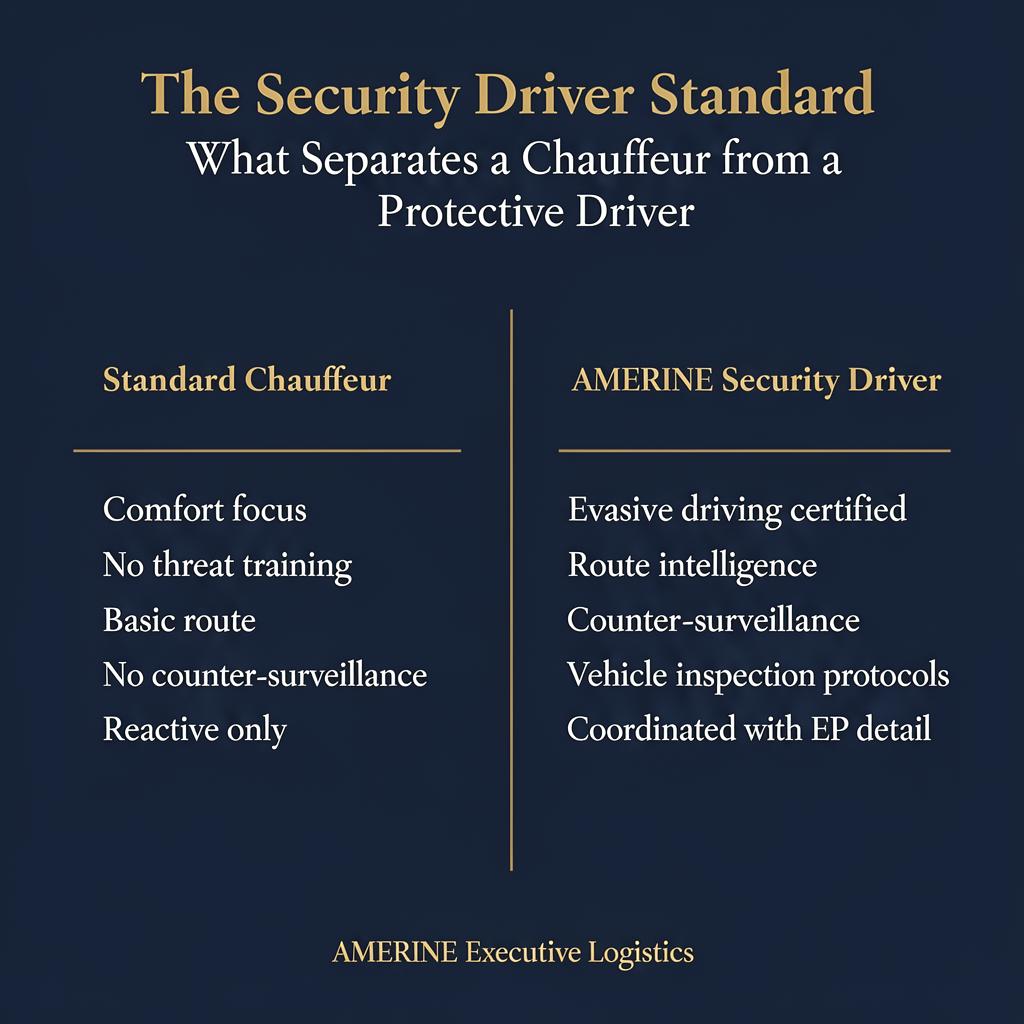
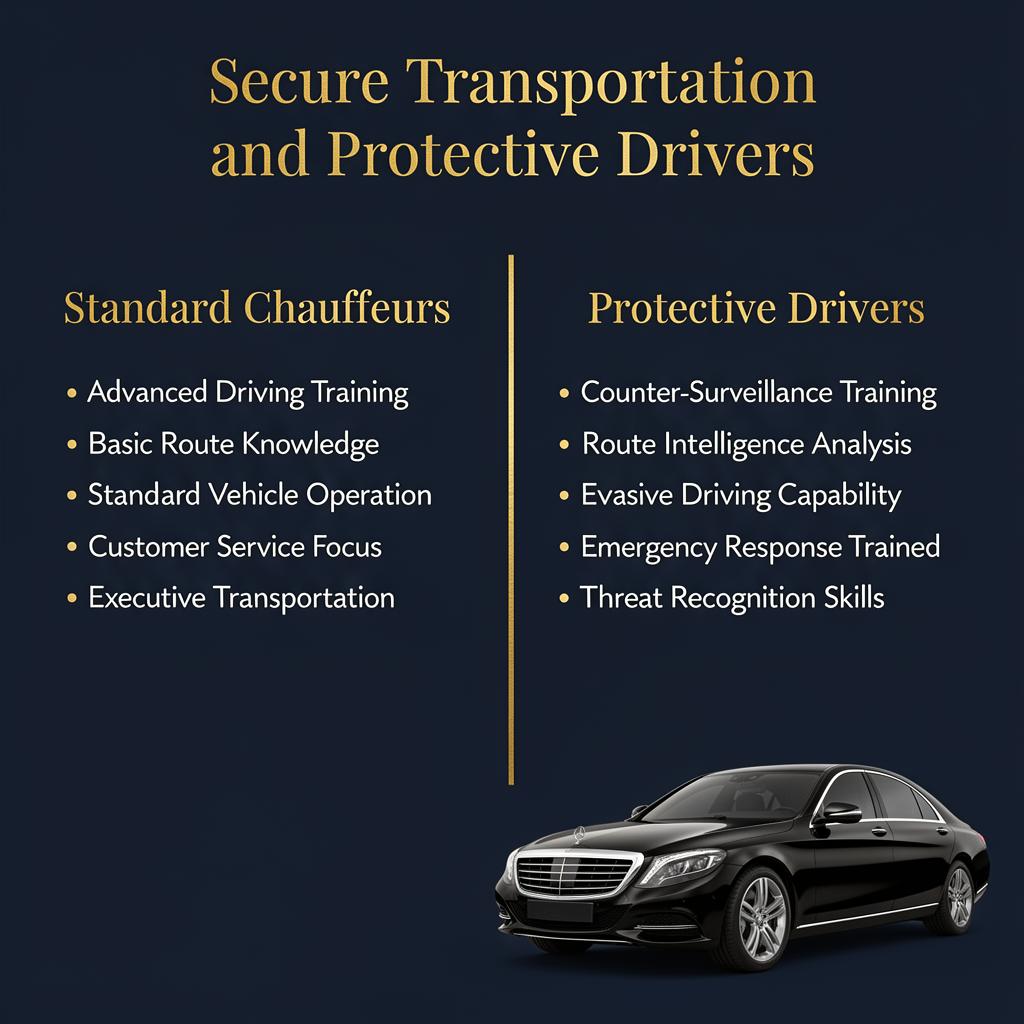
Standard Chauffeurs: Their driving skills emphasize comfort, and their customer service orientation is basic. They have limited security awareness, no training in threat recognition, and no emergency response capability.
Protective Drivers: They receive advanced defensive driving training, including evasive and counter-ambush driving, and continually scan for threats. Security comes first in their decisions. Their capabilities also include emergency medical response, professional discretion, and confidentiality.
The Training Differential
Protective drivers undergo extensive specialized training:
Driving Skills cover precise maneuvering, evasive techniques, and an understanding of vehicle dynamics. They also include handling adverse conditions and driving proficiently at night.
Security Awareness includes detecting surveillance, recognizing threats, and assessing route security. It also covers venue approaches and departures, along with emergency protocols.
Principal Care
- Executive service standards
- Confidentiality protocols
- Schedule management support
- Problem-solving capability
- Cultural sensitivity
Route Intelligence & Planning
Protective transportation extends beyond the driver:
Advance Route Planning means identifying primary and alternate routes, analyzing chokepoints and vulnerabilities, and locating safe havens. Planning also accounts for the time of day and the impact of construction and events.
Real-Time Intelligence involves monitoring traffic and adjusting to it, staying aware of incidents and avoiding them, adapting to weather conditions, and monitoring security events.
Vehicle Considerations
Secure transportation may involve:
Standard Luxury Vehicles include late-model luxury sedans and SUVs that receive regular maintenance and inspection. They're equipped with communication equipment and basic emergency supplies.
Enhanced Security Vehicles offer armored options for elevated threats, along with run-flat tires and reinforced construction. Their features also include advanced communication systems and defensive driving capability.
The Executive Transportation Program
Comprehensive executive transportation includes:
- Driver Vetting: Thorough background investigation and assessment
- Training Standards: Advanced protective driving and security awareness
- Route Management: Ongoing analysis and optimization
- Fleet Standards: Vehicle maintenance and security equipment
- Coordination: Integration with broader security program
- Operations Center: monitoring and support
Family Transportation
UHNW families often need transportation for school runs and activities, as well as for a spouse. Their needs also extend to supporting elderly family members and handling household logistics.
Each requires protective driving capability with appropriate training for family environments.
Corporate Transportation Programs
For corporations protecting multiple executives, transportation arrangements include standardized service levels, consistent vetting and training, and both pool and dedicated driver options. They also include coordination with travel programs, reporting, and documentation.
Selecting a Secure Transportation Provider
Key evaluation criteria:
- Driver Vetting: How thorough is the background process?
- Training Program: What training do drivers complete?
- Fleet Quality: How are vehicles maintained and equipped?
- Operations Support: Is there coordination capability?
- Integration: Can transportation connect with broader security?
- Confidentiality: What measures protect principal privacy?
Getting Started
You may be accepting unnecessary risk if your current transportation lacks protective capabilities. Our secure transportation programs offer reassurance for your daily movements and travel logistics.
If you're choosing between a car service and a protective driver, read Security Driver or Car Service: A Decision Guide for Family Offices.