The Corporate Workplace Violence Challenge
Workplace violence causes nearly 20,000 injuries and 500 fatalities each year in the United States, according to the Bureau of Labor Statistics. For corporations, human safety isn't the only concern: legal liability, disrupted operations, reputational damage, and employee retention are also at stake.
During my years in the Secret Service, I assessed threats against protectees. That approach to identifying and managing threats carries directly into corporate work: the behavioral indicators that signal danger to a public figure also apply in workplace situations.
The Five-Step Prevention Framework
Step 1: Policy Development
Every organization needs a workplace violence policy that's clear and enforceable. It must define prohibited behaviors, including threats, intimidation, physical violence, stalking, and harassment, and set zero-tolerance expectations with specific consequences. The policy also needs clear reporting channels that protect confidentiality and must cover all personnel, including employees, contractors, vendors, and visitors. It must address domestic violence that may spill into the workplace and comply with OSHA General Duty Clause requirements.
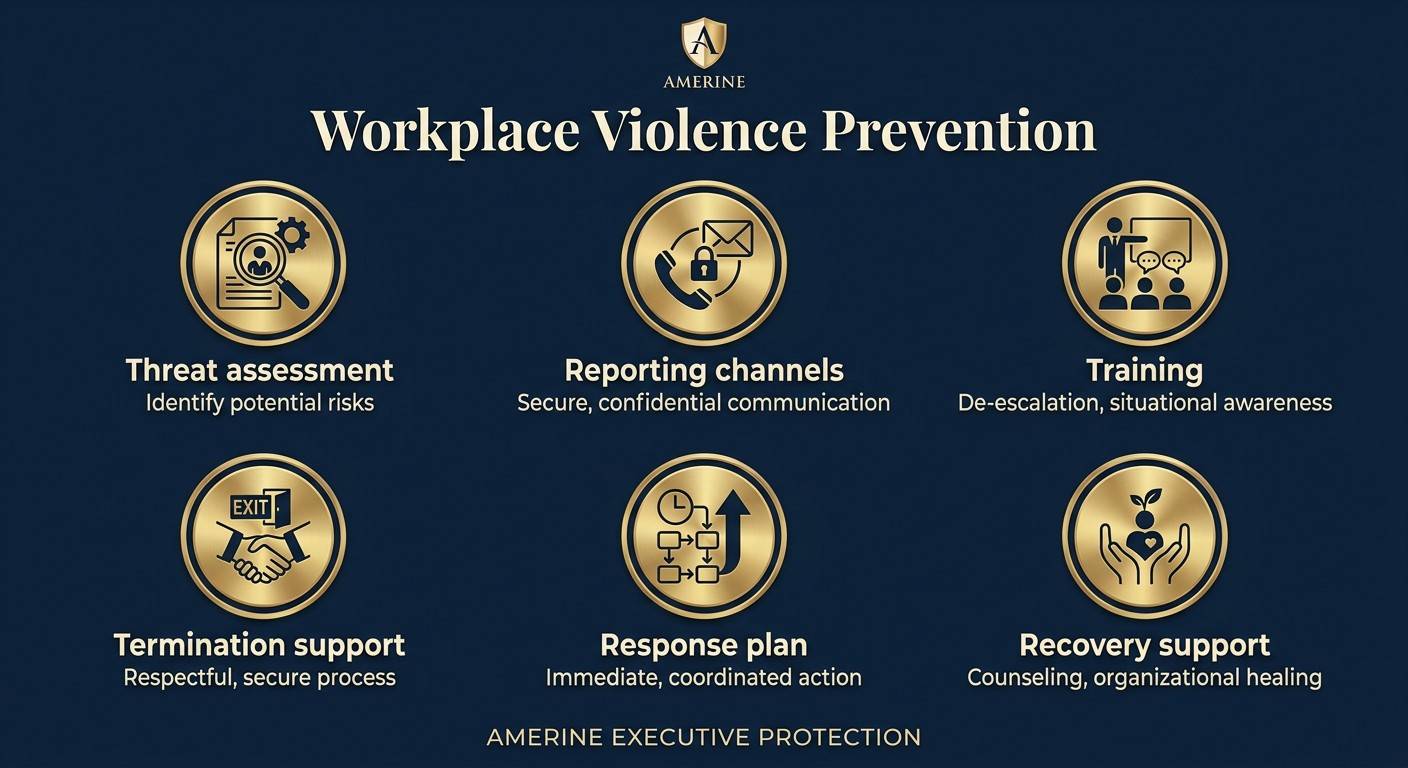
Step 2: Threat Assessment Team
Build a multidisciplinary threat assessment team (TAT) with Human Resources leadership, legal counsel, and security or facilities management. Include a mental health professional, either a consultant or an EAP representative, along with a senior management representative.
The TAT uses structured professional judgment rather than gut feelings to evaluate reported concerns. To assess whether a person of concern is moving toward violence, the team examines escalating behaviors and communications, the collection of grievances and externalization of blame, access to weapons or means, identification with violent role models, and last resort thinking or signs of desperation.
Step 3: Employee Training
Give all employees annual training on recognizing warning signs and pre-attack behaviors, reporting procedures and channels, and active shooter response (Run, Hide, Fight). That training should also cover de-escalation techniques for front-line staff, domestic violence awareness, and workplace safety planning.
Managers need extra training in handling difficult conversations and meeting documentation requirements. They also need training on when and how to involve the TAT, security planning for terminations, and post-termination monitoring protocols.
Step 4: Reporting Systems
Give employees multiple ways to raise concerns so they feel safe reporting them. Set up reporting through direct supervisors, HR, and the security department, along with an anonymous tip line available by phone and online and an ethics hotline.
The key is making reporting easy, confidential, and consequence-free for good-faith reporters.
Step 5: Response Protocols
Put response protocols in writing for imminent threats, including lockdown, evacuation, and law enforcement notification, and for post-incident medical, psychological, and communication needs. Written protocols should also cover investigation procedures, return-to-work protocols, and media management.
High-Risk Situations Requiring Extra Vigilance
Terminations and Layoffs
Statistically, risk is highest immediately before and after a termination. Security measures should cover advance notice to security, planned timing and location, the timing of IT access revocation, escort procedures, and post-termination monitoring for concerning behavior.
Domestic Violence Spillover
When an employee is experiencing domestic violence, the workplace becomes a predictable location where the abuser can find them. Organizations should:
- Train managers to recognize signs
- Develop individualized safety plans
- Coordinate with local law enforcement
- Modify access credentials and parking assignments
- Provide EAP resources
Organizational Change
Anxiety from mergers, acquisitions, restructuring, and facility closures can escalate to violence. Communicating proactively and maintaining a visible security presence help manage that risk.
Building a Culture of Reporting
Building an environment where people report concerns early, before situations escalate, is the single most effective way to prevent workplace violence. In nearly every workplace violence investigation, we find warning signs that people noticed but never reported.
Contact AMERINE to develop a comprehensive workplace violence prevention program tailored to your organization's size, industry, and risk profile.