Part 2 of the AMERINE World Cup 2026 debrief series. Read the pillar: [7 World Cup Security Lessons for Every Event](/blog/world-cup-security-lessons-for-every-event).
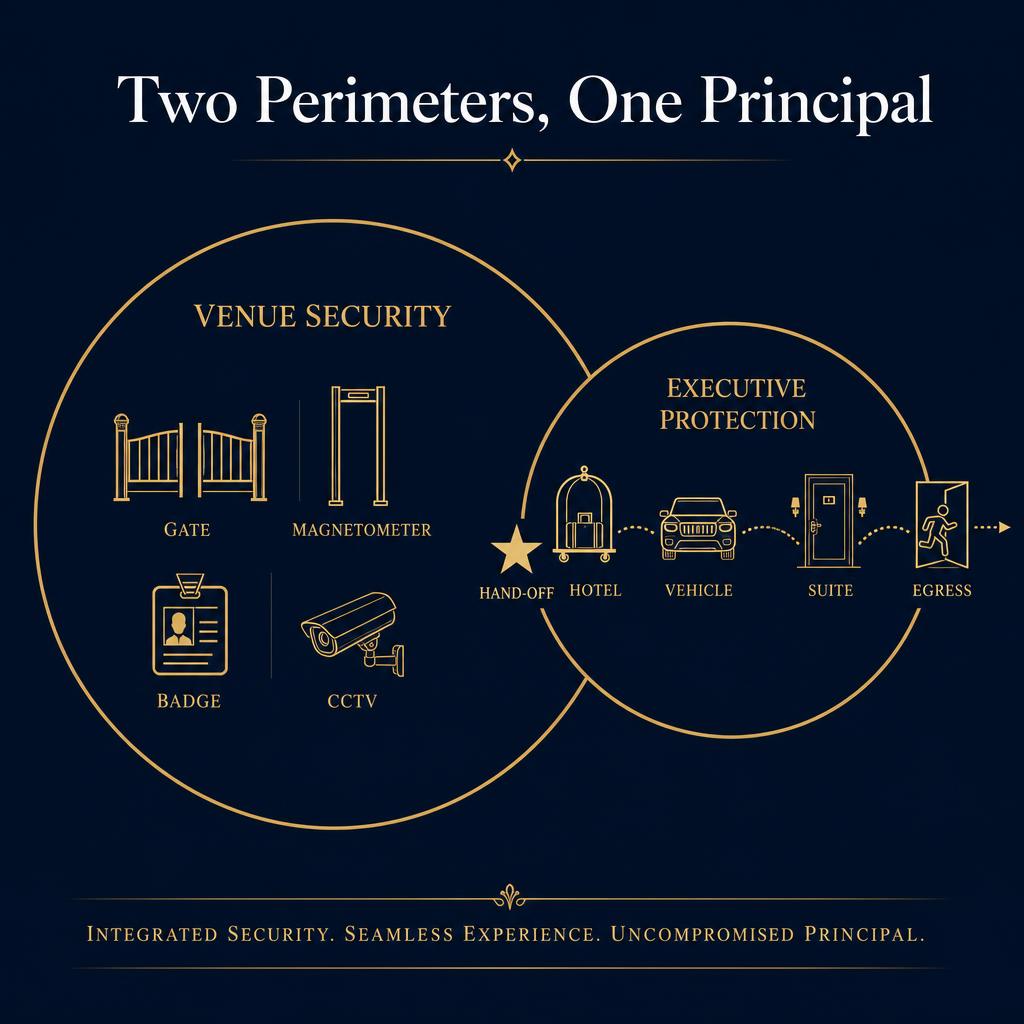
The World Cup made one truth impossible to ignore: the event is not the venue. It is the entire chain of movement, information and public exposure that surrounds a principal from the moment their attendance becomes knowable.
That chain is not managed at the door. It is managed in advance.
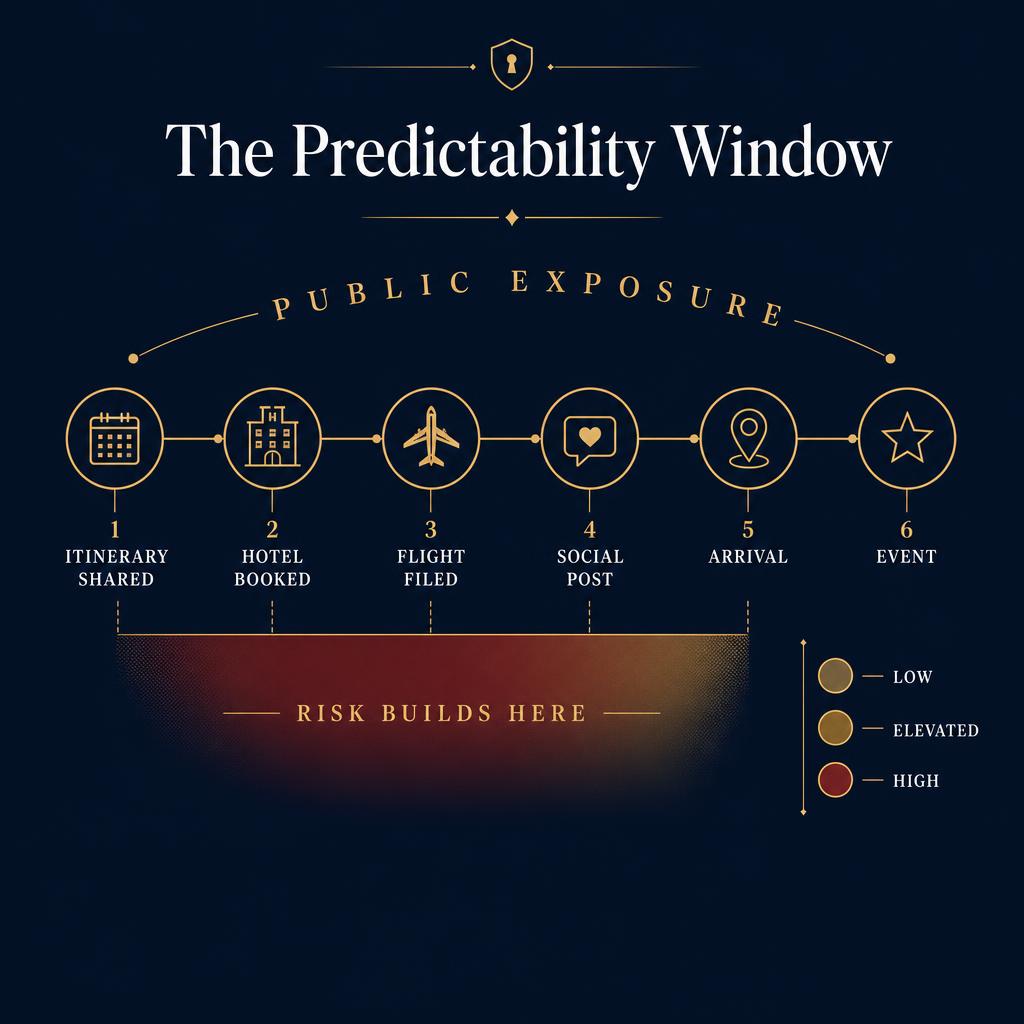
Predictability is the vulnerability
Every executive, athlete, performer, patron or family that attends a public event generates a pattern. A hotel selection. A car service. A recurring restaurant. A sponsor's suite. A social post from a family member. A local charity board that lists the guest of honor by name.
None of those signals are dangerous in isolation. Together, they describe a principal well enough for anyone with time, attention and hostile intent to plan around.
The World Cup demonstrated this at scale. Ahead of high-profile matches, opposing supporters, opportunistic actors and organized groups did not need law-enforcement briefings to know where meaningful principals would be. They read publicly available fixture lists, hospitality announcements and social content.
For a private client, the analogous exposures are more mundane and often more effective: the boarding photo, the tagged charity gala, the country-club Instagram, the wedding registry that lists an address.
Advance work exists to close that gap.
What the advance actually does
An effective advance is not "scouting." It is a written record produced in the days before movement that captures, at minimum:
- The primary and two alternate routes from origin to venue, including safe-haven pull-offs, medical facilities and police jurisdictions along each
- The arrival plan, including who greets the principal, what door is used and who has been briefed to expect them
- The interior movement — coat check, restroom, hospitality room, main event floor, staging area
- The egress plan and the decision authority to activate it early
- Every third party who will know the principal is present: valet, vendor, host, videographer, private aviation ground crew
The output is not a slideshow. It is a working document that drivers, agents, hosts and the client can act on when conditions change.
Where advance work quietly fails
In our post-World Cup review of hundreds of principal movements, three failure patterns recurred:
The advance was conducted, but not distributed. The lead agent knew the route. The relief agent, the driver and the client's assistant did not.
The advance was distributed, but was static. The document reflected the world at the moment it was written and was never updated when a road closed, a sponsor changed the check-in door, a match went to extra time or a demonstration formed nearby.
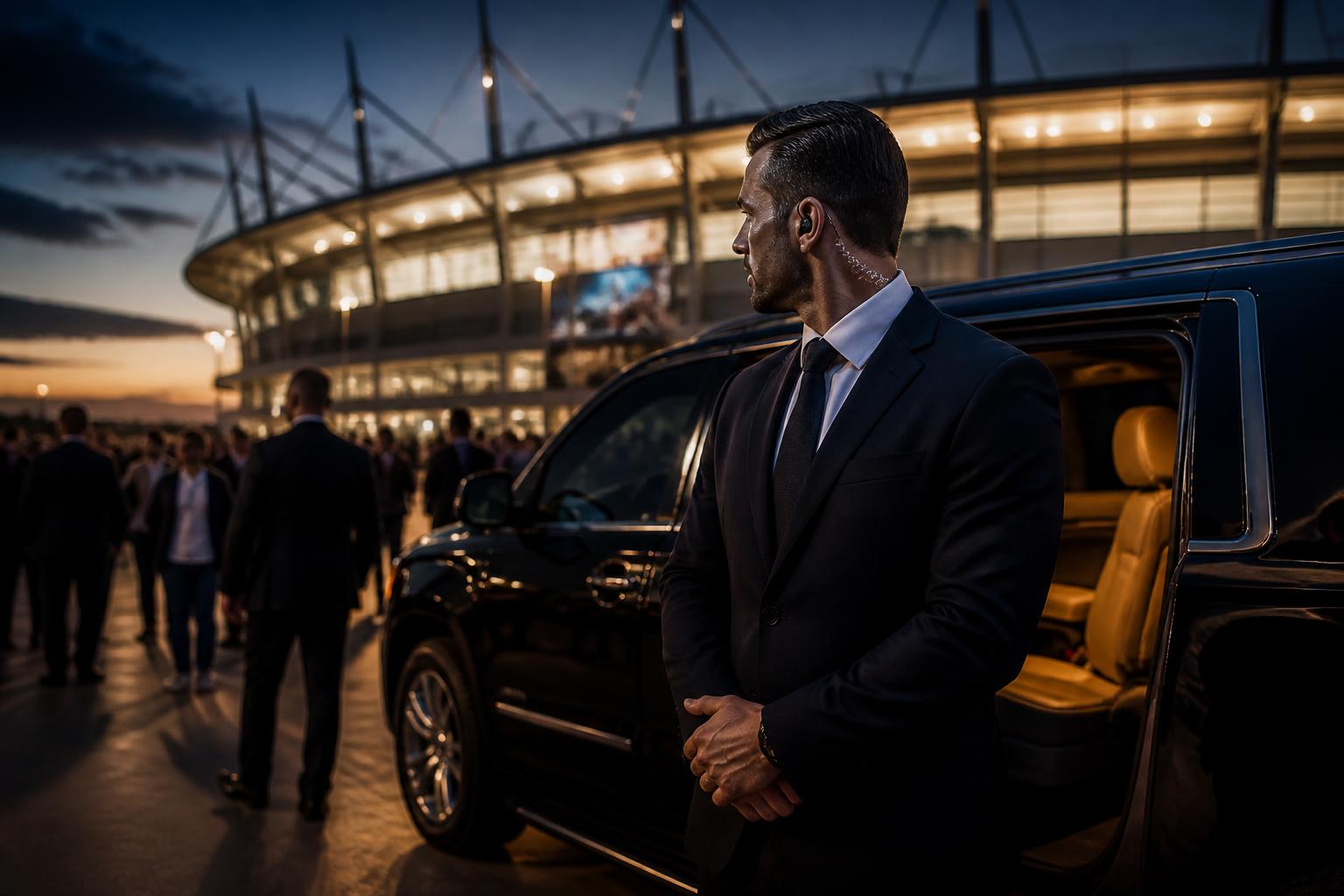
The advance treated the venue as the endpoint. The plan ended at arrival. The most dangerous minutes — the walk to the vehicle, the wait at valet, the departure into traffic released by 80,000 spectators — were not documented at all.
None of these are failures of skill. They are failures of discipline that a professional advance process eliminates.
For private clients and family offices
If you are a principal or work in a family office, the practical question is not whether your team is capable. It is whether the following are documented and reviewed before every meaningful movement:
- Who knows where you will be, and who told them
- The alternate route, and the trigger to use it
- The person authorized to change the plan without asking permission
- The trusted point of contact at every venue you cross
- The photograph that will not be taken because a vendor or guest was informed in advance
If any answer is uncertain, the advance is incomplete.
Related reading
- 7 World Cup Security Lessons for Every Event — the pillar for this series
- How to Vet an Executive Protection Firm — the questions that expose weak advance work
- Protective Intelligence Services — the pre-movement discipline behind every advance
- Secure Transportation — where advance planning becomes route decisions
AMERINE Executive Logistics is licensed by the Texas Department of Public Safety, License No. C31012001.