Back to School Security: Protecting Students Abroad
When your child studies abroad, the opportunity can be tremendous, but UHNW families also face distinct security concerns. The challenge is to provide adequate protection while preserving the independence that gives international education its value.
Understanding the Risks
Students abroad face distinct challenges:
- Unfamiliar Environments: Limited local knowledge and cultural awareness
- Youth Inexperience: Less developed threat recognition and response
- Social Exposure: Meeting new people without established networks
- Travel During Breaks: Exploring new destinations without family oversight
- Distance from Support: Far from family and familiar resources
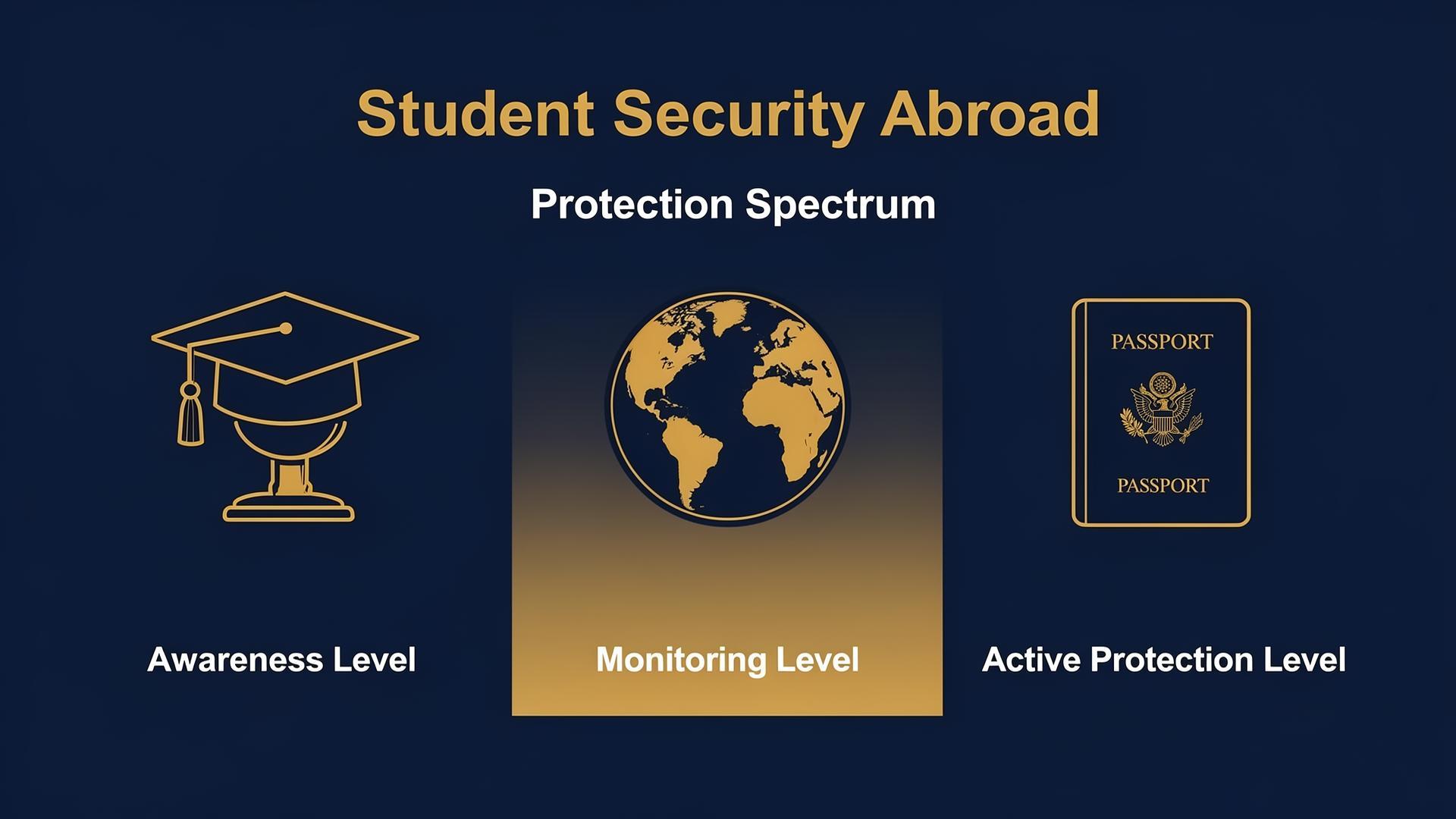
The Protection Spectrum
Student security solutions range from light to comprehensive:
At the awareness level, preparation includes security briefings before departure and information about threats at the destination, along with emergency contact protocols, a safety app and check-in systems.
Monitoring Level
- Regular check-in requirements
- Location monitoring (with consent)
- Travel itinerary tracking
- Emergency response protocols
Active protection includes vetted transportation for regular movements and travel security for breaks and trips. It also includes low-profile accompaniment during high-risk activities and emergency response capability.
Pre-Departure Preparation
Before students leave:
Security Briefing
- Destination-specific threat awareness
- Personal security best practices
- Emergency protocol review
- Communication expectations
Technology Setup
- Secure communication apps
- Location sharing configuration
- Emergency contact programming
- Travel tracking activation
Documentation
- Emergency contact cards
- Medical information accessibility
- Insurance confirmation
- Embassy registration
Destination Considerations
Different locations require different approaches:
Western Europe
Generally safe student destinations. Standard awareness practices sufficient for most students. Petty crime awareness in major cities.
Latin America
Variable by country and city. Some locations require enhanced precautions. Transportation security often advisable.
Asia-Pacific
Generally safe major cities. Cultural awareness important. Some regions require careful planning.
Middle East / Africa
Requires more comprehensive planning. Location-specific assessment essential. May need active support.
Travel During Academic Breaks
Students often travel extensively during breaks:
For spring break and holiday travel, arrangements include a destination briefing before travel and transportation security for group travel, along with check-in protocols during trips and available emergency response.
Weekend Exploration
- Safety briefings for common destinations
- Transportation recommendations
- Communication expectations
The Balance Challenge
Effective student security respects autonomy while ensuring safety:
Too much protection undermines the educational experience and builds dependence rather than awareness. It draws unwanted attention to the student and may lead to resentment and attempts to get around the protections.
Too little protection leaves students vulnerable, with no emergency response capability and inadequate support for actual incidents. Families are left anxious, without reassurance.
The right balance matches protection to the actual risk and strengthens student awareness. Protection stays invisible until it's needed, with a rapid response when required.
Technology Solutions
Modern security technology helps protect students:
- Check-In Apps: Regular location confirmation
- Travel Tracking: Itinerary awareness for family
- Emergency Alert: One-touch communication in crisis
- Secure Messaging: Encrypted family communication
- Local Resources: Pre-programmed emergency contacts
Family Office Coordination
For family offices managing student security:
- Designated point of contact for the student
- Regular reporting to family principals
- Coordination with school security offices
- Emergency response protocols
- Break travel planning and support
Emergency Response Capability
When things go wrong, rapid response matters:
- Operations center availability
- Local resources and contacts pre-established
- Medical and evacuation coordination
- Family communication and coordination
- Crisis management experience
Supporting Your Student
Start security planning well before your child leaves to study abroad. Our team works with families to build age-appropriate security programs with protection proportional to risk, protecting students while respecting their growth and independence.