The Unique Vulnerability of UHNW Children
For children in ultra-high-net-worth families, documented threats include kidnapping for ransom, custody-related abduction, stalking, online exploitation, and social engineering that uses children to reach their parents. Most parents never have to consider these security risks.
The main challenge is to protect children effectively without getting in the way of normal development. They still need room to maintain friendships, attend school, take part in activities, and gradually gain independence.
School Security
School Selection Considerations
- Physical security infrastructure (fencing, access control, cameras)
- Visitor management and credential verification
- Emergency response plans and drill frequency
- Communication protocols during incidents
- Willingness to accommodate additional security measures
School Security Coordination
- Meet with school administration and security director
- Provide updated authorized pickup lists
- Establish communication protocols for emergencies
- Coordinate with school on any specific threats
- Discuss placement of protective agents if needed
Transportation
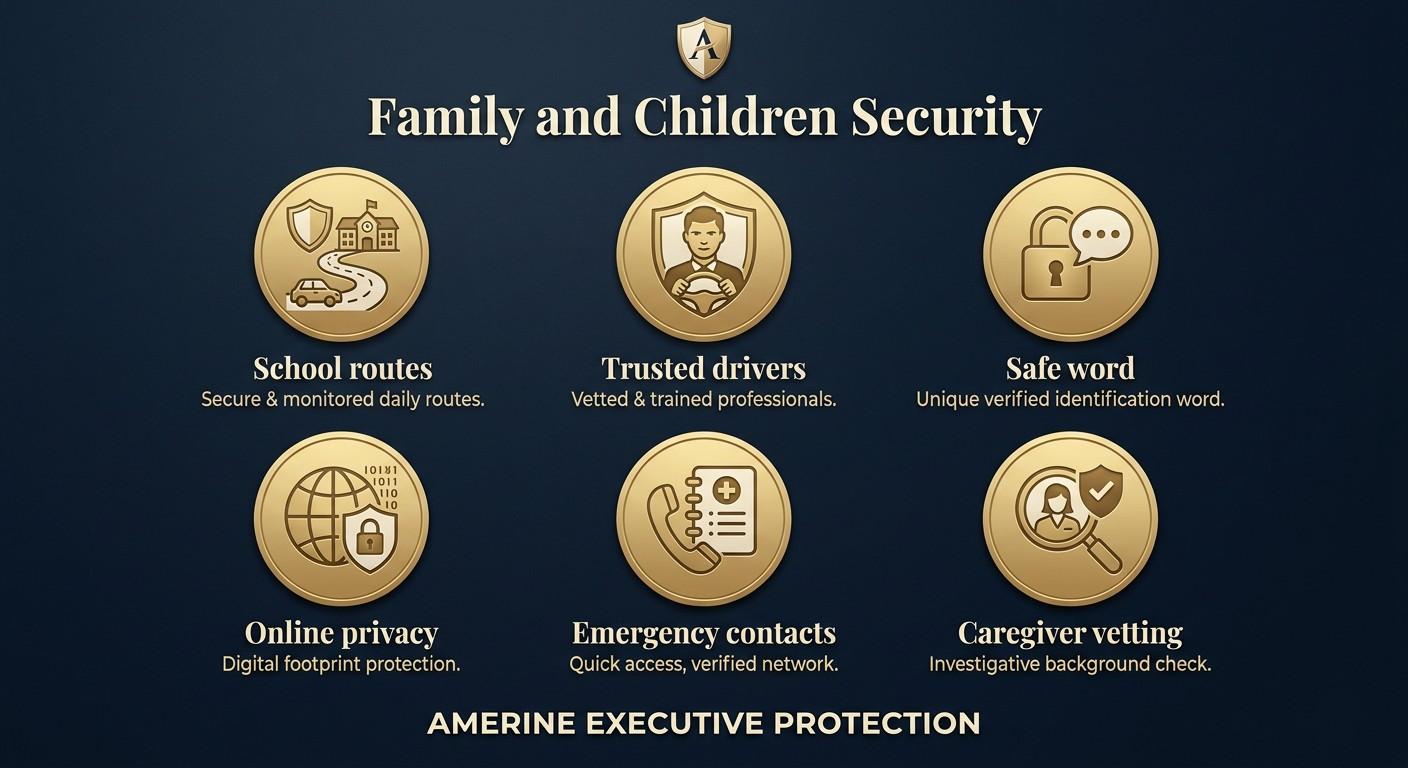
- Vetted drivers for school transportation
- Route variation for daily commute
- Vehicle tracking for real-time location monitoring
- Emergency protocols for school lockdowns
- After-school activity transportation security
Online Safety
Age-Appropriate Digital Security
- Privacy settings on all social media accounts
- Education about not sharing location, school name, or daily routines
- Monitoring tools appropriate to the child's age
- Awareness of social engineering and phishing attempts targeting children
- Gaming platform privacy and stranger interaction protocols
Social Media Guidelines
- No posting of home exterior or identifiable location markers
- No sharing of family travel plans or vacation photos in real-time
- Privacy settings that restrict unknown friend requests
- Awareness that photos contain metadata (location, time)
Household Staff Vetting
Nanny and Caregiver Screening
- Comprehensive background check (criminal, civil, driving, credit)
- Reference verification with previous employers
- Social media review
- NDA and confidentiality agreement
- Ongoing behavioral awareness training
Domestic Staff Security Protocols
- What information staff can and cannot share about the family
- Social media restrictions regarding the children
- Photography policies in the home
- Visitor notification procedures
- Emergency contact and response responsibilities
Travel Security for Children
Domestic Travel
- Vetted transportation at all points
- Hotel room security (interior rooms, upper floors)
- Activity supervision protocols
- Communication check-in schedules
- Emergency contact cards for children old enough to carry them
International Travel
- Passport security and copies
- Emergency embassy contact information
- Medical insurance with pediatric coverage
- Local hospital and pediatric care mapping
- Cultural briefing appropriate to destination
Age-Appropriate Security Awareness
Young Children (5-10)
- Stranger awareness without creating fear
- Never go with anyone not on the approved list
- How to use a phone for emergencies
- Knowing their home address and parent's phone number
Pre-Teens (11-13)
- Basic situational awareness
- Social media safety
- What to do if followed or approached
- Emergency communication protocols
Teenagers (14-17)
- More detailed threat awareness
- Driving safety and vehicle security
- Social engineering recognition
- Responsible social media practices
- Gradual integration into the family security plan
For a family security program with comprehensive child protection strategies built around your family's lifestyle and risk profile, Contact AMERINE.