Why UHNW Families Need Evacuation Plans
For UHNW families, an immediate relocation rarely involves simple logistics. Natural disasters, civil unrest, home invasions, stalker threats, pandemics, and political instability can all force a move. Family members may be spread across multiple residences, children may be at boarding schools, and others may be traveling internationally, making evacuation planning significantly more complex than it is for the average household.
The Family Evacuation Framework
1. Threat Scenario Planning
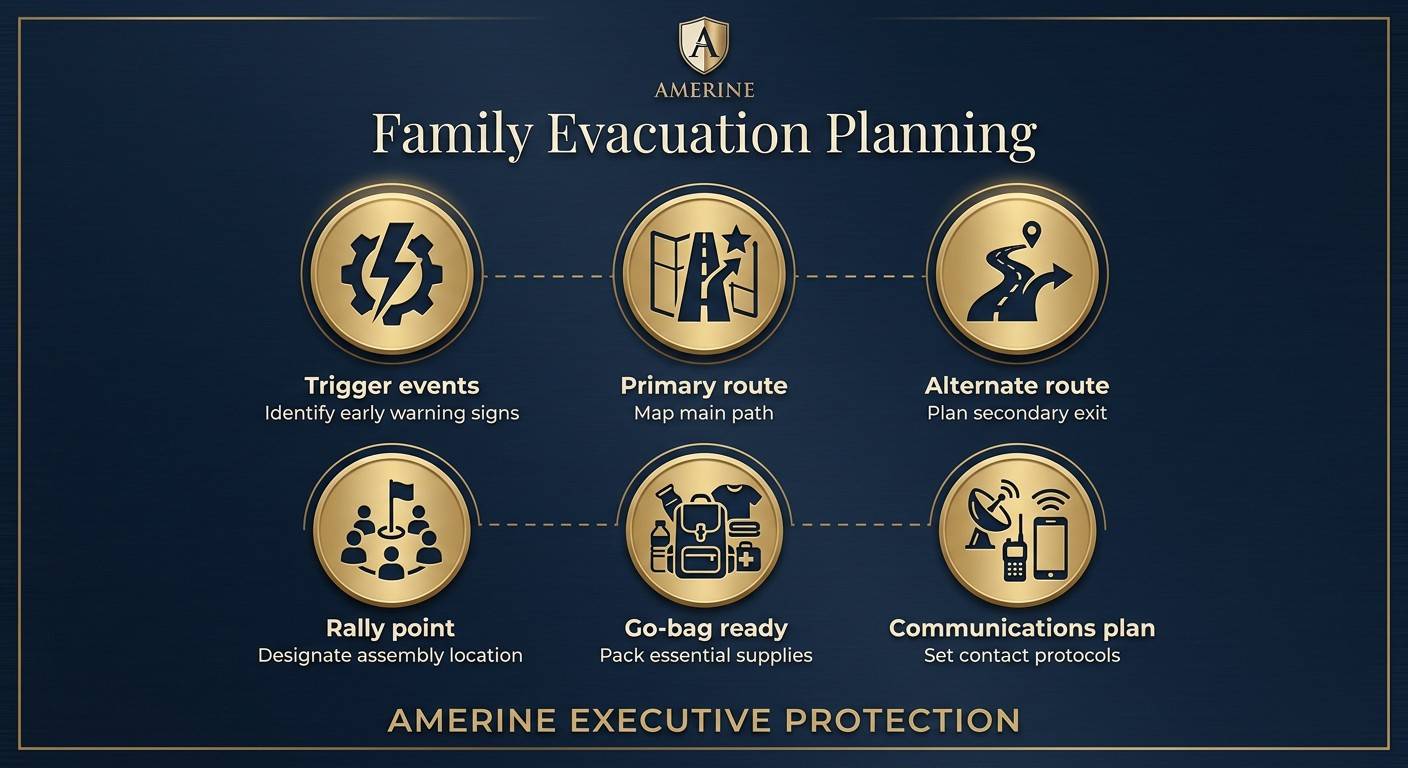
Start by identifying which scenarios are most likely to require evacuation: a Natural disaster such as a hurricane, wildfire, earthquake, or flood; a Home security breach involving an intrusion, stalker, or threat; or Civil unrest at or near a residence. Include a Medical emergency that requires relocation to medical facilities, an International crisis while family members are abroad, and a Targeted threat that requires immediate relocation.
2. Rally Points
Set meeting locations in advance at multiple levels. Your Immediate rally point should be within walking distance of the primary residence, such as a neighbor's home or nearby business. Choose a Local rally point within a 15-30 minutes drive, such as a hotel, friend's home, or second property, and a Regional rally point at least 50-100 miles away. For worst-case scenarios, establish an Out-of-state/country rally point at a predetermined safe location.
3. Communication Plan
Communication is often the first thing to break down during an emergency, so establish your methods in advance. Use a cell phone group text/call as the Primary method, an encrypted messaging app (Signal) as the Secondary method, and a satellite phone or two-way radio as the Tertiary method. For Emergency communication, arrange code words and check-in protocols ahead of time. Designate a family friend or relative outside the affected area as your Out-of-area contact and communication hub.
4. Go-Bags
Keep pre-packed bags at each residence and in each vehicle. Pack passport and ID copies, cash in multiple currencies, medications for 7 days, phone chargers and battery packs, and a change of clothes. Include important documents on an encrypted USB drive, water and nutrition bars, and a first aid kit.
5. Transportation Options
Identify multiple transportation methods ahead of time, including personal vehicles with full fuel tanks and a pre-arranged car service or security driver. Line up private aviation contacts with standby availability, identify commercial flight options from multiple airports, and include maritime options if applicable.
6. Secure Relocation Destinations
Keep secondary residences ready for occupancy, and maintain relationships with property management contacts at all residences. Stay connected with hotels that accommodate unannounced arrivals and trusted family or friends who can provide temporary shelter.
International Evacuation Considerations
For family members traveling abroad, arrange embassy registration through the STEP program for U.S. citizens and evacuation insurance with air ambulance coverage. Identify evacuation routes from each destination in advance, establish local security contacts in each country, and arrange GSOC monitoring with real-time communication.
Training and Practice
Your family needs to be able to carry out the plan for it to have value. Hold an annual family briefing on evacuation procedures and practice communication protocols. As circumstances change, review and update rally points. Test go-bag contents, replace expired items, and conduct at least one physical drill annually.
Contact AMERINE for comprehensive family evacuation planning that integrates with your overall security program.