Church & Religious Security: Protecting Houses of Worship in Today's Environment
Houses of worship have long been sanctuaries for peace, reflection, and community. But current realities call for religious leaders and congregations to give security the same deliberate attention they give ministry. Faith communities need thoughtful, balanced responses to security problems, from high-profile incidents that make national headlines to smaller disruptions that disturb a service.
Protecting your congregation means balancing security with the open, welcoming atmosphere that defines religious community. Practical measures should support worship, not get in its way.
Understanding the Current Threats
Religious facilities face a wide range of potential threats:
- Targeted Violence: Acts of violence aimed directly at specific faith communities
- Opportunistic Crime: Theft, vandalism, and crimes targeting vulnerable populations
- Domestic Disputes: Family conflicts that follow individuals to their place of worship
- Mental Health Crises: Individuals experiencing acute episodes during services
- Protests and Demonstrations: Groups targeting religious institutions for ideological reasons
- Cyber Threats: Attacks targeting donor databases, member information, and financial systems
Recognizing that threats can arrive from multiple directions is the first step toward thorough protection.
---
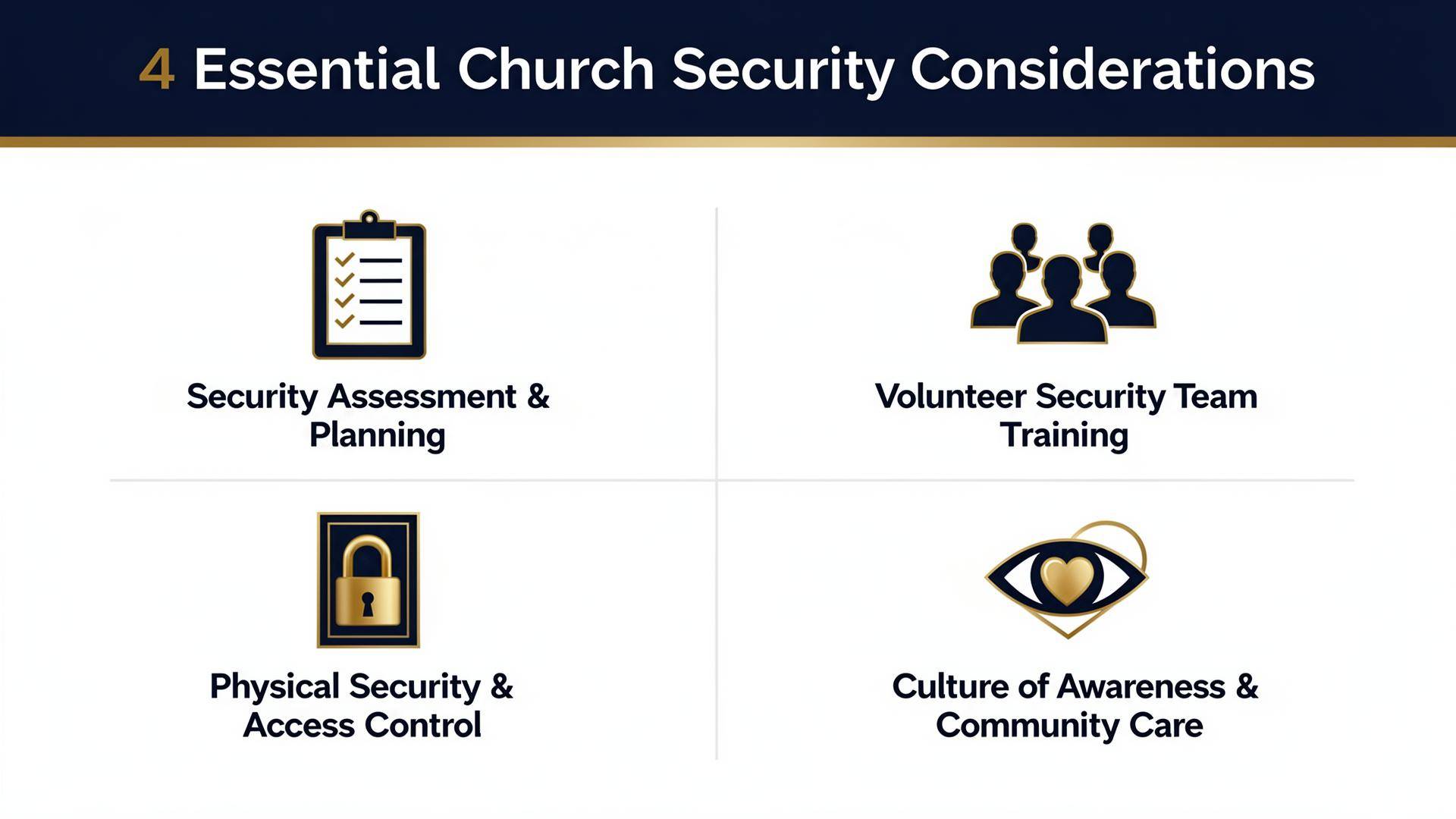
The 4 Essential Security Considerations for Every House of Worship
1. Develop a Comprehensive Security Assessment and Plan
Your congregation's security needs depend on its building layout, neighborhood, service schedule, and member demographics. Those differences make every congregation's security profile distinct, so a plan built for one church may be entirely inappropriate for another.
Start your vulnerability assessment by walking the facility and identifying every entry point, blind spot in sight lines, potential hiding spot, and primary route between the parking lot and sanctuary. Assess the specific threats your congregation might face based on its location, denomination, public visibility, and prior incidents. Put clear emergency procedures in writing for medical emergencies, fires, active threats, severe weather, and other scenarios. Assign roles, spell out how members will be notified, and designate safe areas. Your communication plan should establish how leadership, the security team, and the congregation will receive emergency alerts, with protocols for silent alerts, PA announcements, and post-incident messages.
Conduct a professional security assessment or commission one, and form a security committee that brings diverse perspectives. Write emergency action plans for multiple scenarios, then review and update them annually.
---
2. Train and Equip a Volunteer Security Team
A trained volunteer security team, often called a safety team or protection ministry, can provide meaningful coverage without sacrificing a warm, open environment. Professional guards offer excellent protection.
What This Looks Like:
- Careful Selection: Look for candidates with backgrounds in law enforcement, the military, private security, or medicine. Temperament matters just as much. You need individuals who remain calm under pressure, exercise good judgment, and maintain a servant's heart.
- Formal Training: Prior service does not automatically translate to a house of worship. Provide focused instruction in verbal de-escalation, emergency medical care, law enforcement coordination, and the specific challenges of protecting a worship space.
- Clear Roles: Assign clear duties. Designate observers at the doors, roving monitors, personnel stationed near exits, and liaisons for children's classrooms.
- Equipment: Issue two-way radios, trauma kits, and flashlights. If your leadership permits armed response, ensure it complies strictly with local law and rigorous qualification standards.
Key Action Steps:
- Recruit team members based on temperament and capability, not enthusiasm alone
- Invest in professional training from qualified instructors
- Run regular drills and scenario exercises
- Coordinate directly with local law enforcement for consultation
---
3. Implement Physical Security and Access Control Measures
Physical security measures help you deter, delay, and detect threats. Although no barrier stops every intruder, physical controls give first responders more time and create opportunities to intercept trouble early.
Once services begin, keep secondary doors locked and route all foot traffic through monitored entrances. Light parking lots and exterior pathways; clear sight lines and a visible presence discourage threats before they reach the doors. Tighten access control around nurseries, classrooms, and youth rooms, using strict check-in and check-out systems to protect children and reassure parents. Cameras support deterrence and post-incident investigation, so monitor primary access points and perimeter zones in real time during gatherings. Install hardware that lets doors lock instantly, identify safe rooms for vulnerable groups, and regularly drill lockdown procedures.
Audit every exterior door and entry point, upgrade parking lot and walkway lighting, and put check-in systems in place for children's ministries. Cover primary access points with cameras, and practice lockdown drills with staff and volunteers.
---
4. Foster a Culture of Awareness and Community Care
Even sophisticated equipment fails when people inside the building ignore what's happening around them. Security depends on broad participation: everyday vigilance reinforces each operational safeguard you put in place.
Build a "See Something, Say Something" mentality by encouraging members to report unusual behavior, erratic actions, or hazards, and remind them that speaking up is compatible with being welcoming. Train greeters to welcome people warmly while watching for warning signs; a personal greeting is an ideal chance to gauge demeanor and baseline behavior. Stay alert as you welcome newcomers. Most visitors simply want to attend the service, though atypical actions warrant discreet attention. Teach ministry leaders to recognize signs of acute distress, and set clear procedures for compassionate intervention that de-escalates situations before they intensify. Develop a direct relationship with your local police precinct by inviting officers for walkthroughs, learning their response procedures, and participating in local safety briefings.
Give the congregation brief security awareness briefings, and teach greeters and ushers basic observation skills. Build working relationships with local police and emergency responders, and establish clear procedures for helping distressed individuals and de-escalating their situations.
---
Balancing Security with Ministry
Church security should never turn your building into a fortress that drives visitors away. Its purpose is to let people worship freely because reasonable precautions are in place. Keep the following principles in mind.
Favor discretion over display, finding a balance that fits your congregation's culture. A visible security presence can reassure some members and alarm others.
Welcome First: Greeters should still be warm and inviting. Security awareness enhances rather than replaces hospitality.
Preserve everyone's dignity in your security responses, including people whose behavior raises concerns. Conversation, rather than confrontation, resolves most concerning situations.
Base your security investment on your actual threat profile. Protection needs differ across congregations, so your response should be proportional.
---
When to Seek Professional Help
While volunteer security teams and common-sense measures address many concerns, some situations call for professional consultation:
- Large events with dignitaries or high-profile attendees
- Congregations that have received specific threats
- Facilities in high-crime areas
- Complex multi-building campuses
- Training and assessment for volunteer teams
At AMERINE Executive Logistics, our security consulting services for houses of worship include threat assessments, security program development, and training for volunteer protection teams. We implement professional-grade security measures while respecting the distinct mission of faith communities.
---
Moving Forward
The need for church security says something sobering about our world, but it also speaks to the profound importance of what happens in houses of worship. Congregations deserve protection because of their importance to members, communities, and society.
Addressing these four essential areas, planning, training, physical security, and culture, can help your congregation feel more at ease during worship while preserving the open, welcoming spirit that defines faithful community.
Contact our team to discuss security consulting services for your house of worship.