CPO vs Bodyguard at a Glance
How a close protection officer (CPO) and a traditional bodyguard for hire differ across the dimensions that actually move risk.
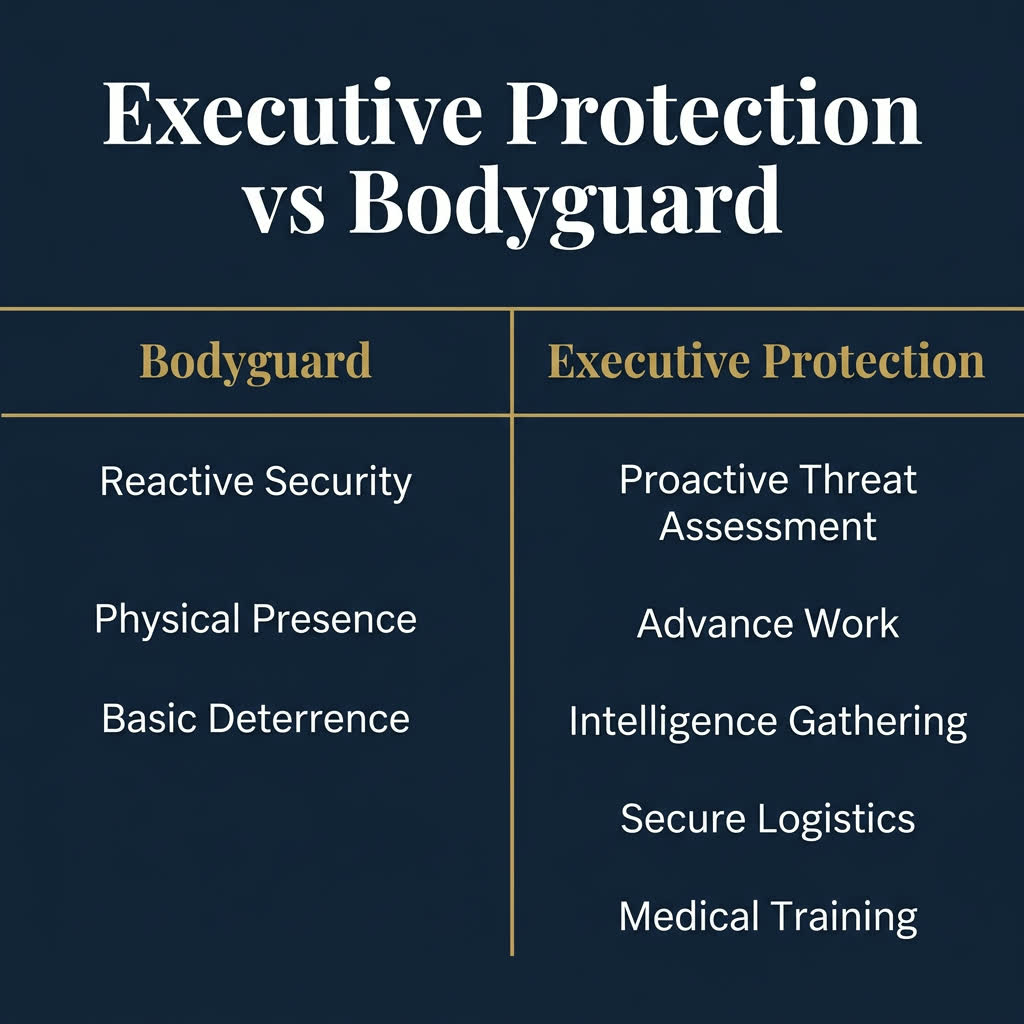
| Dimension | Executive Protection / CPO | Bodyguard for Hire |
|---|---|---|
| Mindset | Planning-first, prevention | Reactive presence |
| Advance work | Routes, venues, contingencies pre-walked | Rarely conducted |
| Protective intelligence | Pre-trip + real-time monitoring | Not included |
| Team structure | Coordinated detail with comms plan | Solo operator |
| Transportation | Vetted security driver, alternate routes | Standard ride or none |
| Medical capability | TECC/TCCC-trained, kit on body | Variable |
| Vetting | Federal / military / USSS pedigree | Inconsistent |
| Best for | Executives, UHNW families, ongoing programs, travel | One-off events, short overwatch |
Not sure which fits your situation? Scott personally takes every first call.
CPO vs Bodyguard — Quick Answers
Most People Searching "Bodyguard" Actually Need Executive Protection
If you are searching for a bodyguard, you probably do not need a bodyguard. You need executive protection.
The difference is not branding. It is methodology, training, vetting, and how risk gets managed before anything happens. A bodyguard reacts. An executive protection (EP) agent — also called a close protection officer (CPO) — plans, prevents, and only reacts when prevention fails.
This guide walks through how to evaluate the two, how to vet a provider, and how to hire the right level of protection without overpaying or under-protecting.
The Real Difference: Reactive vs Planning-First
A traditional bodyguard for hire is typically a single operator booked for short-term physical presence. Common use cases: a one-night event, a contentious meeting, a hostile encounter response, or a public appearance with crowd pressure. The work is largely reactive — be present, project deterrence, intervene if necessary.
Executive protection is built around the opposite premise. Most of the work happens before the principal arrives:
- Threat assessment and protective intelligence
- Advance work on venues, routes, and arrival/departure points
- Secure transportation planning
- Communications, medical, and contingency planning
- Coordinated team protocols, not solo improvisation
When EP is done well, the visible operator standing near the principal is the smallest part of the engagement.
For a deeper breakdown of the role itself, see What Does a Close Protection Officer Do?.
When a Bodyguard Is Actually the Right Call
There are legitimate scenarios where a single, short-duration bodyguard is the right tool:
- A contentious in-person meeting, served papers, or hostile interaction
- A one-night public event with low-to-moderate exposure
- A short residential overwatch period during a credible but contained threat
- A response presence after a stalker or workplace violence incident, in coordination with law enforcement
Even in these scenarios, AMERINE deploys a vetted EP-trained operator — not a generic "guard." The methodology travels with the operator regardless of duration.
When You Need Full Executive Protection Instead
You are past "bodyguard" and into EP territory if any of these apply:
- The principal is recognizable, public, or financially exposed (UHNW, C-suite, family-office principal, public figure)
- The trip involves multiple cities, venues, or international travel
- There are children, spouses, or extended family in the protective picture
- There is an active or emerging threat (stalker, fixated person, public controversy, M&A or layoff event, divorce proceedings, political exposure)
- The principal has a residence or estate that needs coordinated coverage
- Duty of care, insurance, or board-level governance is a factor
In any of these cases, you are buying a program, not a person. See Executive Protection Services and Family Office Security Programs for how AMERINE structures this.
How to Vet a Provider — A Practical Checklist
Most "bodyguard for hire" listings online cannot answer these questions. A serious EP firm should answer all of them in the first call.
- State licensing. Are operators licensed in the state where they will work? AMERINE is licensed in Texas (License No. C31012001).
- Operator backgrounds. U.S. Secret Service, federal law enforcement, military special operations, or career private-sector EP — with verifiable history.
- Insurance. General liability and, where applicable, professional liability coverage.
- Methodology. Is there an advance? An intelligence component? A medical plan? A communications plan? A contingency plan?
- Vehicle and driver standards. Are protective drivers trained in evasive and security driving — or just chauffeurs?
- Scalability. Can the firm scale from a single operator to a multi-agent detail with secure transportation and a command element if the threat changes?
- Discretion. Will the operator blend into a luxury, corporate, or family environment without standing out?
- Accountability. Who is the single point of contact during the engagement? At AMERINE, Scott personally takes every first call.
If a provider cannot answer these, they are not protection. They are presence.
How a Program Is Scoped
Scope and terms are confirmed in writing. The program depends on threat level, duration, locations, team size, vehicle requirements, residential coverage, international travel, and intelligence support.
Scope and terms are confirmed in writing. Every engagement starts with a confidential intake conversation, then a threat assessment, then a program proposal.
For more context, see our blog.
How to Hire — Step by Step
If you are ready to move, the process is straightforward:
- Call or email AMERINE. Scott personally handles first contact. Phone (281) 799-1877. Email scott@amerineexecutivelogistics.com.
- Confidential intake. A short conversation about the principal, the situation, the timeline, and what is driving the request.
- Threat assessment. A structured look at the risk picture, exposure, and operational requirements.
- Program proposal. Scope, team composition, transportation, intelligence support, contingency plan, and investment.
- Deployment. Operators on the ground, advance complete, communications live.
Request a confidential consultation →
The Bottom Line
If you are searching "bodyguard for hire," you are likely closer to needing executive protection than you think. The right question is "who can plan this so nothing happens?"
That is the work AMERINE does — quietly, every day, for principals who expect the day to feel normal.
Contact AMERINE for a confidential conversation. Scott personally takes every first call.
---
Frequently Asked Questions
What is the difference between a bodyguard and executive protection?
A bodyguard is typically a single, reactive operator booked for short-term physical presence. Executive protection is a planning-first program built around threat assessment, protective intelligence, advance work, secure transportation, and coordinated response. EP prevents incidents; bodyguards react to them.
How do I hire a bodyguard?
Contact a licensed protection firm directly. Expect a confidential intake conversation, a threat assessment, and a tailored program proposal. Scope and terms are confirmed in writing. Verify state licensing, operator backgrounds, insurance, and methodology before signing.
How is a bodyguard engagement scoped?
Scope depends on threat level, duration, location, team size, vehicle and driver requirements, and whether residential or international coverage is involved. Scope and terms are confirmed in writing.
Can I hire a bodyguard for one day or one event?
Yes. AMERINE supports single-day movements, single-event coverage, and short-term details. The methodology — advance, intelligence, movement plan, contingency — is the same regardless of duration.
Do I need an armed bodyguard?
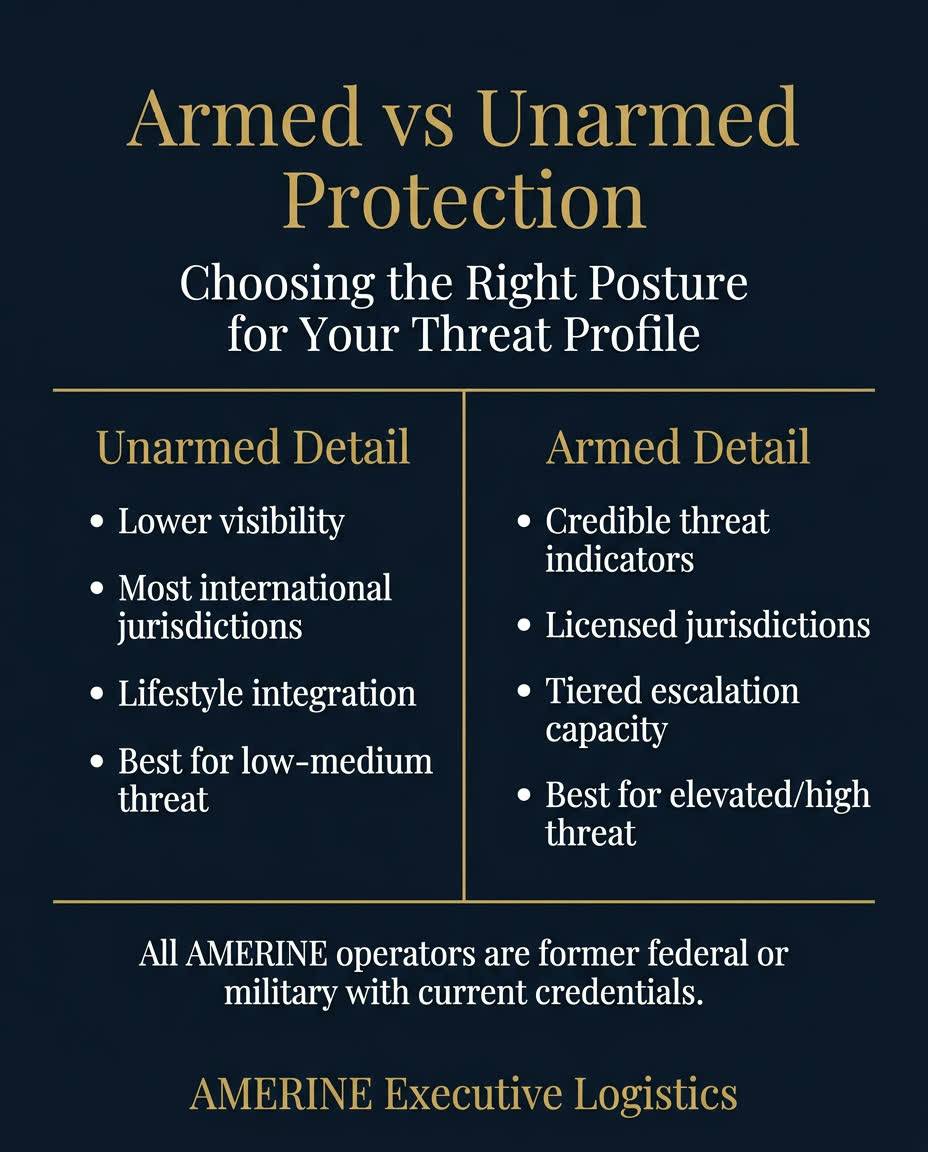
It depends on the threat picture, jurisdiction, venue rules, and the principal's preferences. AMERINE deploys both armed and unarmed operators and matches armed status to the assessment, not to the request.
What backgrounds do AMERINE's protective agents come from?
AMERINE operators come from the U.S. Secret Service, federal law enforcement, military special operations, and senior private-sector executive protection roles. Every operator is vetted for credentials, character, and the discretion that UHNW, corporate, and family environments require.
How quickly can AMERINE deploy?
Services are delivered by appropriately licensed personnel where state law requires it. Licensing, staffing and response times are confirmed in writing before each engagement.
---
This article is general information about hiring private protection and is not legal, licensing, or operational advice. Licensing and firearms requirements vary by state and country. Contact AMERINE for guidance specific to your situation.