The Gap Between Legal IP and Operational IP
Most companies have strong legal programs for IP, covering patents, NDAs, employment terms, and trade-secret policies. An operational IP program is far less common. That’s the people, posture, and procedures that prevent sensitive information from leaving the room in the first place.
Principals carry deal terms, product roadmaps, personnel decisions, and M&A targets with them through hotels, cars, restaurants, and conference centers. Each of those places is a leakage point, putting executive protection squarely in the operational IP layer.
Where Operational IP Leaks
We see the same five leak points repeatedly:
- Hotel rooms. Unattended laptops, documents left on desks, in-room conversations within hearing range of staff or adjacent rooms.
- Back of cars. Phone calls on speaker, sensitive conversations in front of unvetted drivers, documents visible on screens.
- Restaurants. Deal terms discussed within earshot of tables that may include reporters, competitors, or counterparties.
- Conference foyers. Side conversations near open mics, recorded sessions, and unsecured laptops at registration desks.
- Home and household staff. Cleaners, contractors, and casual visitors with line-of-sight to documents, screens, and conversations.
These threats aren’t exotic. They’re part of the routine of executive life, where most operational IP loss happens.
The Protective Layer
A properly designed executive program adds an operational IP layer:
- Device posture. Travel laptops, hardened phones, encrypted comms, and a clear "never leaves the room" device list.
- Driver vetting. Drivers selected and briefed as part of the information perimeter, rather than simple transportation.
- Venue advance. Restaurants and meeting rooms pre-checked for layout, line-of-sight, and audio exposure.
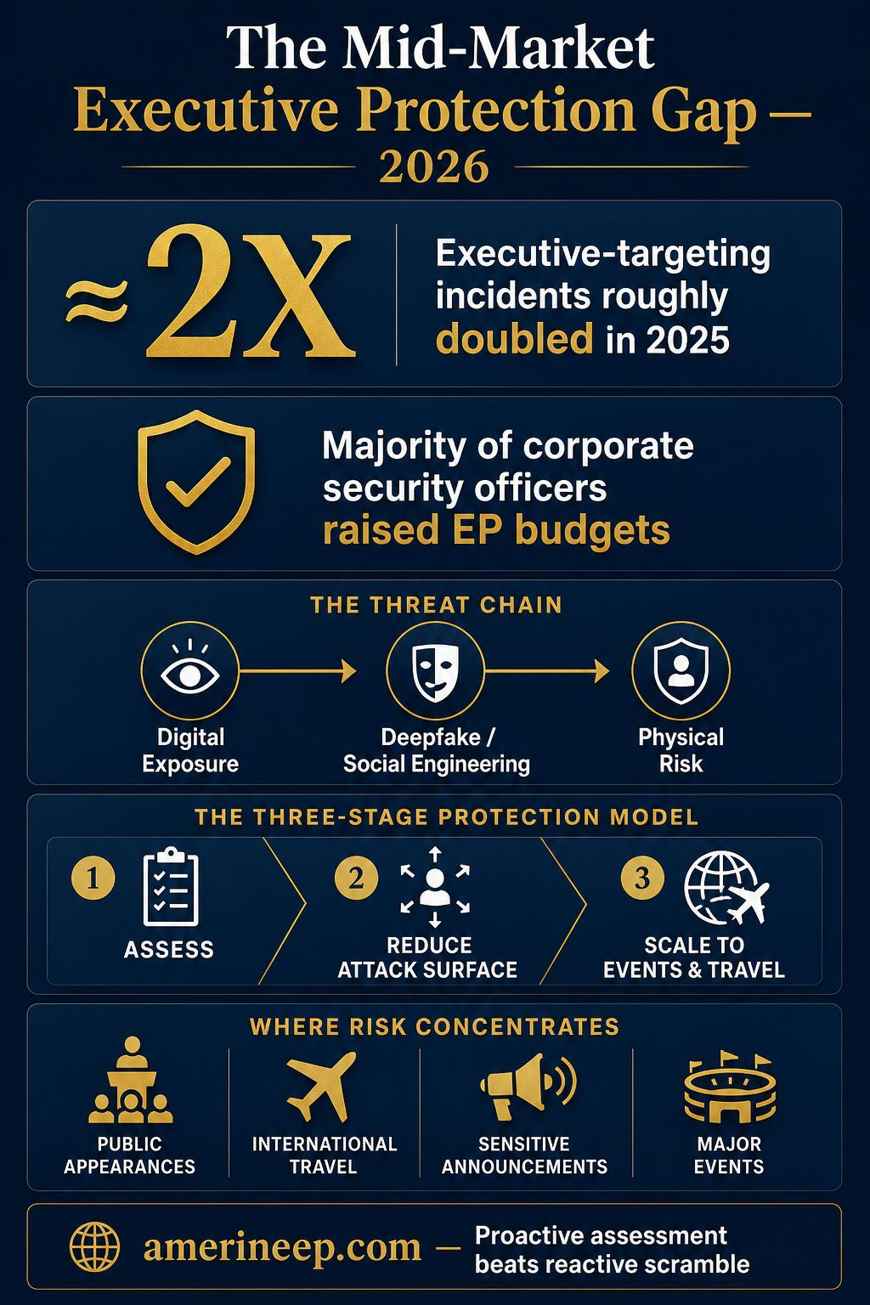
- Counter-surveillance during sensitive windows. Pre-announcement, deal close, board meetings, and litigation periods.
- Household briefing. A clear understanding among household staff about what they see and what they do not discuss.
When to Engage
A once-a-year posture review and a documented protocol can cover routine operations. During sensitive windows, such as pre-IPO, pre-M&A announcement, board transitions, or major litigation, the work becomes an active engagement involving sweep, advance, and dedicated counter-surveillance.
AMERINE's Role
Our work with corporate security teams, GCs, and family offices covers the operational IP layer of executive protection: pre-trip device posture, secure ground transportation with vetted drivers, venue advance, and counter-surveillance during sensitive windows. Counsel owns the legal IP program. We own the layer that keeps the information from leaving the room.
Contact us to discuss a posture review.
---
This article is general protective-security guidance. It is not legal, IP, or compliance advice. Operational IP programs should be coordinated with corporate counsel and internal security leadership.