The Personal Protection Officer: Beyond the Bodyguard Myth
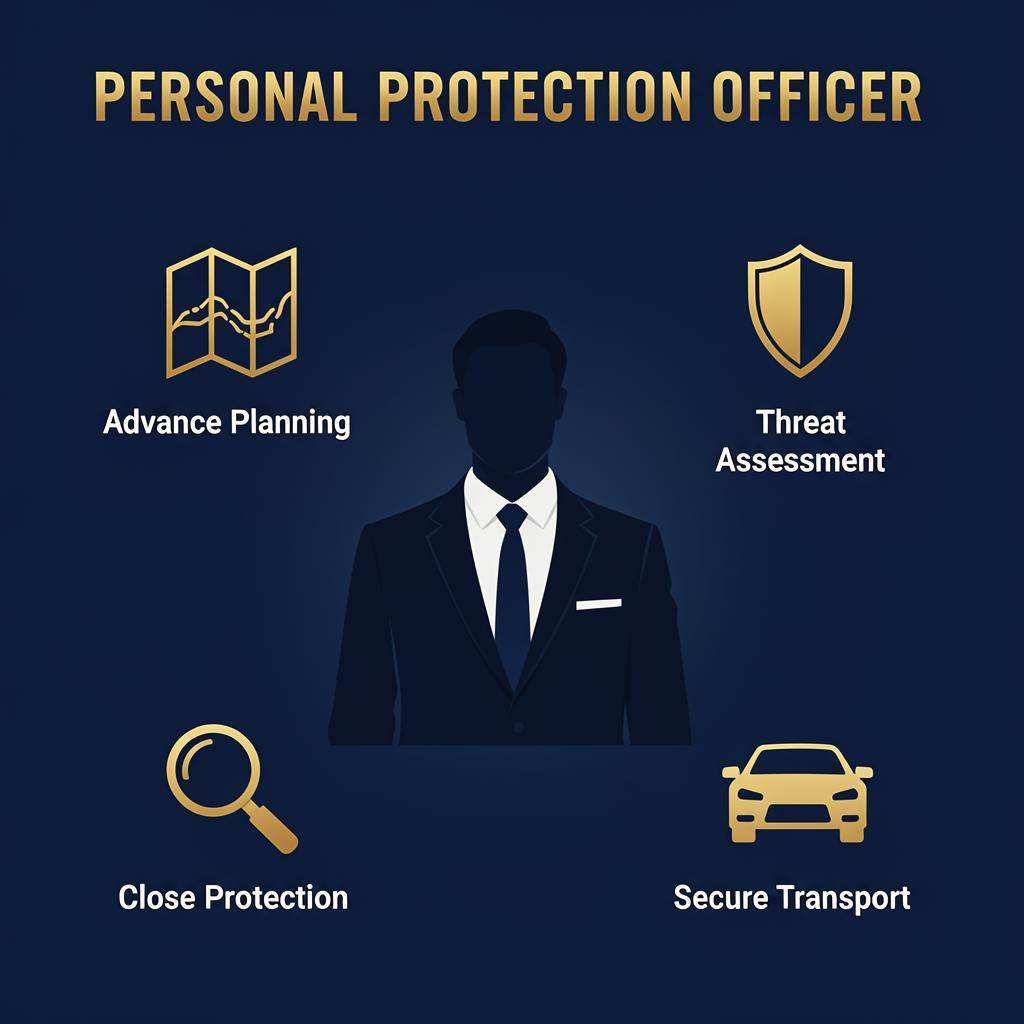
Most people hear "personal protection officer" (PPO) and picture a large person in a dark suit standing behind a celebrity. The job is far more complex and demanding than that image suggests. These highly trained specialists draw on intelligence analysis, advance planning, risk assessment, emergency medicine, and interpersonal skills to keep clients safe without disrupting their lives.
At AMERINE, we draw our protection officers from the U.S. Secret Service, military special operations, the FBI, and other elite government programs.
What Is a Personal Protection Officer?
A personal protection officer protects a specific individual or family from physical threats. Also known as a close protection officer (CPO) or executive protection agent, this security professional moves with clients through their daily lives. Security guards monitor buildings or fixed sites; PPOs protect people directly.
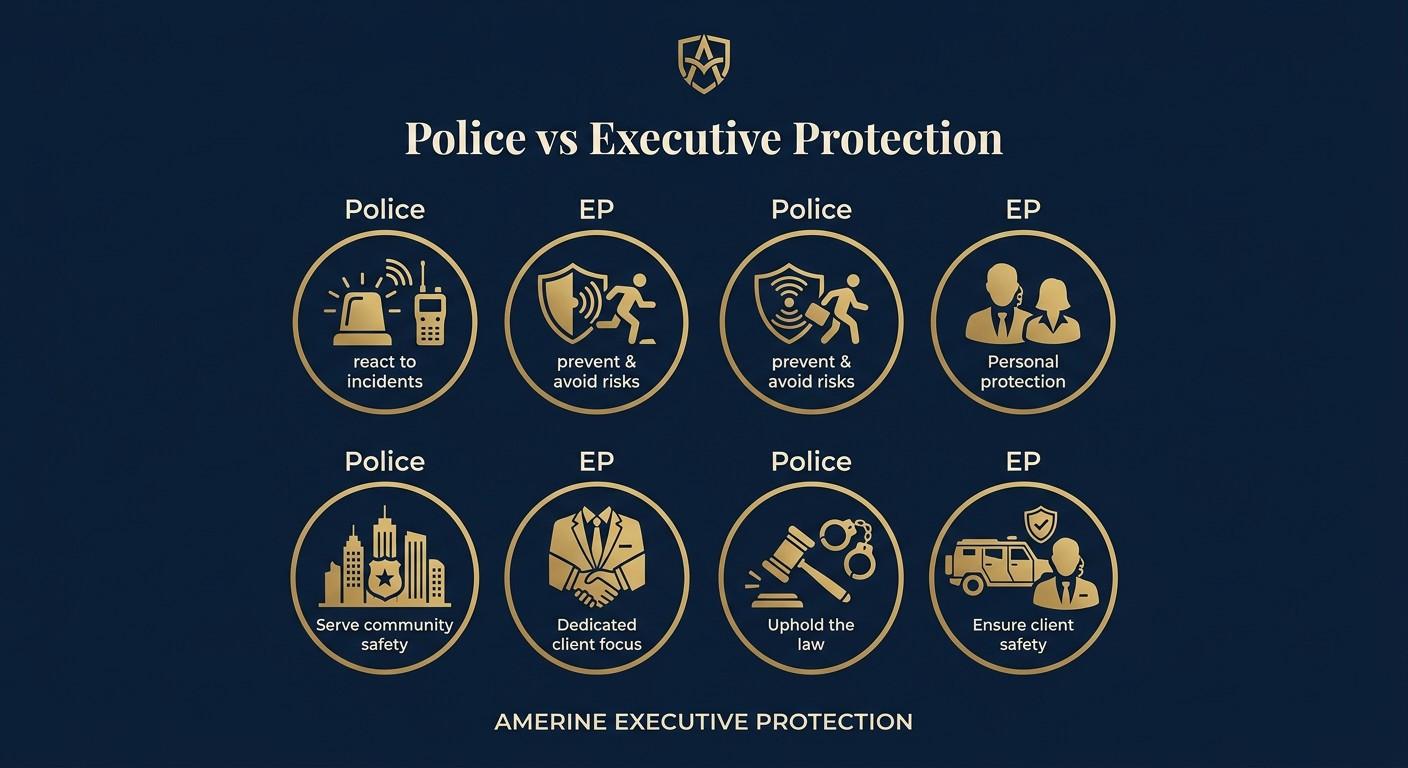
PPO vs. Security Guard: Key Differences
| Personal Protection Officer | Security Guard | |
|---|---|---|
| Protects | Individuals and families | Buildings and properties |
| Training | Government-level protective operations | Basic security licensing |
| Approach | Proactive threat prevention | Reactive response |
| Planning | Extensive advance work for every location | Static post assignment |
| Integration | Blends into client's lifestyle | Visible deterrent |
| Medical | Advanced first aid / EMT trained | Basic first aid |
| Driving | Defensive/evasive driving certified | Standard driver's license |
| Intelligence | Threat assessment and monitoring | Incident reporting |
Daily Responsibilities of a Personal Protection Officer
1. Advance Planning
A PPO does advance work before a client goes anywhere, including trips from home to the office, dinner outings, and travel between cities:
- Route planning: Identifying primary, secondary, and emergency routes between locations
- Venue assessment: Visiting restaurants, meeting locations, and event venues before the client arrives to identify entry/exit points, parking, and potential threats
- Medical facility identification: Knowing the nearest hospital, trauma center, and urgent care at every location
- Communication planning: Ensuring radio, cell, and backup communication channels are operational
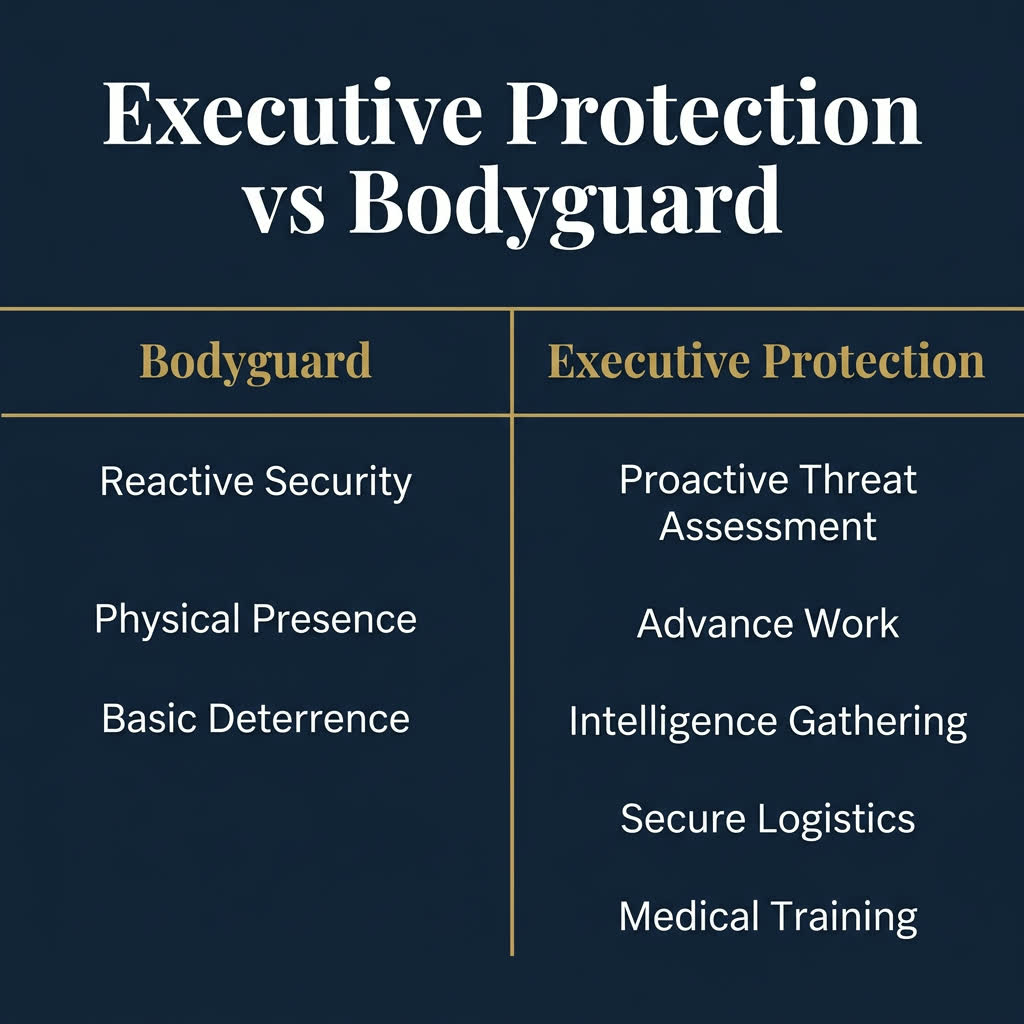
Advance planning is what separates elite protection from reactive "bodyguard" services. At AMERINE, we plan first, protect always.
2. Protective Movements
During daily movements, the PPO:
- Maintains appropriate proximity to the client based on threat level and environment
- Scans for threats using trained observation techniques (baseline behavior analysis)
- Manages vehicle transitions, ensuring the client moves efficiently between secure vehicles and venues
- Coordinates with other team members (driver, counter-surveillance, operations center)
- Maintains communication with the Global Security Operations Center (GSOC) for real-time intelligence updates
3. Threat Assessment and Intelligence
A PPO works to prevent threats before they materialize:
- Monitor social media and open-source intelligence for threats against the client
- Assess persons of interest who may pose risks (disgruntled employees, online stalkers, former associates)
- Evaluate the threat environment at each destination (crime rates, protest activity, geopolitical risks)
- Coordinate with local law enforcement when operating in their jurisdictions
4. Emergency Response
When things go wrong, the PPO is the first responder:
- Medical emergencies: Most elite PPOs carry trauma kits and are trained as EMTs or tactical medics
- Active threat: Trained in protective formations, evacuation protocols, and, where legally permitted, armed response
- Natural disasters: Emergency evacuation planning for fire, earthquake, severe weather
- Vehicle incidents: Defensive and evasive driving techniques for vehicle-borne threats
5. Lifestyle Integration
Perhaps the most underappreciated skill of a great PPO is fitting quietly into a client's world:
- Dressing appropriately for the client's social environment (business attire, casual, formal)
- Interacting professionally with the client's family, staff, business associates, and social contacts
- Maintaining discretion: a good PPO is effective precisely because no one notices them
- Adapting to the client's schedule and preferences without creating friction
Qualifications of an Elite Personal Protection Officer
Background and Training
The best PPOs come from government protective services or military special operations:
- U.S. Secret Service: Presidential and dignitary protection experience
- Diplomatic Security Service (DSS): Overseas protective operations
- Military Special Operations: Army Special Forces, Navy SEALs, Marine MARSOC
- FBI Protective Details: High-profile witness and dignitary protection
- State and local law enforcement: Specialized executive protection units
Essential Certifications and Skills
- State private security licensing (varies by jurisdiction)
- Defensive and evasive driving certification
- Advanced first aid / EMT / Tactical Combat Casualty Care (TCCC)
- Firearms proficiency and concealed carry permits
- Counter-surveillance and surveillance detection
- Foreign language capability (for international assignments)
- Cultural competency for international operations
Soft Skills That Matter
Technical skills get a PPO hired. Soft skills determine whether they succeed:
- Emotional intelligence: Reading social situations and adjusting behavior accordingly
- Discretion: Maintaining absolute confidentiality about client activities and locations
- Communication: Clear, professional communication with clients, staff, and team members
- Patience: Hours of waiting punctuated by moments requiring instant action
- Professionalism: Representing the client's image through personal appearance and conduct
What to Expect When You Hire a Personal Protection Officer
The Consultation
Every engagement begins with a confidential consultation:
- [Threat assessment](/threat-assessment-services): Understanding your specific risk factors: public profile, wealth visibility, active threats, and travel patterns
- Lifestyle review: Understanding your daily routine, family situation, social obligations, and comfort level with visible security
- Requirements definition: Determining the appropriate level of protection: single PPO, multi-person detail, coverage, or event-specific deployment
The Planning Phase
Before your PPO deploys, extensive preparation occurs:
- Security survey of your primary locations (home, office, frequent venues)
- Route analysis for daily movements
- Emergency action plans for each location
- Communication protocols established
- Coordination with existing security systems and personnel
Daily Operations
Once deployed, your PPO integrates directly into your daily routine:
- Morning briefing on the day's schedule and any threat intelligence updates
- Advance work for each location on the day's itinerary
- Protective coverage throughout the day
- Coordination with secure transportation
- Evening security check and next-day planning
What a Good PPO Won't Do
Professional personal protection officers maintain strict boundaries:
- Won't act as personal assistants or run errands (this compromises security focus)
- Won't share client information with anyone outside the security team
- Won't consume alcohol or use substances while on duty
- Won't engage in personal relationships with clients or household staff
- Won't deviate from the security plan without operational justification
How Is a Personal Protection Officer Engagement Scoped?
PPO requirements vary based on several factors:
- Operator caliber: Former Secret Service agents bring their training and experience
- Duration: Single-day events vs. ongoing programs
- Team size: Solo PPO vs. multi-person detail
- Location: Domestic operations vs. international deployments
- Specialized requirements: Armed protection, secure transportation, GSOC monitoring
Learn how a program is scoped or contact us.
When Do You Need a Personal Protection Officer?
Consider bringing on a PPO if you:
- Have received credible threats directed at you or your family
- Are a high-net-worth individual with public visibility
- Travel internationally to elevated-risk destinations
- Are involved in contentious litigation, divorce, or business disputes
- Are a public figure, celebrity, or professional athlete
- Lead a corporation and need duty-of-care protection during travel
- Want proactive security covering your family's daily activities
Choosing the Right Protection Provider
When evaluating PPO providers, ask:
- What are your operators' backgrounds? Look for verifiable government protective experience.
- What is your planning methodology? Elite firms plan extensively before deploying.
- Do you provide GSOC support? operations center backing is essential for comprehensive protection.
- Can you scale internationally? If you travel abroad, your provider needs vetted international capability.
- What is your vetting process for operators? Background checks, reference verification, and ongoing evaluation.
---
AMERINE Executive Logistics provides personal protection officers from the highest tiers of government service. Our operators served in the U.S. Secret Service, military special operations, and federal law enforcement, bringing elite capability and absolute discretion to every engagement. [Contact us](/contact) for a confidential consultation or call (281) 799-1877.