The Realistic Threat Is Low-Grade and Constant
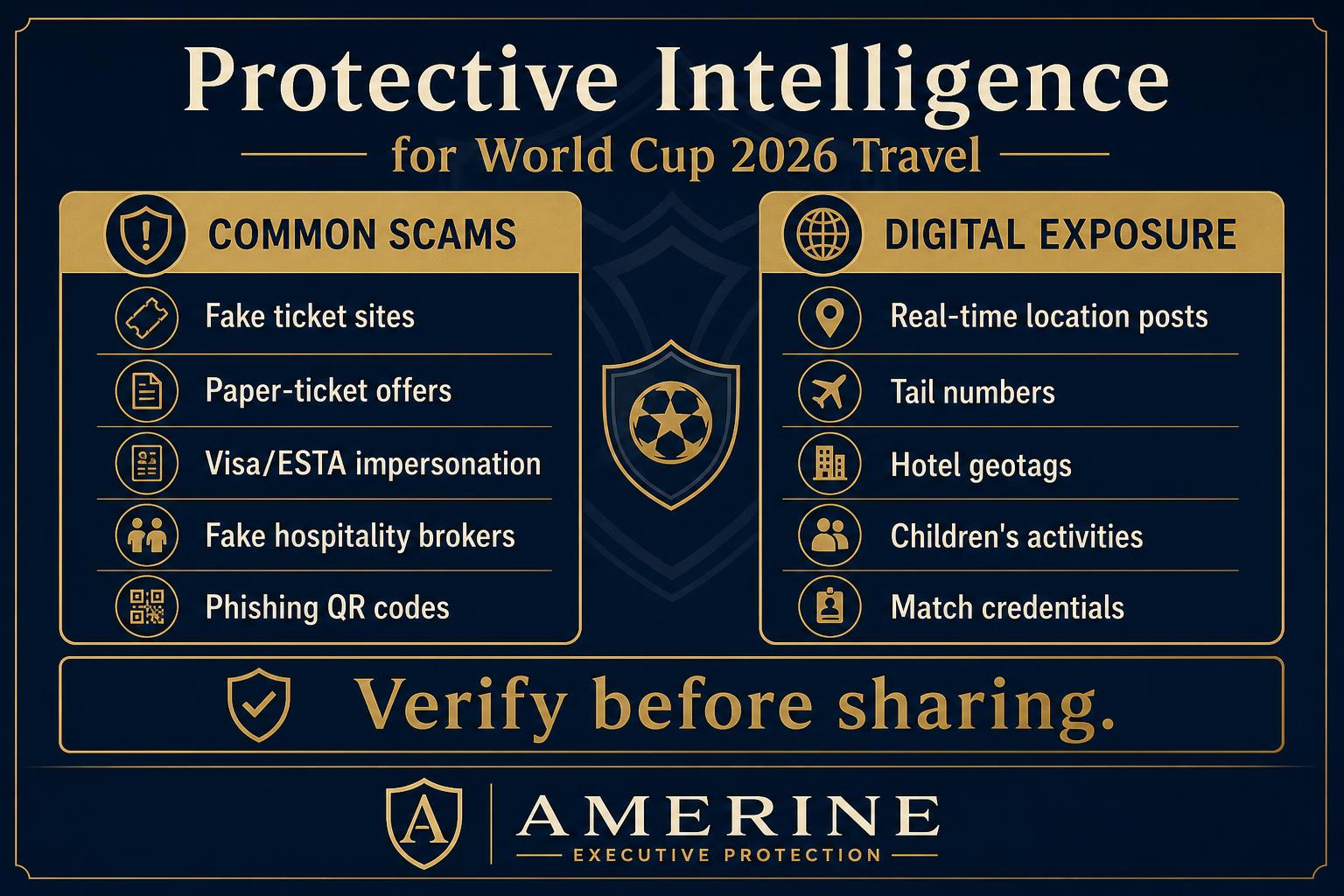
Most VIP exposure at mega-events does not come from determined adversaries. It comes from fans, hobbyists, content creators, and curious bystanders who use publicly available information — flight trackers, hotel sightings, restaurant tags, suite photos — to locate principals in near-real time. The cumulative effect is a low-grade form of stalking that compounds throughout the trip.
How Fan-Driven OSINT Works
A typical pattern: a tail number is spotted at an FBO, a hotel guest posts a photo from the lobby, a restaurant employee tags a check-in, and within hours a principal's location is shared across niche communities. By the time the principal moves, the next stop is already mapped.
Hotel Lobby Exposure
Hotel lobbies are the highest-frequency exposure point of any trip. Mitigations include using side or back entrances when available, never using the public elevator bank for principal moves, holding pre-meeting waits in a suite or private lounge rather than the lobby, and minimizing predictable timing patterns.
Personal Digital Hygiene Before the Trip
Brief the traveler and their family before departure: no real-time social posts, no geo-tagged photos, no public mentions of the hotel or restaurant, no public posts from the suite. Posting can resume after departure. This single behavior change prevents the majority of fan-driven location leaks.
When 'Soft' Becomes a Pattern
Repeat behavior — the same individual at the hotel, the same person at multiple venues, gifts left at the door — should be documented and reported to the protective team and venue security. Patterns matter more than isolated incidents.
AMERINE's Role
AMERINE provides protective intelligence, social-media monitoring, advance work at hotels and venues, and counter-surveillance services for principals at high-visibility events. Contact AMERINE for a confidential conversation about your World Cup itinerary.
---
AMERINE is not affiliated with FIFA. This article is general protective-intelligence guidance and is not legal or law-enforcement advice.