Predictable Risks in Summer Host Cities
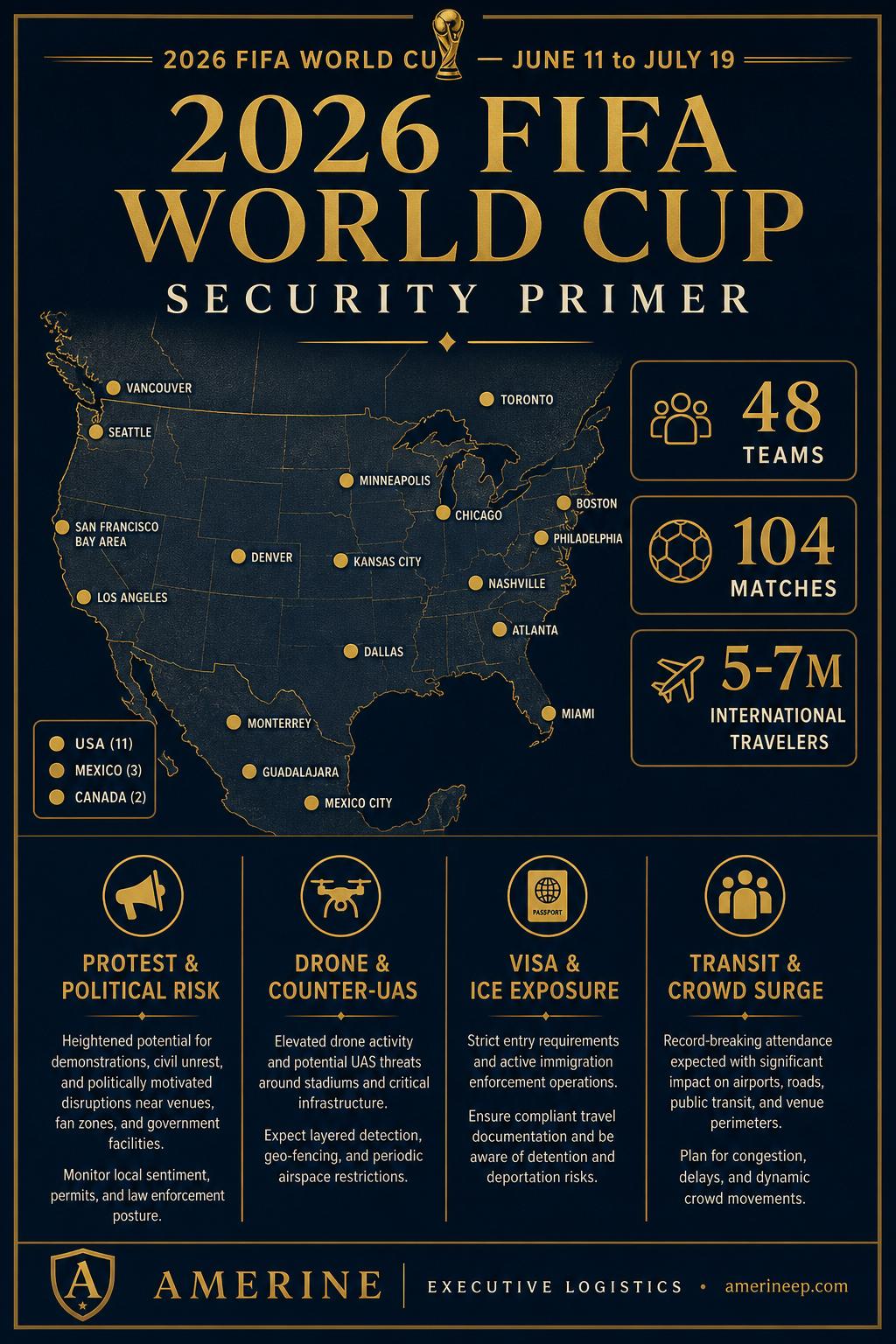
Summer in Houston, Dallas, Miami, Atlanta, Kansas City, and Inglewood produces predictable medical issues during a packed match calendar: heat exhaustion, dehydration, sunstroke, alcohol-related issues, and minor injuries from crowd dynamics. The plan should exist before anyone needs it.
Pre-Trip Medical Profile
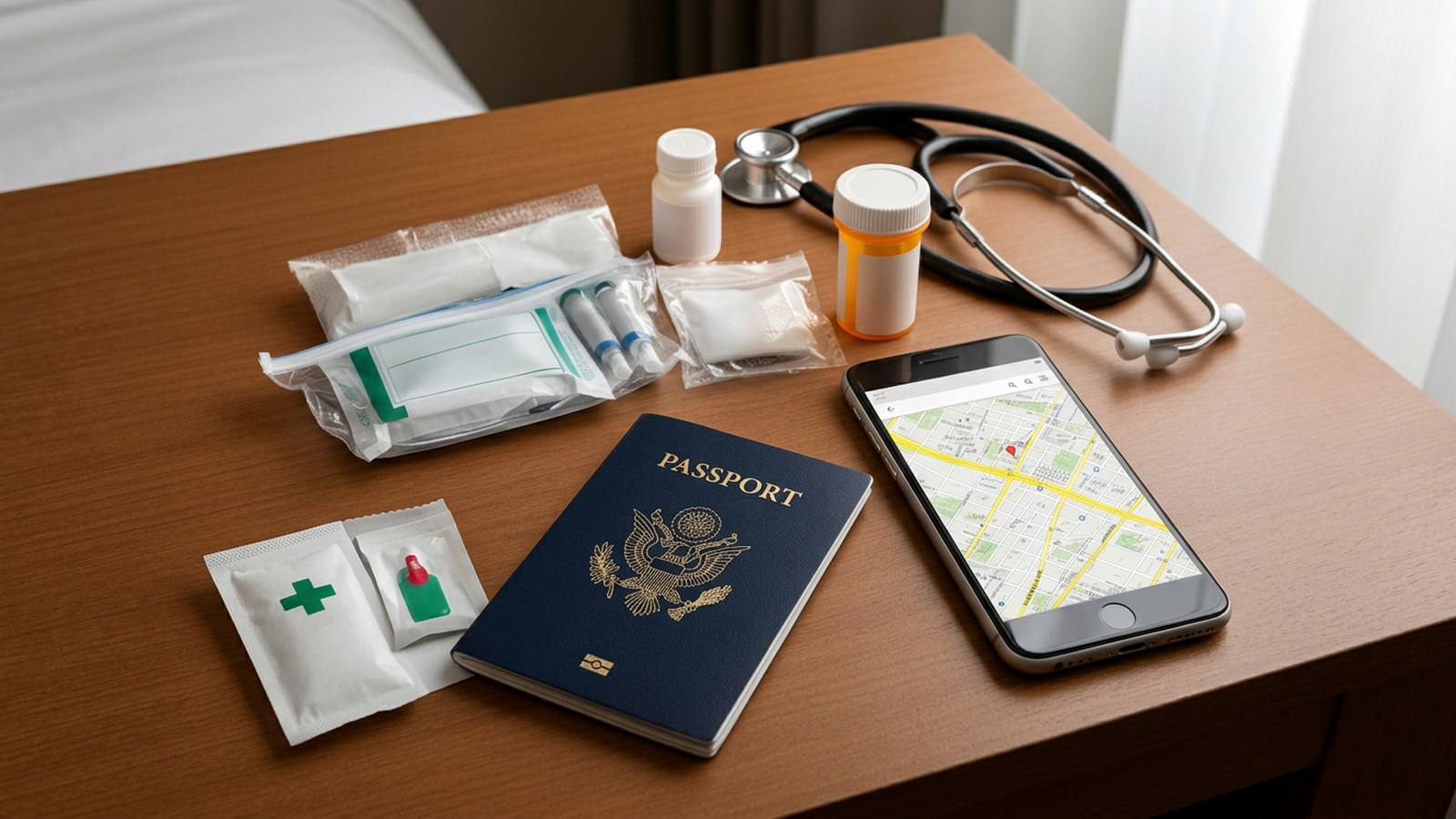
Each traveler should have a one-page medical summary: blood type, allergies, medications, dosages, primary physician contact, insurance details, and any conditions that require specific treatment (cardiac, diabetes, anaphylaxis). This document should travel with the protective team, the family, and a trusted contact at home.
Hospital and Pharmacy Mapping
Before arrival, identify the nearest Level I or II trauma center, the nearest hospital with a pediatric ER if children are traveling, the nearest 24/7 pharmacy, and a primary-care or urgent-care option for non-emergency issues. Save addresses offline. GPS routing during a major event is unreliable.
Heat and Hydration
For day matches in southern host cities, plan around heat: pre-hydrate the morning of, electrolyte drinks during the match, light long-sleeve clothing with UPF, and a meeting plan if anyone shows early signs of heat illness (headache, nausea, confusion). Children, older travelers, and anyone on certain medications are at higher risk.
Evacuation Options
For UHNW families and corporate principals, AMERINE recommends confirming an evacuation pathway in advance: medical evacuation membership or insurance coverage, pre-identified receiving hospitals at home or at a hub city, and aviation options if a private aircraft is available. The most expensive part of any evacuation is deciding it at 2 a.m.
AMERINE's Role
AMERINE coordinates with medical advisors, travel-medical providers, and aviation operators to integrate medical planning into the protective plan. Contact us for a confidential conversation before travel.
---
AMERINE is not affiliated with FIFA. This article is general planning guidance and is not medical, insurance, or aviation advice. Travelers should consult licensed medical professionals.