Three Countries, One Itinerary
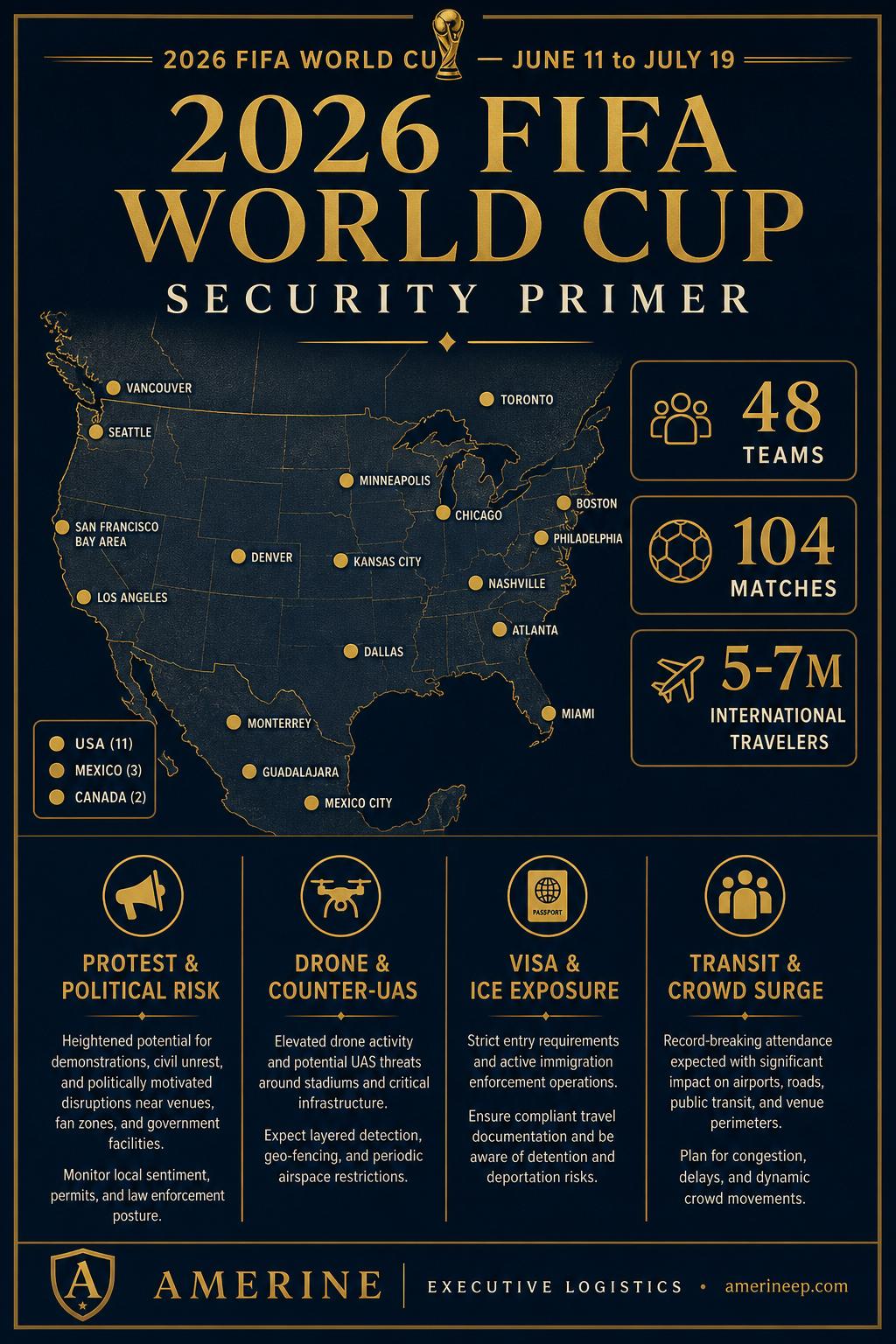
The 2026 World Cup is jointly hosted by the United States, Mexico, and Canada. Following a team across the bracket can mean three jurisdictions, three security environments, and at least two border crossings. Continuity of protection across those borders is the planning challenge.
Documentation and Visas
Confirm passport validity (six months past travel for many destinations), visa or ESTA status for each leg, and any specific event-period entry guidance from FIFA and the destination governments. Travelers from visa-required countries should plan well in advance — appointment availability tightens around major events.
Crossing Considerations
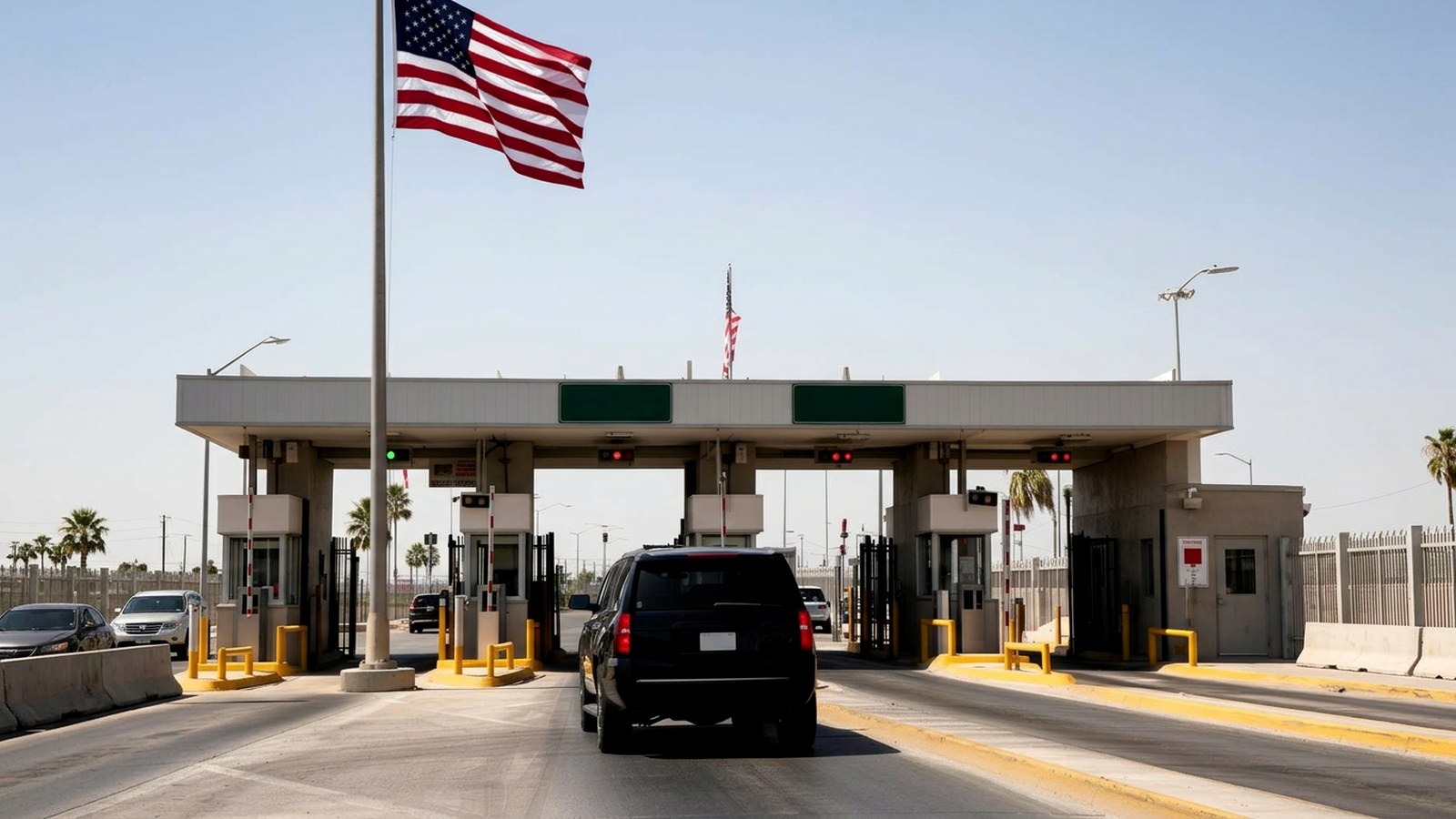
Land crossings between the U.S. and Mexico or Canada concentrate exposure at the border itself: vehicle searches, document checks, and unpredictable wait times. For most UHNW and executive travelers, air travel between host nations is the lower-friction option, with private aviation requiring slot, customs, and FBO coordination on both sides.
Continuity of Protection
A protective team rarely follows a principal across borders without planning. AMERINE coordinates with vetted in-country partners in Mexico and Canada to provide continuous protection through clear hand-off protocols: who meets the principal at the door, who has the documents, who confirms the receiving hotel and venue plan, and who is the named on-call agent for the next 24 hours.
Cultural and Legal Differences
Each host country has different rules around private security, vehicle armoring, weapons, and protective equipment. Decisions made in one country may be illegal in the next. Confirm in writing what your in-country partner can and cannot do before the trip.
AMERINE's Role
AMERINE has international experience and a vetted partner network across the Americas. We coordinate cross-border protective travel, secure transportation hand-offs, and protective-intelligence continuity. Contact us before the bracket forces a last-minute trip.
---
AMERINE is not affiliated with FIFA. This article is general planning guidance and is not legal, immigration, or in-country regulatory advice.