Part of the AMERINE World Cup 2026 after-action series. Read the pillar: [World Cup 2026 After-Action Report](/major-event-security).
Primary FBOs in the host metros were going to face sustained pressure, and teams that hadn't locked slots months out were going to feel it. On private aviation, the pre-tournament analysis was broadly right.
What the pre-tournament analysis underweighted was the secondary-airport story, and that is where the actionable lesson lives.
What behaved as forecast
- Teterboro, Van Nuys, Opa-locka, DAL/Addison, and Atlanta's PDK ran near ceiling on match days in their respective metros.
- Fuel and hangar-space contention was real but manageable with pre-commitment.
Programs that treated the tournament like Super Bowl week times a hundred largely got what they planned for.
What actually stressed programs
- Second-choice FBO handling variance. When teams shifted to secondary FBOs (Addison instead of Love, Ontario instead of Van Nuys, White Plains instead of Teterboro), line service familiarity dropped. Ground transport pickups took longer, and secure-lot arrangements had to be re-briefed on the fly.
- Same-day slot changes. Weather on the East Coast triggered fast slot cascades. Teams that had not built a fallback FBO into the movement plan spent hours waiting on the ramp.
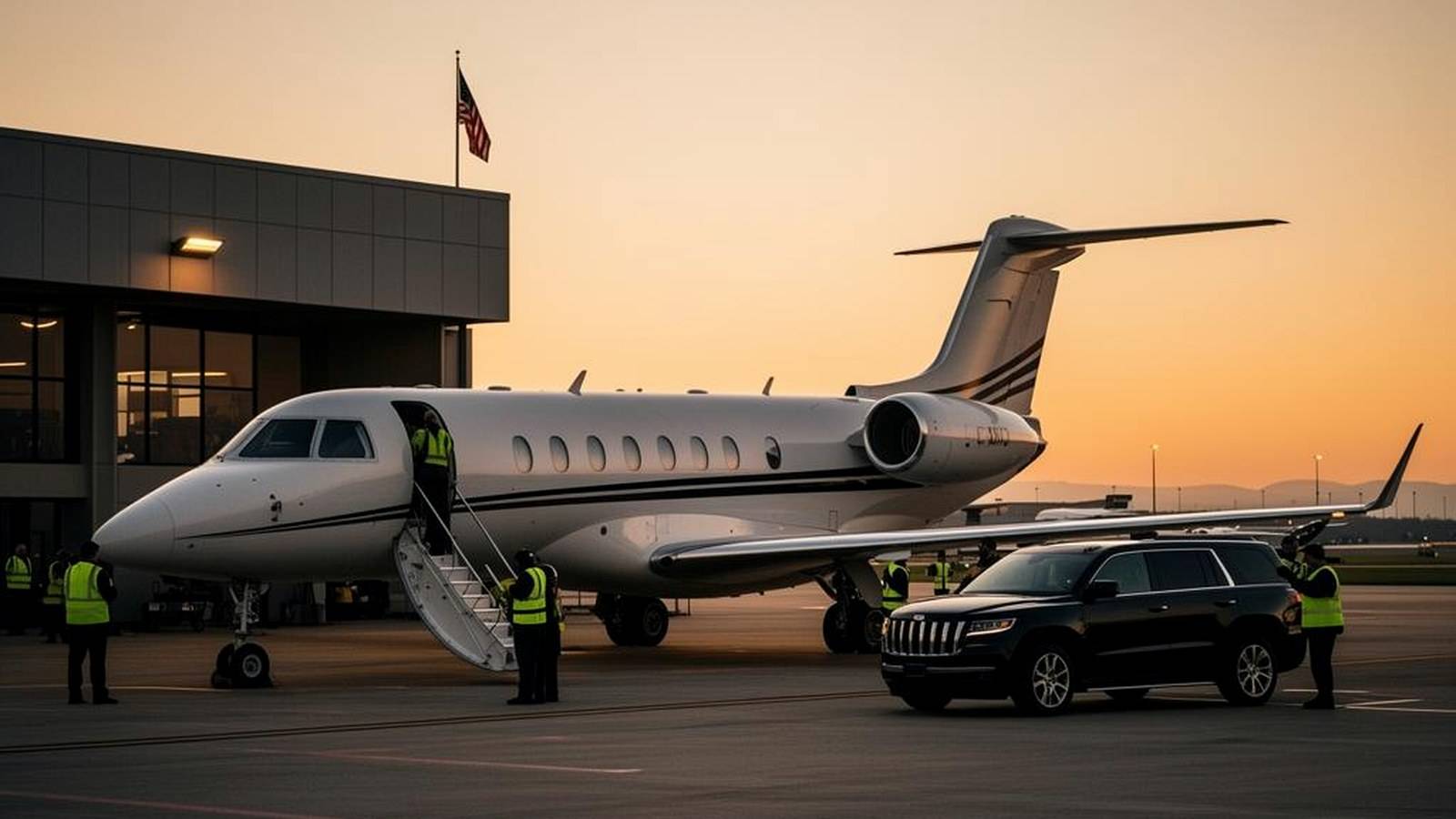
- Ground-side handoff friction. The handoff from the FBO gate to secure transportation, normally a trivial 90 seconds, repeatedly stretched to 15+ minutes at unfamiliar FBOs with unfamiliar staff and unfamiliar ramp geography.
- Crew rest and duty-time collisions with match-day return windows caught more than one program flat. The 11:30 p.m. wheels-up after a late kickoff is a duty-time problem, not a scheduling preference.
What we are formalizing
For LA28, the Ryder Cup, and the enterprise flight-department playbooks we support, three items are shifting from ad-hoc practice to program standard:
- Pre-brief the alternate FBO before the tournament. Physical walk-through, secure-lot confirmation, line-service introduction, and ground-transport dry run.
- Build a duty-time contingency into every match-day itinerary. Assume the game goes to extra time. Assume the crew rolls over. Have a Plan B airport, a Plan B crew, or a Plan B overnight.
- Own the ramp-to-vehicle handoff. A dedicated agent meets the aircraft. The transport is on the ramp when the door opens. There is no lobby walk unless there has to be one.
The tournament proved that programs with those practices written down performed measurably better than programs that kept them in the lead agent's head. The practices themselves aren't new.
Related reading
- World Cup 2026 After-Action Report: the pillar
- Private Aviation & FBO Surge Planning: the pre-tournament planning piece
- Mega-Event Security Playbook
- World Cup 2026 Host-City Debrief
AMERINE Executive Logistics is licensed by the Texas Department of Public Safety, License No. C31012001.