Part of the AMERINE World Cup 2026 after-action series. Read the pillar: [World Cup 2026 After-Action Report](/major-event-security).
Inside the hardened ring, the World Cup was a well-run federal operation. Perimeters held. Credentialing was tight. Movement was predictable if you had done your advance work.
The client-facing incidents we tracked — and the ones we heard about across the industry — clustered in the same place they always cluster at mega events: the hospitality district a mile or two outside the venue.
This is the retrospective on that pattern, and the doctrine we are carrying into LA28 and the 2027 mega-event calendar.
Where the risk concentrated
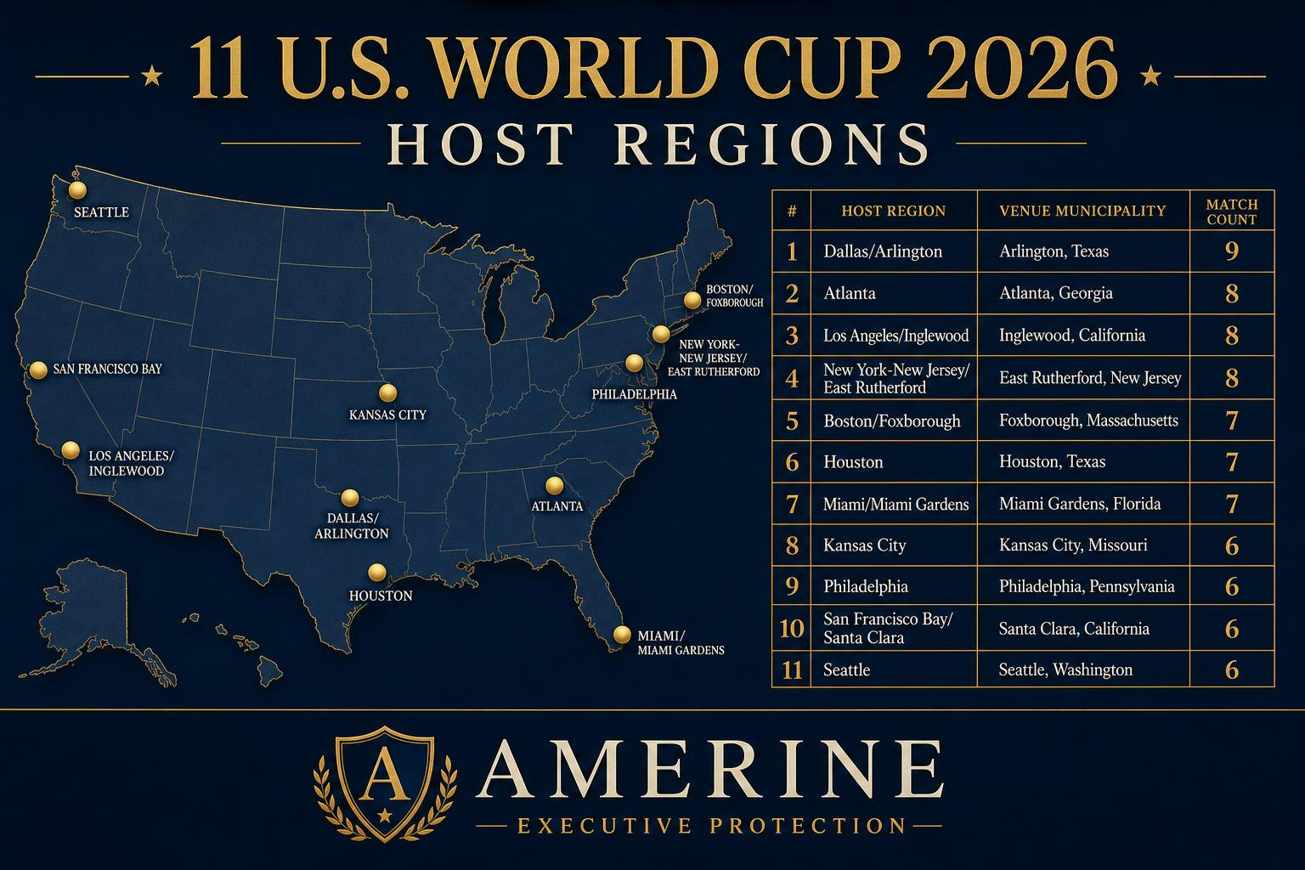
Across the 11 U.S. host cities, three archetypes of hospitality-district exposure repeated:
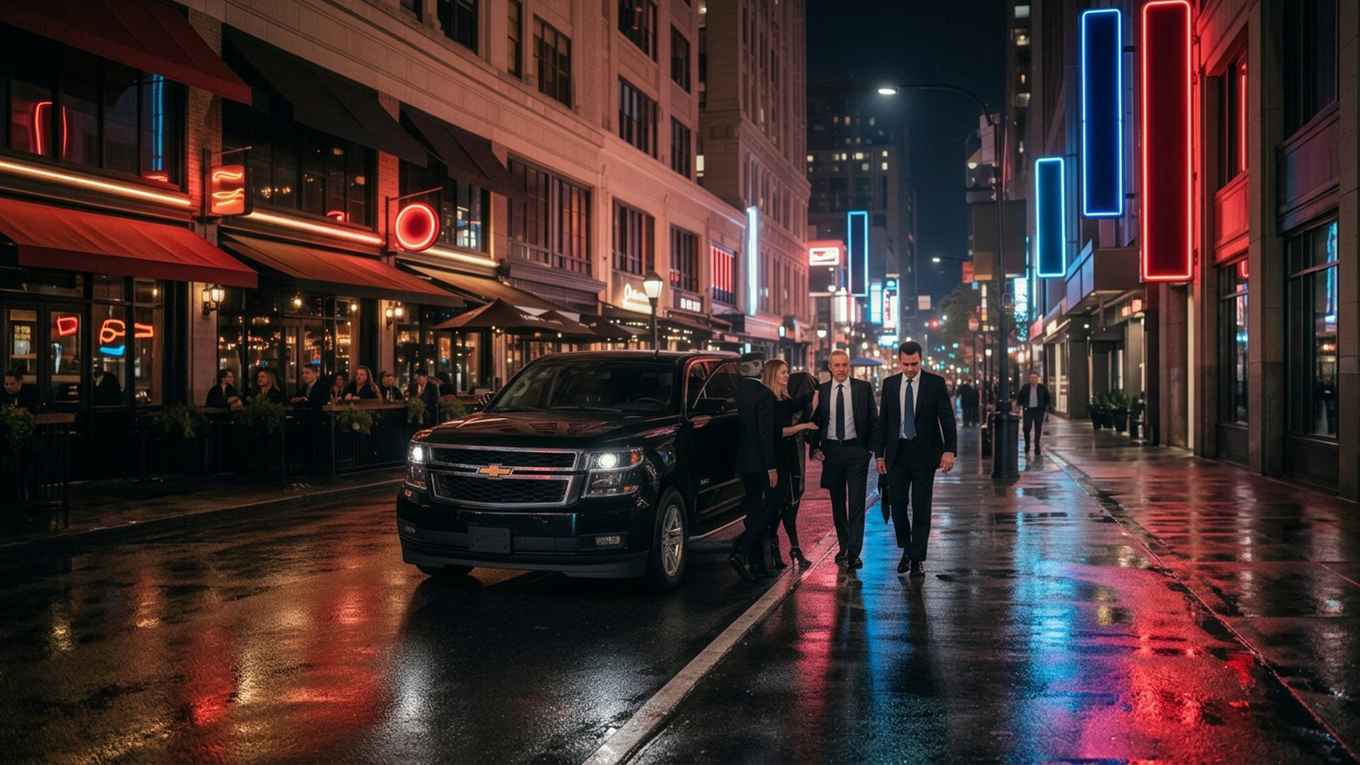
The stadium-adjacent nightlife strip. Restaurants and bars two to six blocks from the venue that absorb the post-match crowd. Miami's Brickell and Wynwood, Atlanta's Midtown, and Los Angeles's Downtown/South Park all ran hotter than expected. Ejections, low-level altercations, opportunistic theft, and paparazzi-adjacent incidents concentrated here.
The sponsor hospitality suite / activation zone. Sponsor-hosted lounges and activations at museums, private clubs, and rooftop venues drew UHNW and celebrity foot traffic in dense clusters. These are soft targets by design — the whole point is access and visibility — and they consistently drew the highest counter-surveillance workload of the tournament.
The team-hotel bar and lobby. Fan concentration around published team-hotel locations produced the most consistent low-grade principal exposure. Teams that stayed at the published hotels made this manageable through disciplined lobby control; teams that assumed the hotel would handle it did not.
What actually failed
Failure modes we saw or debriefed with peers:
- No advance in the hospitality venue itself. A protective driver plus a single agent in a rooftop lounge is not an advance — it is an arrival.
- Credentialing gaps at sponsor activations. "The list is at the door" is not a credentialing regime when the door is a velvet rope and three temp-hire staff.
- Route back to the vehicle. The two-block walk from the venue to the pickup point at 1 a.m. was, in more than one case, the least-covered leg of the day.
- Social posting during the event. Real-time posting from the venue turned a discreet arrival into a broadcast location.
Doctrine forward
For LA28, the World's Games, the LIV Golf calendar, and the enterprise event calendar in general, the doctrine we are formalizing:
- Treat the hospitality district as its own operation. It gets its own advance, its own credentialing review, and its own extraction plan.
- Compress the footprint after the whistle. The two hours after the final whistle are where the exposure lives. Move principals through it deliberately, not incidentally.
- Publish nothing in real time. Delay the post. The location intel value of a same-hour post to a sophisticated actor is meaningful.
- Own the walk to the vehicle. If it is more than 30 seconds, plan it like a movement.
Related reading
- World Cup 2026 After-Action Report — the pillar
- Mega-Event Security Playbook
- World Cup 2026 Host-City Debrief
- Post-Match Nightlife & Hospitality District Risk — the pre-tournament planning piece this retrospective closes the loop on
- Egress Is the Operation
AMERINE Executive Logistics is licensed by the Texas Department of Public Safety, License No. C31012001.