Part 4 of the AMERINE World Cup 2026 debrief series. Start with the pillar: [7 World Cup Security Lessons for Every Event](/blog/world-cup-security-lessons-for-every-event).
Ask any experienced protection professional which part of a major event demands the most planning and the answer is unanimous.
Not the arrival. Not the seat. Not the concourse.
The departure.
Why egress is the operation
An arrival can be staged. A seat is fixed. A concourse is patrolled. But a departure begins the moment an event ends — and every planning assumption becomes untrue at once.
Eighty thousand people move at the same time. Rideshares surge. Traffic lights are overridden by police. Streets close. Radios saturate. The valet stand backs up. The service road is being used as an ambulance route. A group of intoxicated spectators recognizes a familiar face and follows.
The World Cup made every one of those variables predictable and none of them controllable.
The three egress mistakes we saw most
Across dozens of movements in and out of tournament venues, the same three failures repeated.
The vehicle was not pre-staged. The driver was circling because "the plan was to pick up at the north entrance." When the north entrance became a crush of departing spectators, there was no fallback.
The egress was tied to the whistle. The plan assumed a 90-minute match. Extra time, penalties and post-match ceremony added twenty minutes the team had not planned for. The staged vehicle window closed. The team improvised.
The exit was public. The principal used the same door as the crowd. The most planned event of their week ended with an unplanned walk through a rope-line of phones.
What a professional egress looks like
An egress plan worthy of the name specifies:
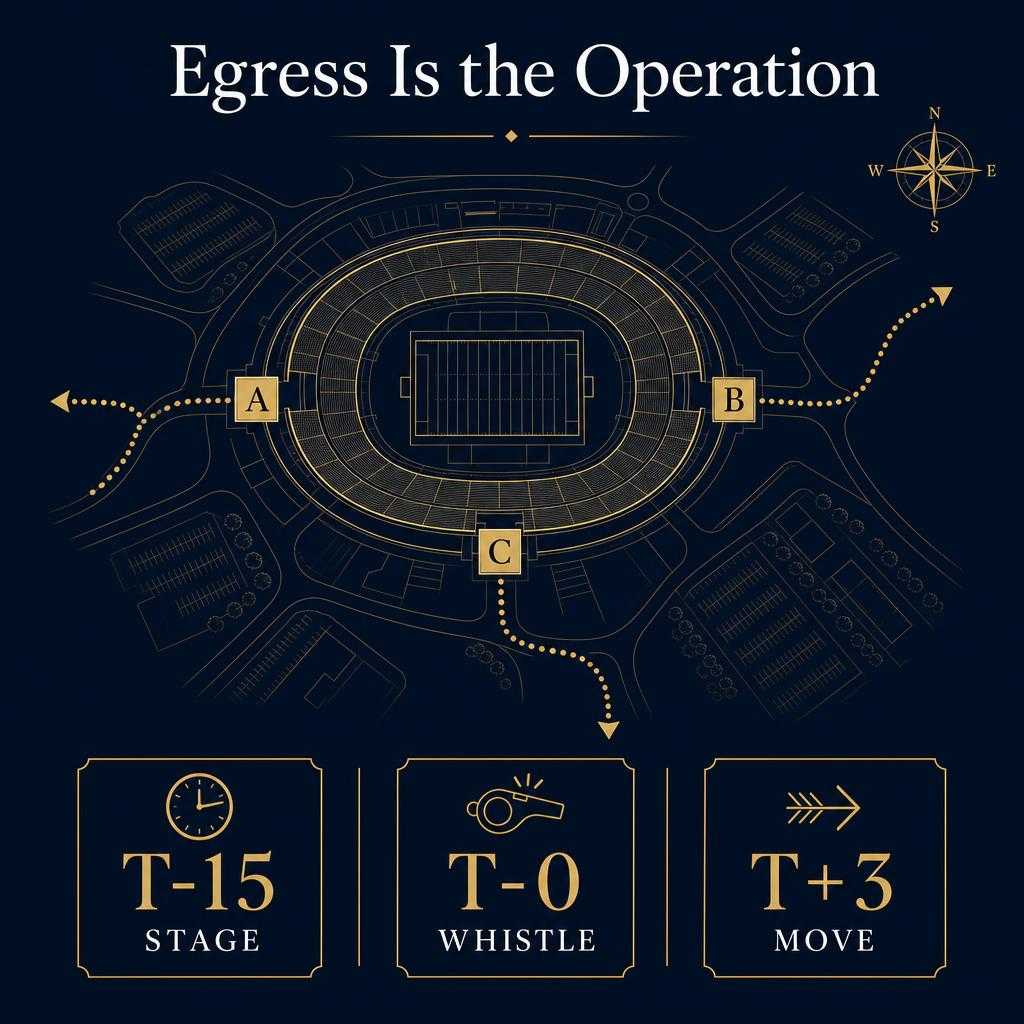
- Where the vehicle stages, with a primary and two alternates, each with a police-recognizable pass number
- When it stages — a specific clock time and a specific event-relative time (e.g. "T-15 from expected final whistle")
- Who authorizes the move — one person, plus a successor
- How the principal is walked to the vehicle — the door, the interior route, the escort composition
- What the alternate route home looks like when the primary route is closed by the same event
For a stadium, an arena, a concert hall or a convention center, that plan is written before the doors open. It is not improvised at the whistle.
The invisible signal
Egress is also where the most experienced protection details signal their sophistication.
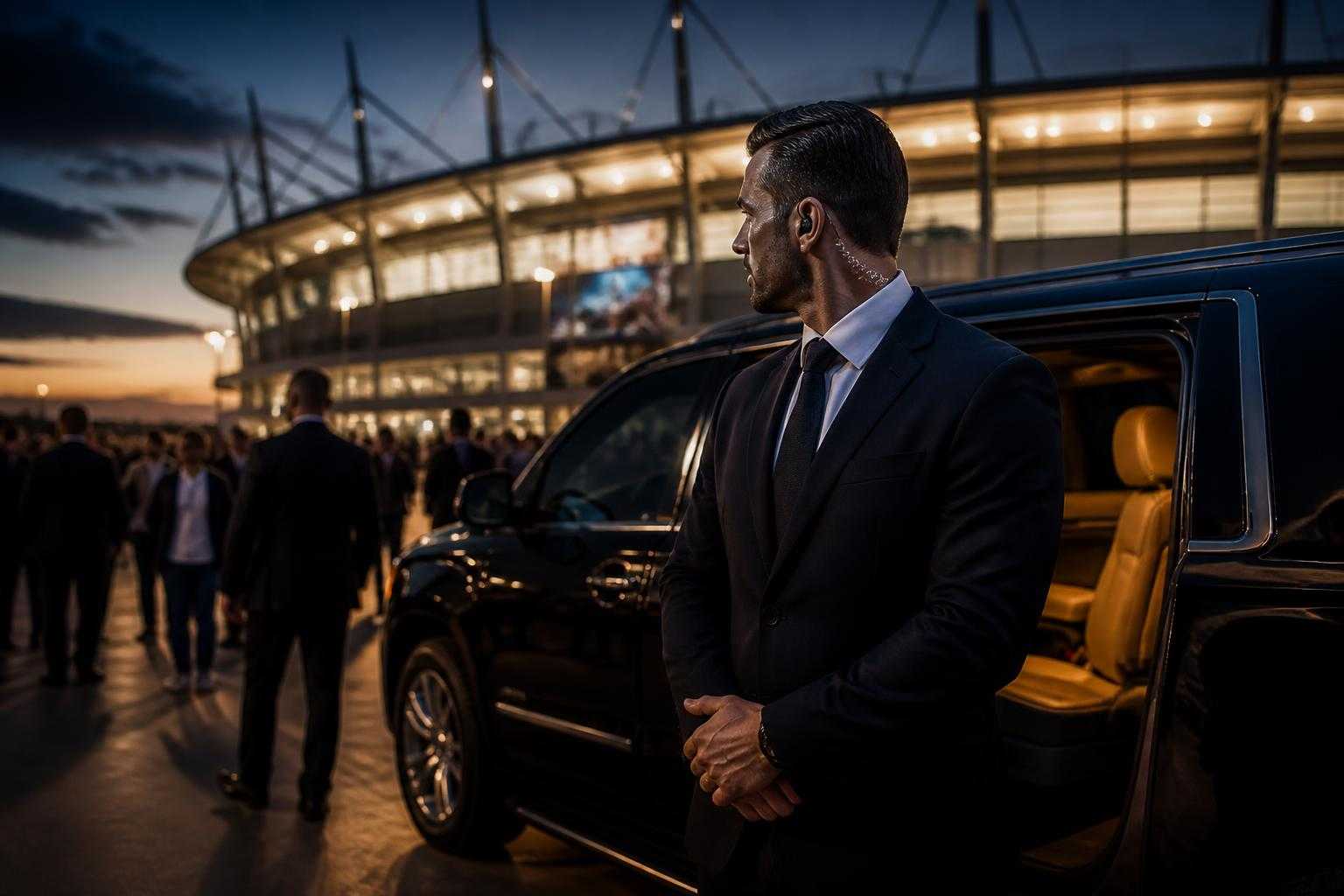
An amateur team clears a path with size. A professional team makes the departure look routine because the vehicle is already there, the door is already open, the interior team is already positioned and the alternate route is already loaded on the driver's navigation. There is no scrum, no jog, no photograph — because there is no delay for one to form.
That is the practical measure of "discreet." Not that the team is small. That the plan is complete enough to eliminate the seconds that create attention.
For clients and event organizers
If you host public appearances, sponsor hospitality or family attendance at major events, the diagnostic question is simple.
Ask your provider to draw — on one page — the egress plan for your next event, with the primary route, two alternates, staging position, timing trigger and departure decision authority.
If the answer requires a phone call, the plan does not exist.
Related reading
- 7 World Cup Security Lessons for Every Event
- Decision Triggers: The Protective Playbook That Keeps Events Fluid
- Secure Transportation
- Executive Protection Services
AMERINE Executive Logistics is licensed by the Texas Department of Public Safety, License No. C31012001.