A Trigger-Based Framework
The wrong way to evaluate executive protection is to wait for a specific event and react. The right way is to identify the triggers that, when present, justify a proportional response — and to document the decision either way.
This is not a sales argument. It is a governance framework. Half the triggers below result in "no change required" most of the time. The point is that the board considered them and recorded the decision.
Public and Personal Threat Triggers
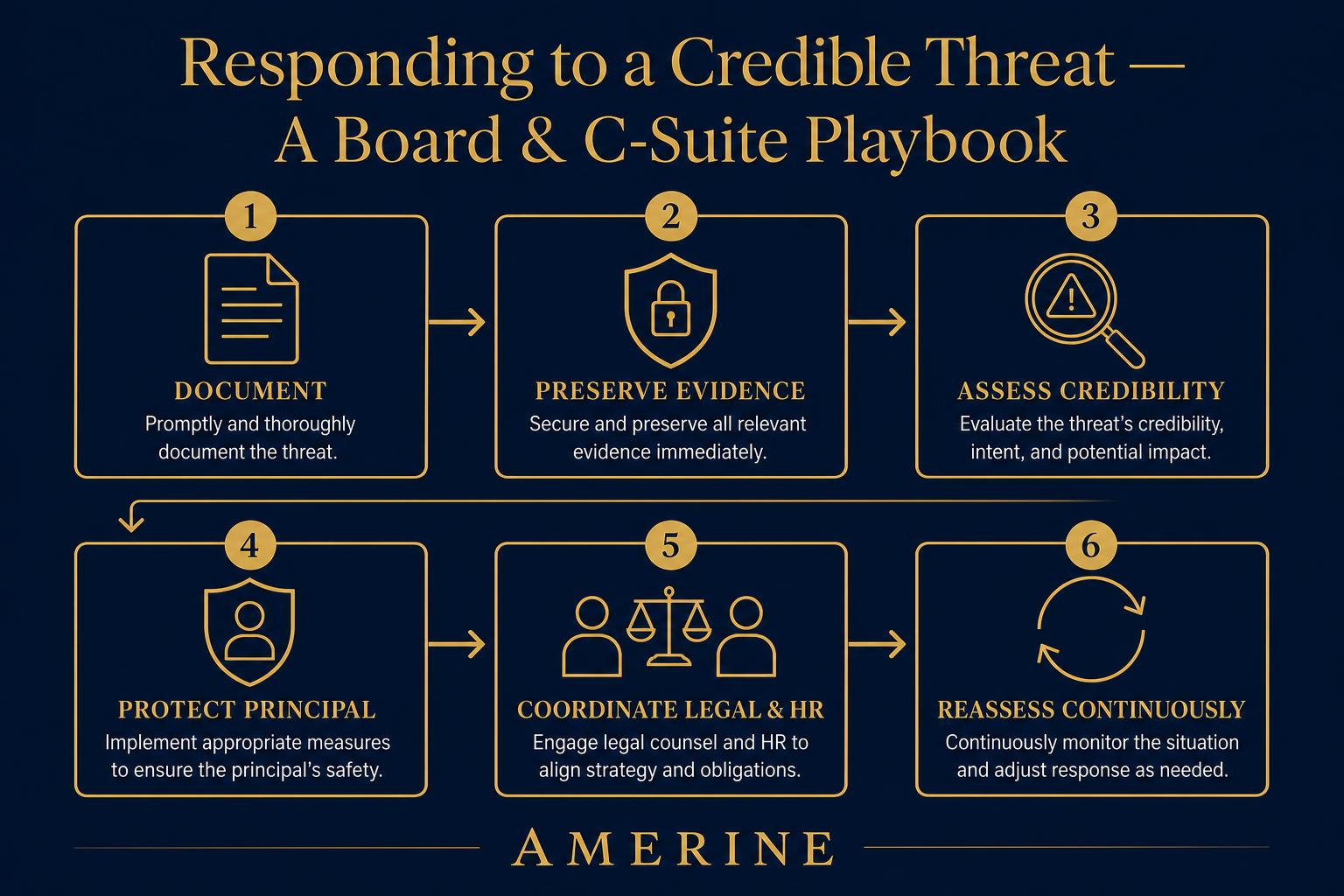
Trigger 1 — Direct threats or harassment. Threatening calls, emails, letters, or social-media posts directed at the executive or family. Document, preserve, and assess.
Trigger 2 — Doxxing, stalking, or unwanted residence contact. Public posting of address, family identifiers, or routines. Physical approaches to the residence, office, or family locations.
Trigger 3 — Protests or activist targeting. Picketing at the residence, school, or office. Public campaigns naming the executive personally.
Business Inflection Point Triggers
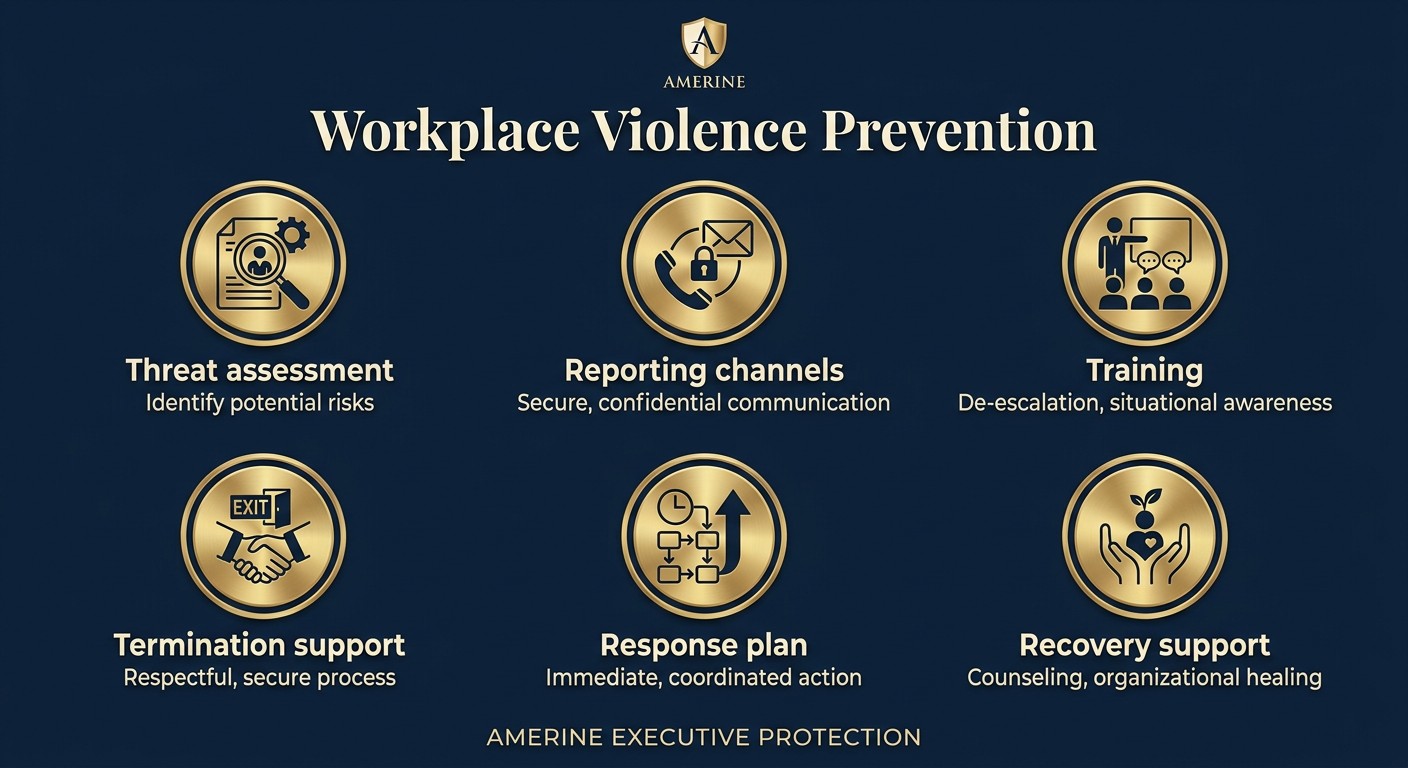
Trigger 4 — Layoffs, restructuring, or labor action. The window around layoffs is statistically the most common workplace-violence and executive-targeting window in the corporate calendar. Plan coverage around the announcement and the following thirty days.
Trigger 5 — Litigation, regulatory action, or controversy. Indictments, congressional hearings, major regulatory enforcement, or public controversy elevate the personal exposure of the executive named in the case.
Trigger 6 — M&A, investor activism, or hostile campaigns. Proxy contests, hostile bids, and high-profile activist campaigns raise the personal profile of the CEO and create incentives for targeting.
Travel and Visibility Triggers
Trigger 7 — International or high-risk domestic travel. Travel to elevated geographies, or to domestic locations with active threats or unfamiliar operating conditions.
Trigger 8 — Public speeches, conferences, or media exposure. Earnings tours, keynote conferences, major media interviews, and political affiliation events create predictable, public exposure windows.
Trigger 9 — Political affiliation or government-relations activity. Lobbying, campaign donations, and government-facing roles produce a different exposure surface than typical commercial leadership.
Family and Routine Exposure Triggers
Trigger 10 — Family travel or social-media exposure of children. Predictable family routines, school identification, and real-time social posting create exposure the executive does not directly control.
Trigger 11 — Residential exposure. Visible address, predictable arrival pattern, contractor turnover, and neighborhood profile create background exposure that compounds over time.
Trigger 12 — Personal life events. Divorce, custody, inheritance, public wealth events, and high-profile philanthropy create discrete exposure windows.
Proportional Response
Each trigger does not automatically translate to a detail. The board's response should be proportional:
- Tier 1: advisory only — protective intelligence, threat monitoring, periodic review.
- Tier 2: event coverage — protective presence during specific high-visibility moments.
- Tier 3: travel coverage — protective coverage for all material trips, domestic and international.
- Tier 4: continuous coverage — full-time detail with residential, family, and travel layers.
Most CEOs sit at Tier 1 with periodic moves to Tier 2 around layoffs, earnings, and travel. A small number live at Tier 3 or Tier 4 because their exposure profile actually requires it.
How Boards Document the Decision
A clean board record for any executive-protection decision includes:
- Triggers present, with sources and dates.
- Severity and credibility assessment.
- Recommended response tier with rationale.
- Dissent or alternative views noted.
- Review cadence — when this decision will be revisited.
That record is the duty-of-care evidence the board will rely on if something happens. It is also the document that prevents both overbuild and underbuild.
A Final Note
The boards that do this well do not over-rotate. They evaluate the triggers, document the call, and revisit the call quarterly. They do not buy a full-time detail in response to a single email, and they do not refuse to fund a program because nothing has happened yet.
That is the standard. It is defensible regardless of which direction the decision goes.
Request an executive threat assessment →
Related: Threat assessment, Protective intelligence, Executive protection services, Duty of care, FAQ.
---
General governance guidance, not legal or compliance advice. Coordinate trigger evaluation with general counsel.