A Prevention-First Frame
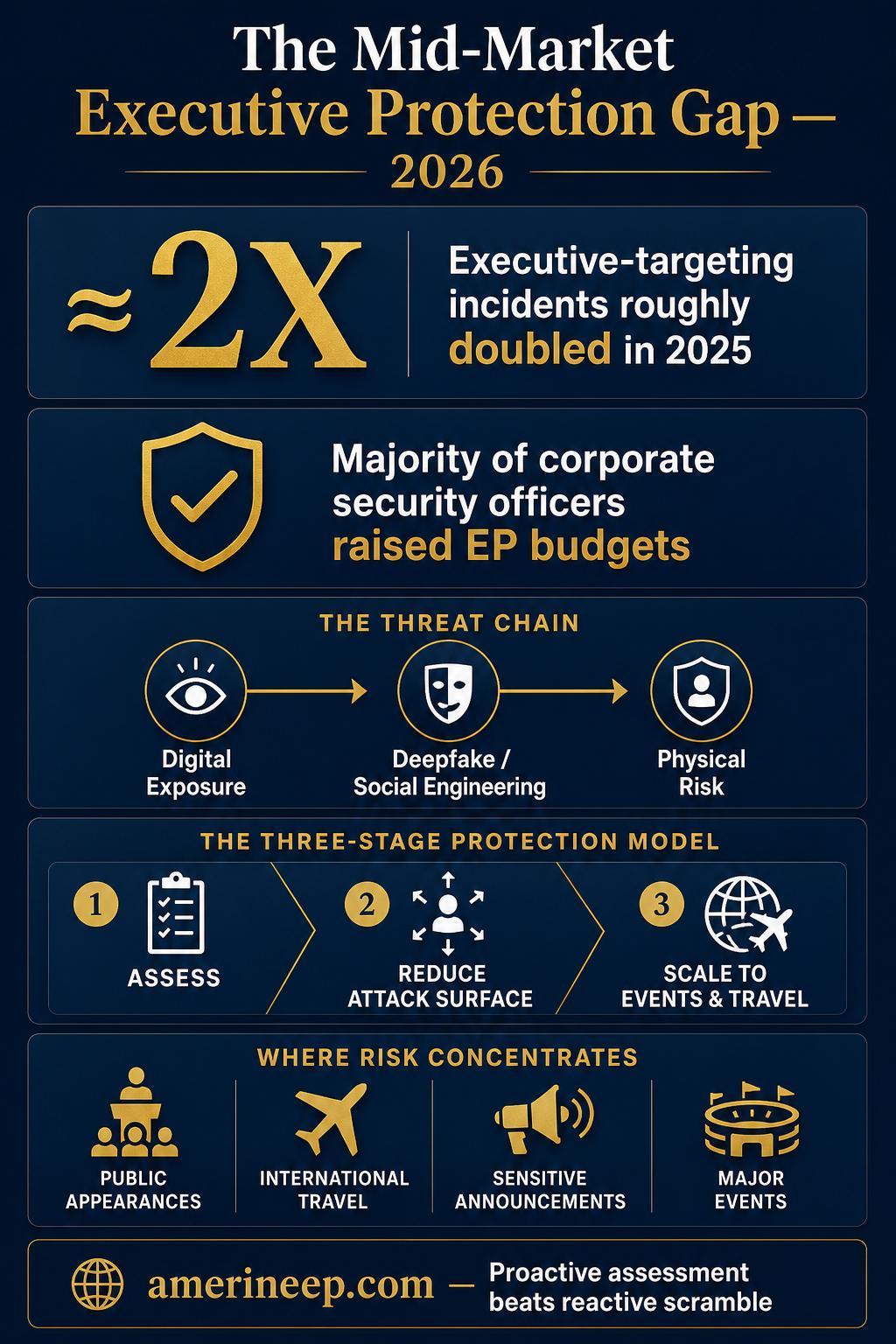
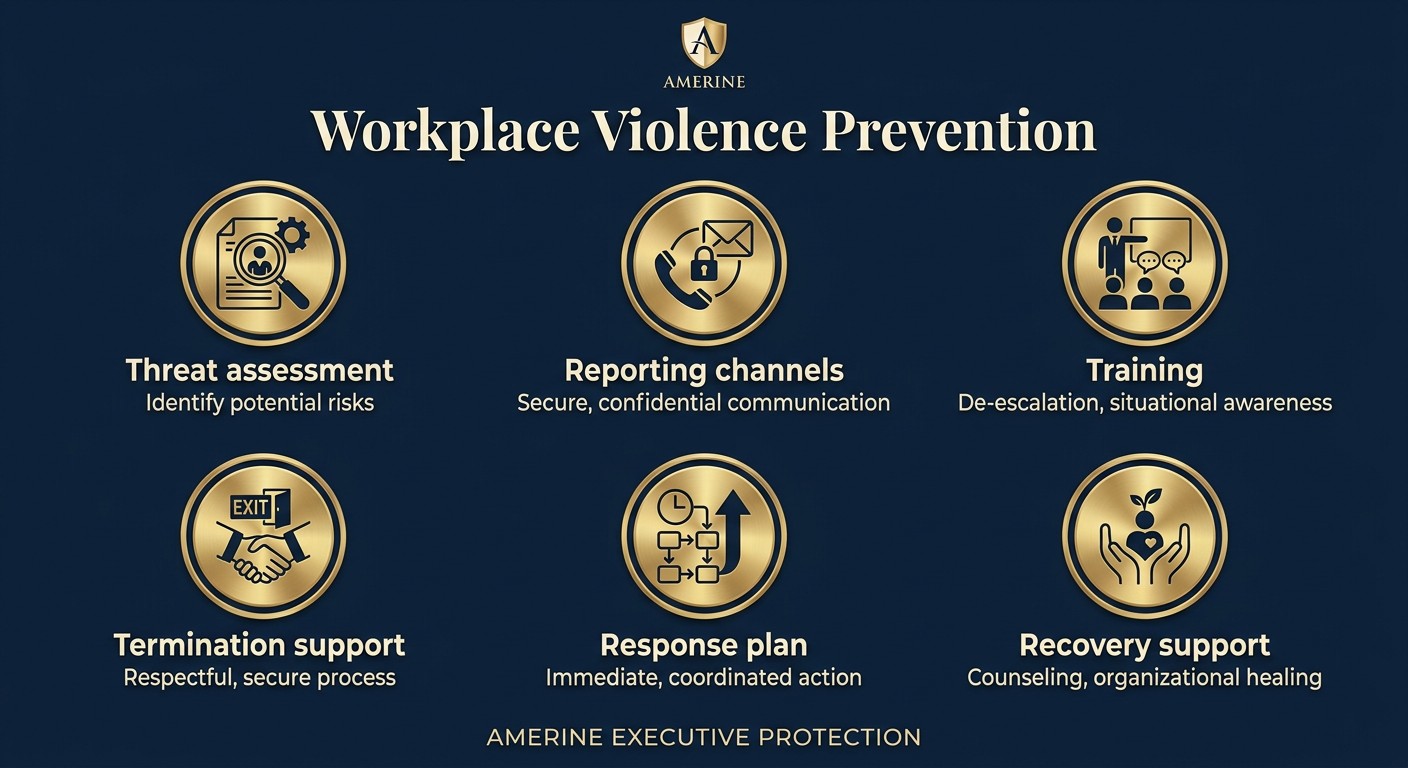
The most common mistake corporate leaders make about workplace violence is treating it as a tactical-response topic — active shooter drills, evacuation routes, recovery plans. Those matter. But the work that actually reduces risk happens months earlier, in HR, legal, and security coordination around the moments that statistically produce the most exposure.
This is a prevention guide for executive risk planning, not a tactical-response manual.
The Windows That Matter
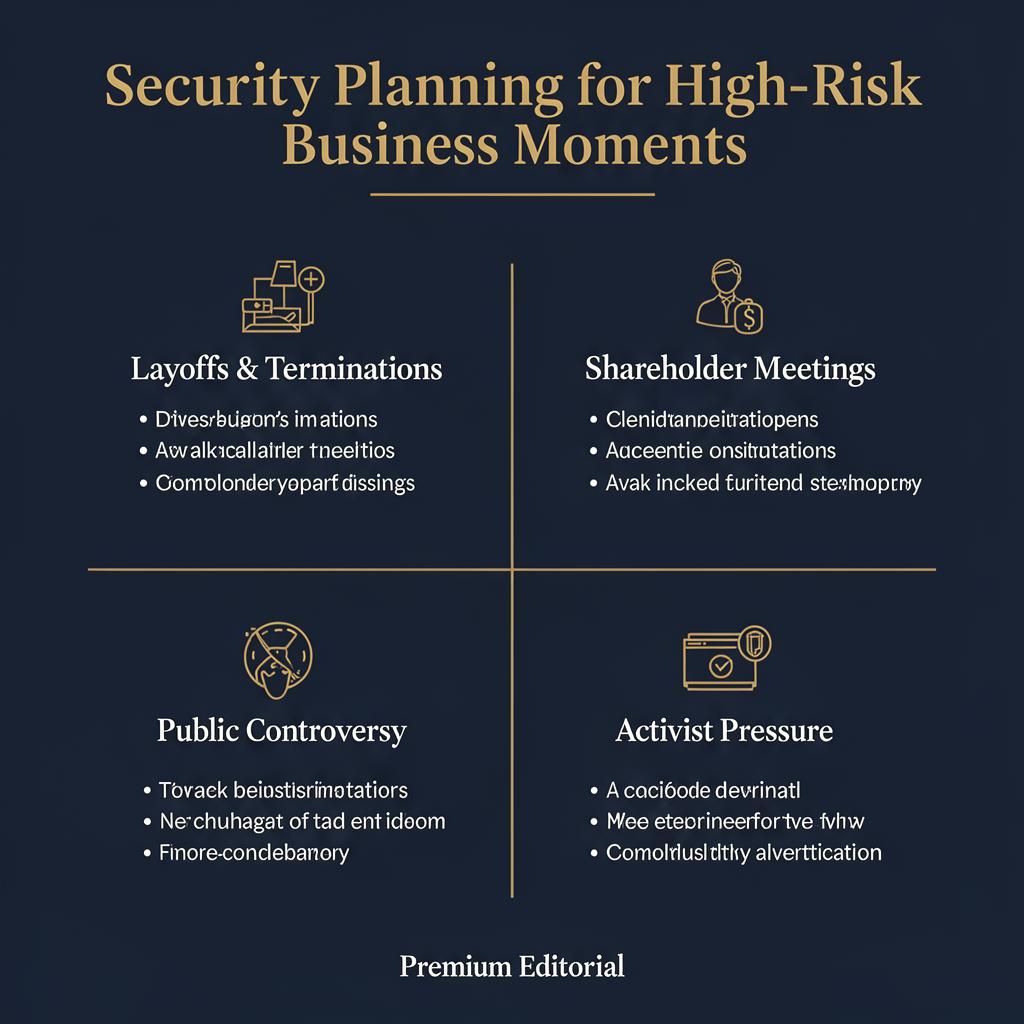
Workplace violence does not appear from nowhere. It clusters around predictable business moments:
- Layoffs, terminations, and restructuring.
- Plant closures and operational consolidations.
- High-profile litigation and contentious settlement negotiations.
- Public controversy and media exposure of named executives.
- Labor action, organizing, and contract negotiations.
- Public protests at office or residential addresses.
- Personal life events involving disgruntled former employees or external parties.
Most prevention work happens in those windows.
Reporting Channels and Escalation Criteria
Every meaningful prevention program starts with two questions: how does a concern get reported, and how does it get escalated?
- A clear, confidential channel for employees, contractors, and family members to report concerns.
- A named owner — usually a workplace violence prevention lead inside HR, security, or legal.
- Defined escalation criteria: when does a concern move to a threat assessment, an attorney, law enforcement, or external protection support?
- Documentation that survives turnover. Verbal-only escalation is not escalation.
HR, Legal, and Security Coordination
The teams that need to coordinate on a sensitive termination are not the same teams that meet for normal HR work. A working coordination structure includes:
- HR for the employment action and documentation.
- Legal for the litigation and regulatory exposure.
- Security for the protective envelope before, during, and after the action.
- The executive's office for the visibility decision.
Coordination is most effective when it happens before the calendar locks. A termination that gets scheduled and then handed to security on the morning of the meeting is the most common failure pattern we see.
Protecting Executives at the Right Surfaces
Executive targeting in the layoff and litigation windows happens at predictable surfaces:
- The office parking garage or entrance.
- The lobby of the building, especially during shift changes.
- Public meeting venues — earnings tours, town halls, customer events.
- The executive's residence, especially when address visibility is high.
- Children's school routines when family identifiers are public.
Most exposure at those surfaces can be reduced with low-visibility planning. Visible security at the lobby is rarely the right answer. Discreet escort, alternate entry, route variation, and protective intelligence are.
Warning Signs That Require Professional Assessment
Some indicators warrant moving from internal monitoring to professional threat assessment immediately:
- Explicit threats of harm to a named person.
- Acquisition or display of weapons in a work or workplace-adjacent context.
- Detailed surveillance or stalking behavior toward an executive or family.
- Repeated communications that escalate in tone, frequency, or specificity.
- Statements suggesting intent to act at a specific time, place, or event.
These are not internal HR matters at that point. They require professional threat assessment and, when appropriate, law enforcement coordination.
Tabletop Exercises
A reasonable cadence is one tabletop exercise per year covering a workplace-violence scenario the company has not actually faced. The point is not to grade the team. The point is to find the gaps in coordination, reporting, and decision authority before a real event finds them.
Scenarios that work well:
- A credible threat received the day before a layoff announcement.
- An executive's residence appearing on a public protest target list.
- A former employee arriving at the lobby with a non-specific grievance.
- A media event scheduled at a venue with limited security control.
After-Action
Every actual incident — and every near-miss that did not become an incident — deserves a short, written after-action review within seven days. The review covers what was reported, when, by whom, who decided what, what worked, and what to change. Over time, this is the document that drives the most meaningful improvements to the program.
A Final Note
Workplace violence prevention is governance work. It is not a security purchase. The companies that handle it well treat it as a coordinated function across HR, legal, security, and the executive office — with a named owner, defined escalation, periodic exercise, and short documentation cycles.
Request a workplace violence and executive threat review →
Related: Workplace violence prevention guide, Active shooter response planning, Threat assessment, Protective intelligence, Training.
---
General prevention guidance, not legal, HR, or law-enforcement advice. Coordinate sensitive workplace-violence matters with general counsel and qualified threat-assessment professionals.