A Travel Period Unlike Any Other
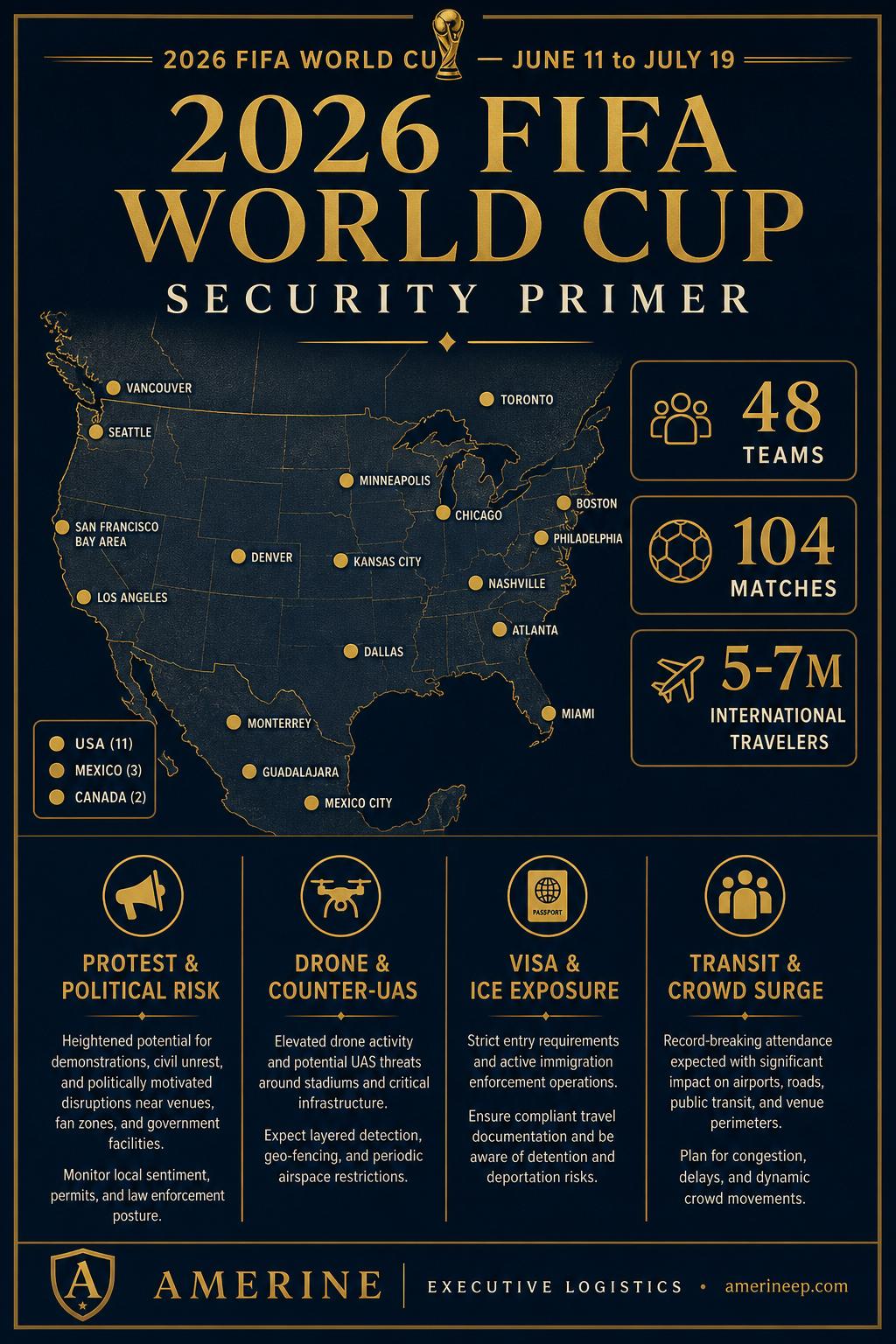
The FIFA World Cup 2026 will be one of the most complex travel periods the United States has seen in years. The tournament runs from June 11 through July 19, 2026, with 104 matches across the United States, Canada, and Mexico. In the U.S. alone, 11 host regions will absorb match-day crowds, airport surges, road closures, hospitality events, media attention, private activations, and fan-zone activity.
For executives, UHNW families, public figures, board members, corporate delegations, and high-profile travelers, this is not a "book the hotel and show up" event. A World Cup itinerary should be treated as a protective movement plan.
Start With the Full Itinerary, Not the Match Ticket
The first step is to map the entire trip: arrival city, hotel, match venue, training events, sponsor events, dinners, private meetings, family activities, and departure. In cities such as Dallas, Los Angeles, New York/New Jersey, Miami, and Atlanta, the highest-risk moments may not happen inside the stadium. They may occur in hotel lobbies, curbside arrivals, restaurant exits, rideshare zones, fan crowds, or airport terminals.
AMERINE recommends planning around five questions:
- Who is traveling, and what makes them recognizable or exposed?
- Which cities and venues are involved?
- What is the ground transportation plan from wheels-down to wheels-up?
- Which events are public, semi-private, or confidential?
- What is the contingency plan if traffic, protest activity, weather, or a medical event disrupts the schedule?
Travel Documents and Tickets Need Early Verification
International travelers should verify visa or ESTA requirements early. The U.S. Visa Waiver Program allows eligible travelers to visit for tourism or business for 90 days or less, but they must have valid ESTA approval before travel. The State Department also notes that visa wait-time information is updated monthly and does not guarantee appointment availability.
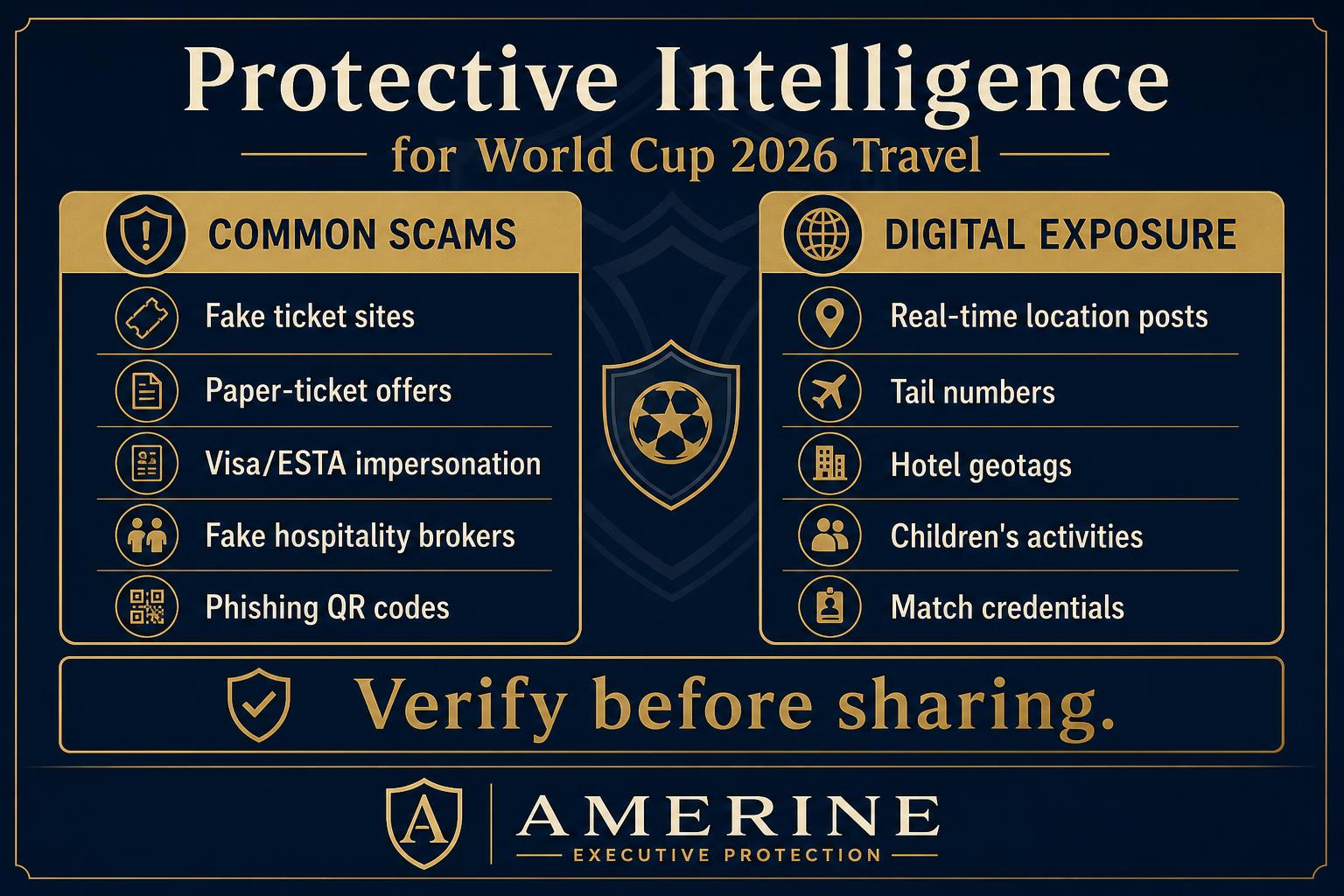
Ticketing should be handled with the same discipline. The FTC has warned World Cup travelers to watch for copycat websites, fake tickets, paper-ticket offers, screenshots, and travel-document scams. Remaining tickets are sold through FIFA channels and the FIFA app, while resale tickets may appear through FIFA's resale marketplace and third-party platforms with varying buyer protections.
Secure Transportation Is a Protective Function
During major events, transportation is not just logistics. It is exposure management. A secure movement plan should account for vetted drivers, vehicle suitability, pickup points, alternate routes, stadium-area restrictions, hotel access, communications, and post-match egress.
For high-profile travelers, the most vulnerable point of the day is often the transition: hotel to vehicle, vehicle to entrance, entrance to suite, or venue to vehicle after the match. These movements require advance planning, not improvisation.
> A World Cup trip is not a single event. It is a series of transitions — and transitions are where exposure lives.
Protective Intelligence Should Start Before Departure
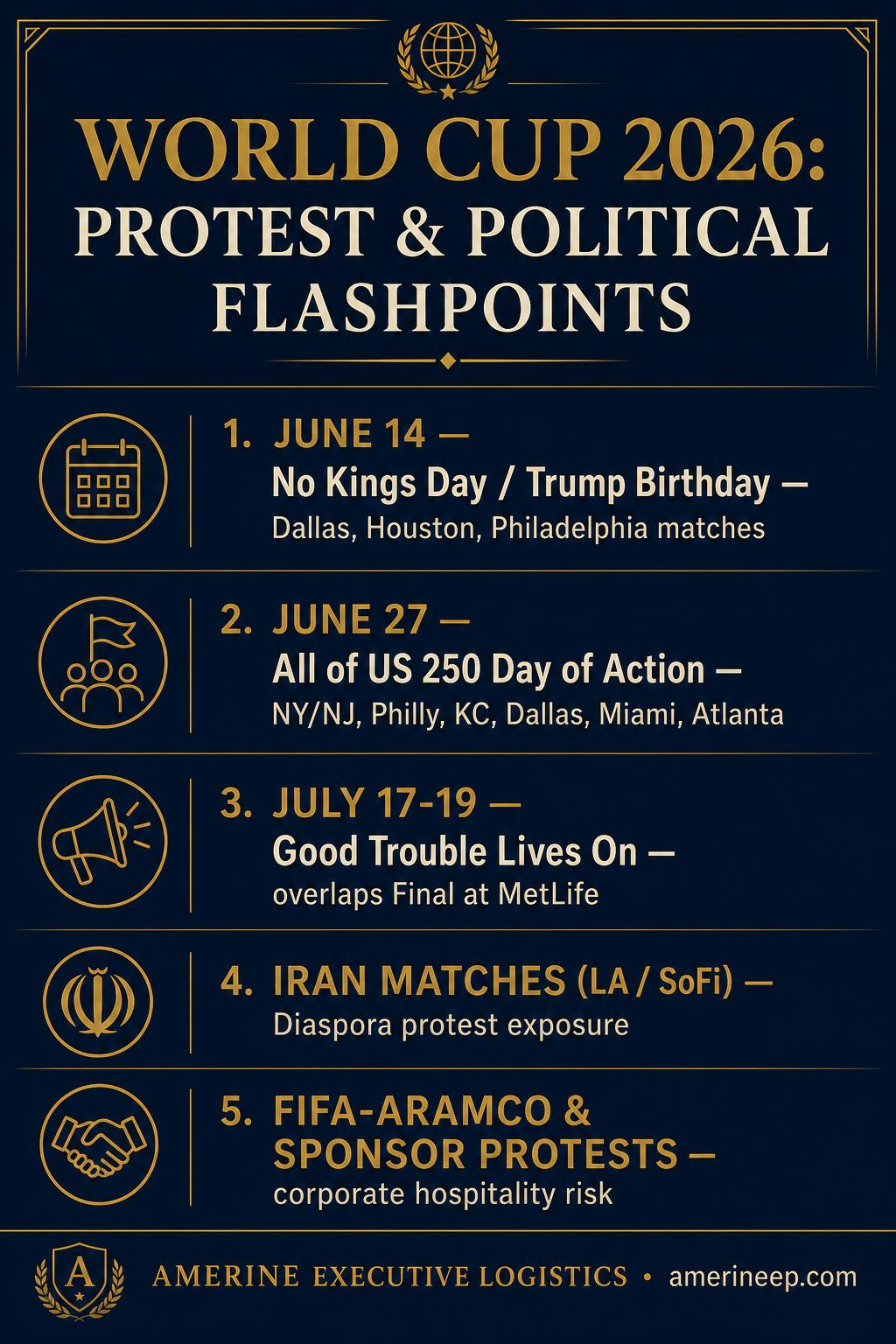
A World Cup trip should include protective intelligence monitoring before and during travel. Relevant issues may include protest activity, weather, traffic disruptions, airport delays, venue restrictions, neighborhood crime patterns, online exposure, cyber risk, and reputational concerns.
The goal is not to make the trip feel restrictive. The goal is to make the trip feel smooth.
AMERINE's Role
AMERINE supports clients with executive protection, close protection, secure transportation, threat assessment, protective intelligence, and travel security services. For World Cup travelers, that means building a plan before the trip begins and managing the details that can affect safety, privacy, and schedule integrity.
Planning travel to a FIFA World Cup 2026 host city? Contact AMERINE for a confidential conversation. Scott personally takes every first call.
---
AMERINE is not affiliated with FIFA. This article is general travel-security planning guidance and is not legal, immigration, aviation, law-enforcement, or ticketing advice. Travelers should verify current requirements through official FIFA, U.S. government, airline, venue, and host-city sources before departure.