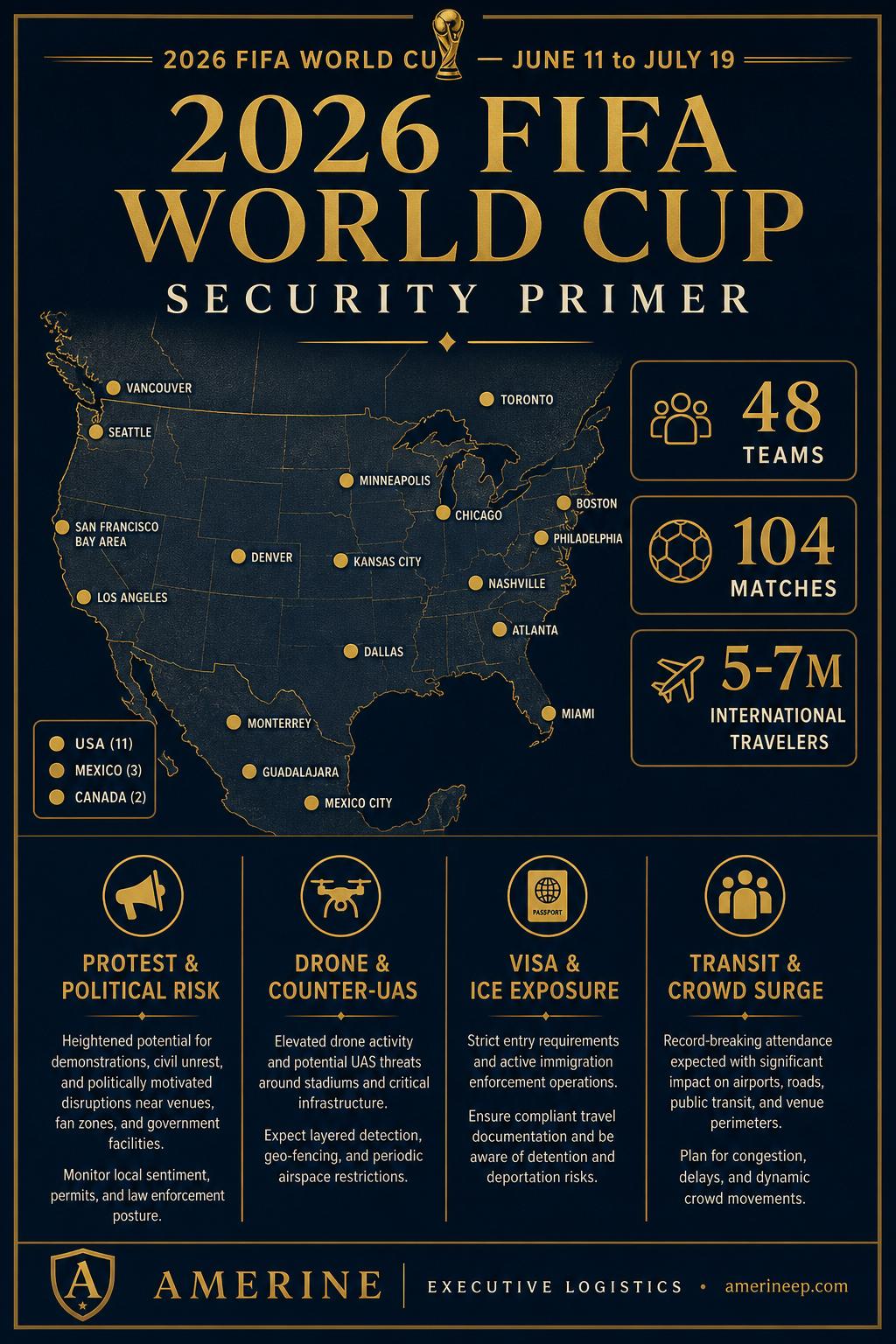
Interactive Map
11 U.S. World Cup 2026 Host Markets
Tap a city to jump to its planning notes.
Select a city above to view its FIFA World Cup 2026™ match schedule (kickoff dates & times). Team match-ups still TBD will resolve as UEFA / FIFA play-offs conclude.
Eleven Regions, Not Eleven Stadiums
The U.S. portion of FIFA World Cup 2026 will not affect one city at a time. It will affect entire metro regions. Airports, hotels, restaurants, private aviation terminals, stadium districts, convention spaces, rideshare zones, fan festivals, and downtown entertainment areas will all experience pressure.
The official U.S. host regions are Atlanta, Boston, Dallas, Houston, Kansas City, Los Angeles, Miami, New York/New Jersey, Philadelphia, San Francisco Bay Area, and Seattle. Some marketed host cities differ from the actual venue municipality. For example, the Boston venue is in Foxborough, the Dallas venue is in Arlington, the Los Angeles venue is in Inglewood, the Miami venue is in Miami Gardens, the New York/New Jersey venue is in East Rutherford, and the San Francisco Bay Area venue is in Santa Clara.
U.S. Host-City Impact List
Dallas / Arlington — 9 matches
Dallas carries the largest U.S. match load. The practical impact area includes Dallas, Fort Worth, Arlington, DFW Airport, Love Field, private aviation terminals, hotels, restaurants, and corporate hospitality venues.
Atlanta — 8 matches
Atlanta will see major downtown and airport pressure, especially around match days and knockout-stage activity. Corporate travelers should plan hotel access, vehicle staging, and airport timing carefully.
Los Angeles / Inglewood — 8 matches
Los Angeles creates a wide-area planning challenge. LAX, Inglewood, Beverly Hills, Santa Monica, downtown Los Angeles, and private event venues may all be part of a single itinerary.
New York/New Jersey / East Rutherford — 8 matches
This is the final host region. The impact will extend across Manhattan, Newark, Jersey City, Hoboken, East Rutherford, airports, rail hubs, hotels, and private hospitality venues.
Boston / Foxborough — 7 matches
The venue is outside central Boston, making ground transportation planning critical. Travelers staying in Boston should not treat stadium transfer time as a standard city ride.
Houston — 7 matches
Houston travel planning should account for airport distance, heat, NRG-area traffic, hotel access, and private event schedules.
Miami / Miami Gardens — 7 matches
Miami will combine match traffic with hospitality, nightlife, private aviation, marine movement, and high-profile social activity. Privacy and exposure management will matter.
Kansas City — 6 matches
Kansas City's stadium district will require disciplined arrival and departure planning. Hotels, fan areas, and airport transfers should be coordinated in advance.
Philadelphia — 6 matches
Philadelphia's South Philadelphia stadium complex will concentrate match-day traffic. Center City, the airport, and private events should be incorporated into the movement plan.
San Francisco Bay Area / Santa Clara — 6 matches
The Bay Area requires regional planning across San Francisco, San Jose, Oakland, Silicon Valley, and Santa Clara. Airport selection and hotel location can materially change the travel-security plan.
Seattle — 6 matches
Seattle's downtown stadium environment can be convenient, but that convenience also means dense pedestrian flow, nightlife activity, transit congestion, and hotel exposure.
Why the Venue City Matters
For protective planning, "host city" is not specific enough. A traveler may fly into one airport, sleep in another city, attend an event in a third location, and travel to a stadium in a fourth. That is where problems develop: unclear timing, unvetted drivers, public entrances, long curbside waits, poor communications, and no fallback plan.
Recommended Planning Standard
Every World Cup itinerary should include:
- Airport arrival and departure plan
- Hotel arrival and lobby management plan
- Secure ground transportation plan
- Match-day ingress and egress plan
- Medical and emergency contingency plan
- Protective intelligence monitoring
- Family or executive communications protocol
- Backup plan for delays, road closures, weather, or unrest
AMERINE supports World Cup travelers with advance planning, protective intelligence, executive protection, and secure transportation coordination across U.S. host regions. Contact us for a confidential consultation.
---
AMERINE is not affiliated with FIFA. This article is general travel-security planning guidance. Travelers should verify current requirements through official FIFA, U.S. government, airline, venue, and host-city sources before departure.